Field Day 2026
I’ve been living in Australia for three months now, and since the day I landed in Sydney, one big question had been sitting in the back of my mind: what would a festival be like here? As a foreigner, with plenty of European festivals behind me, curiosity was inevitable. I knew Field Day was one of the biggest names in the country, but I still needed to find out whether that reputation came from the festival’s identity itself or simply from the artists on the lineup.
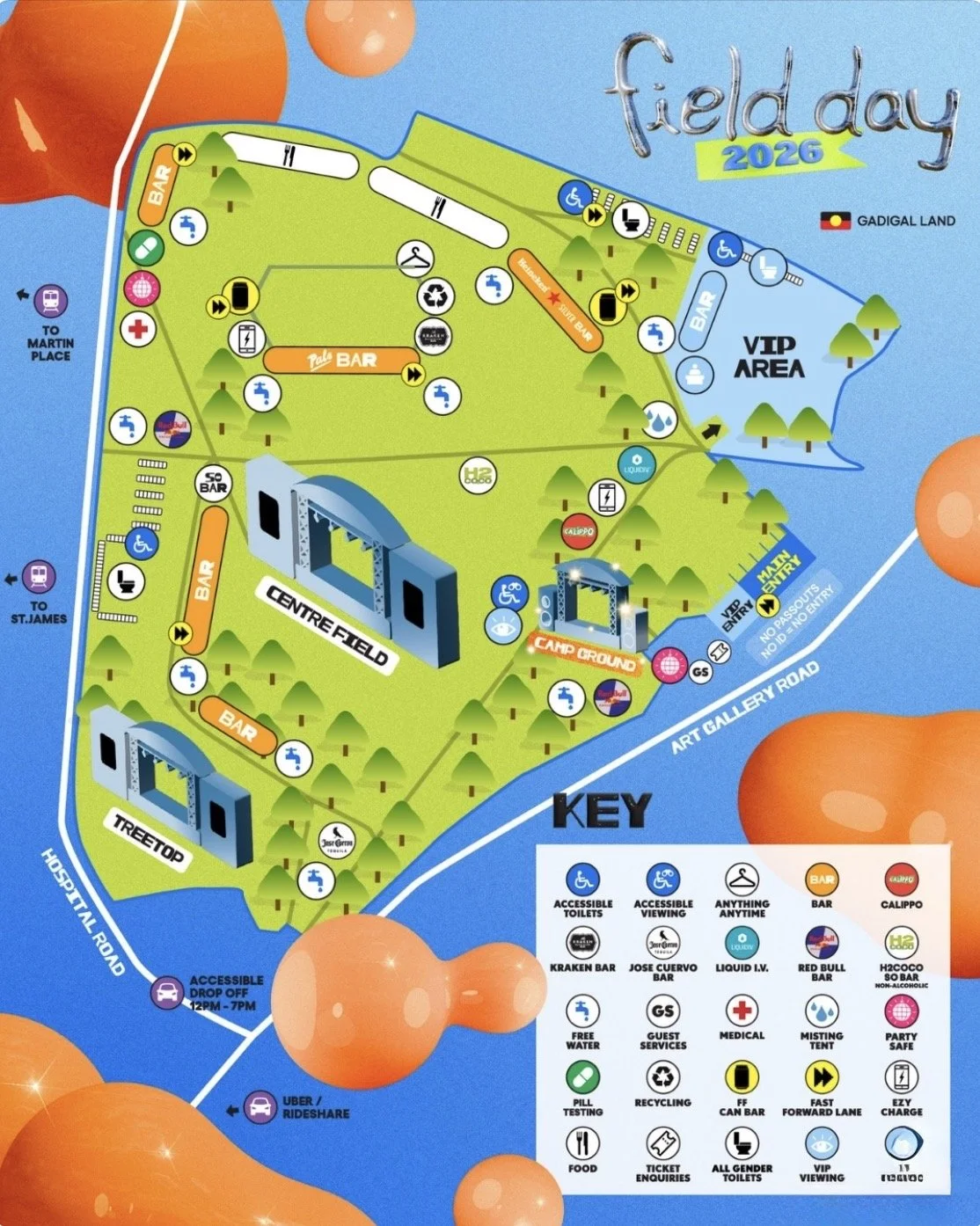
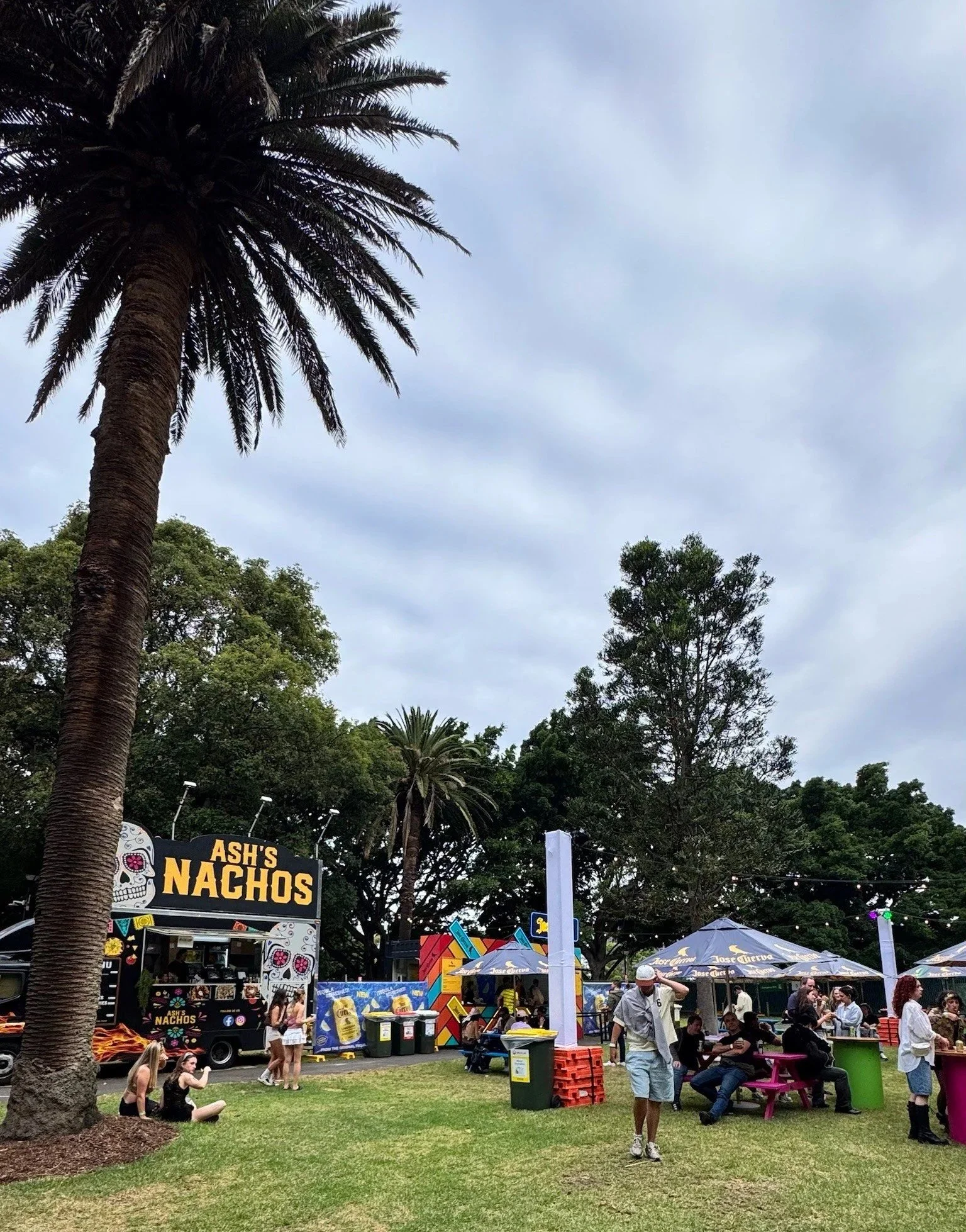
As soon as we got in, we took our time walking around the entire venue, paying attention to the details. The cultural difference with Spain—especially when it comes to drinks—has been one of the biggest adjustments since moving here, but in this case, the surprise was a positive one. For a festival, prices were quite reasonable: beers at $13 and spirits between $15 and $16.50. Considering the Australian context, it was honestly a pleasant surprise.
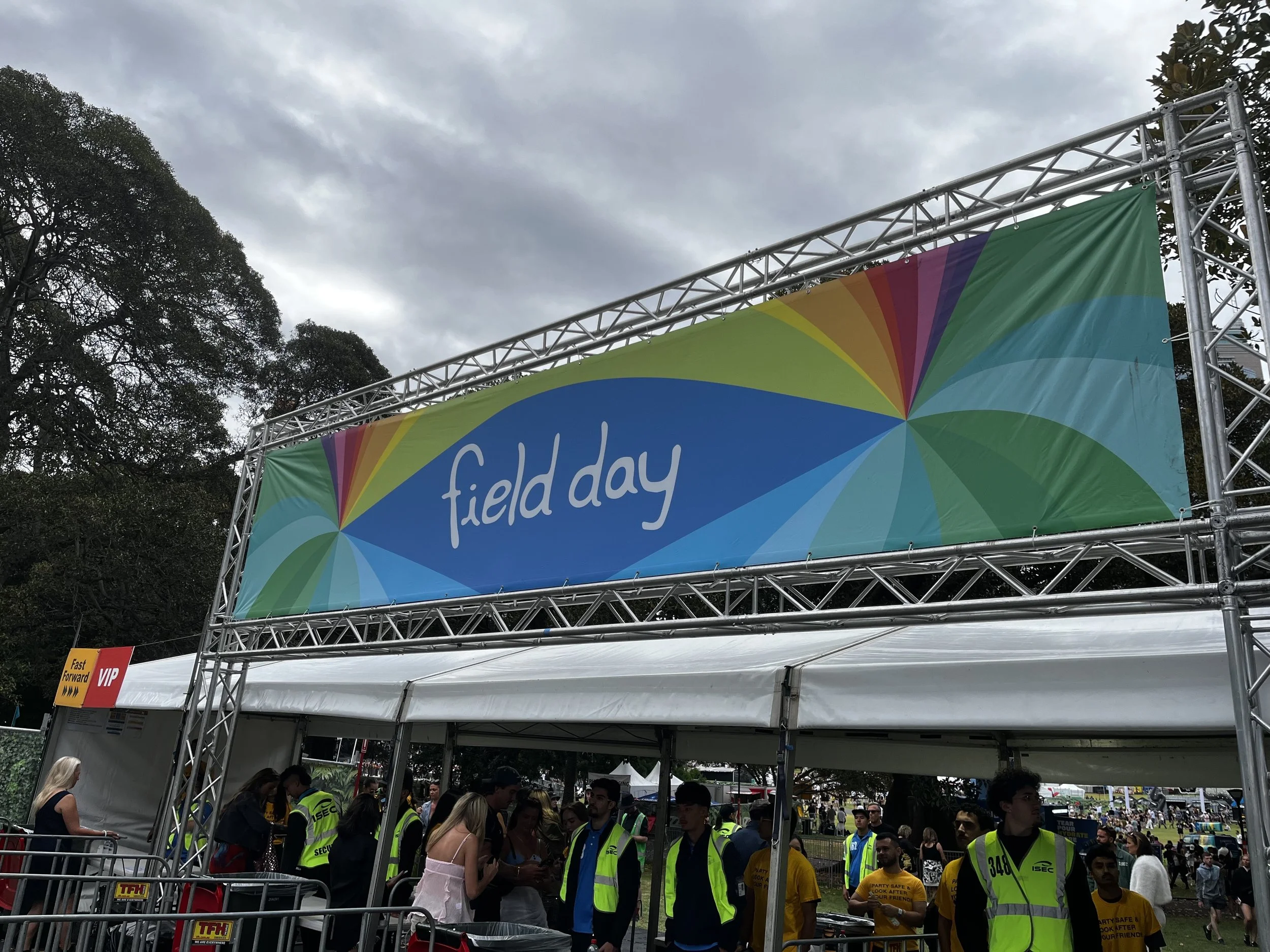
The VIP area, on the other hand, felt a bit underwhelming. Yes, it offered quieter areas and shorter lines at bars and toilets, but not enough to really justify the price difference. What really caught our attention was something we had never seen at a festival before: Fast Forward. An add-on where you pay extra to skip queues at bars and toilets. After comparing prices, it actually seemed more worth it than upgrading to VIP, which made us question whether the full upgrade really made sense.
If there was one thing that clearly worked in the festival’s favor, it was the bathrooms. Always clean. It might sound like a small detail, but at a festival of this size, it makes a huge difference to the overall experience.
One of my biggest questions was whether Field Day already has a loyal crowd that trusts the festival blindly, or if its importance is mainly driven by the lineup. We asked a few people around us, and the answers were almost identical: no one was there for the first time. Everyone who goes once wants to come back the following year. January 1st is already marked in many calendars as a tradition to start the year right—especially this year, with the festival celebrating its 25th anniversary.
That’s also where we noticed one of the few things missing. For a 25th anniversary, we expected something extra: more decoration, a standout visual element, or a special detail to highlight the milestone. It’s not essential, but when it’s there, it definitely adds something.
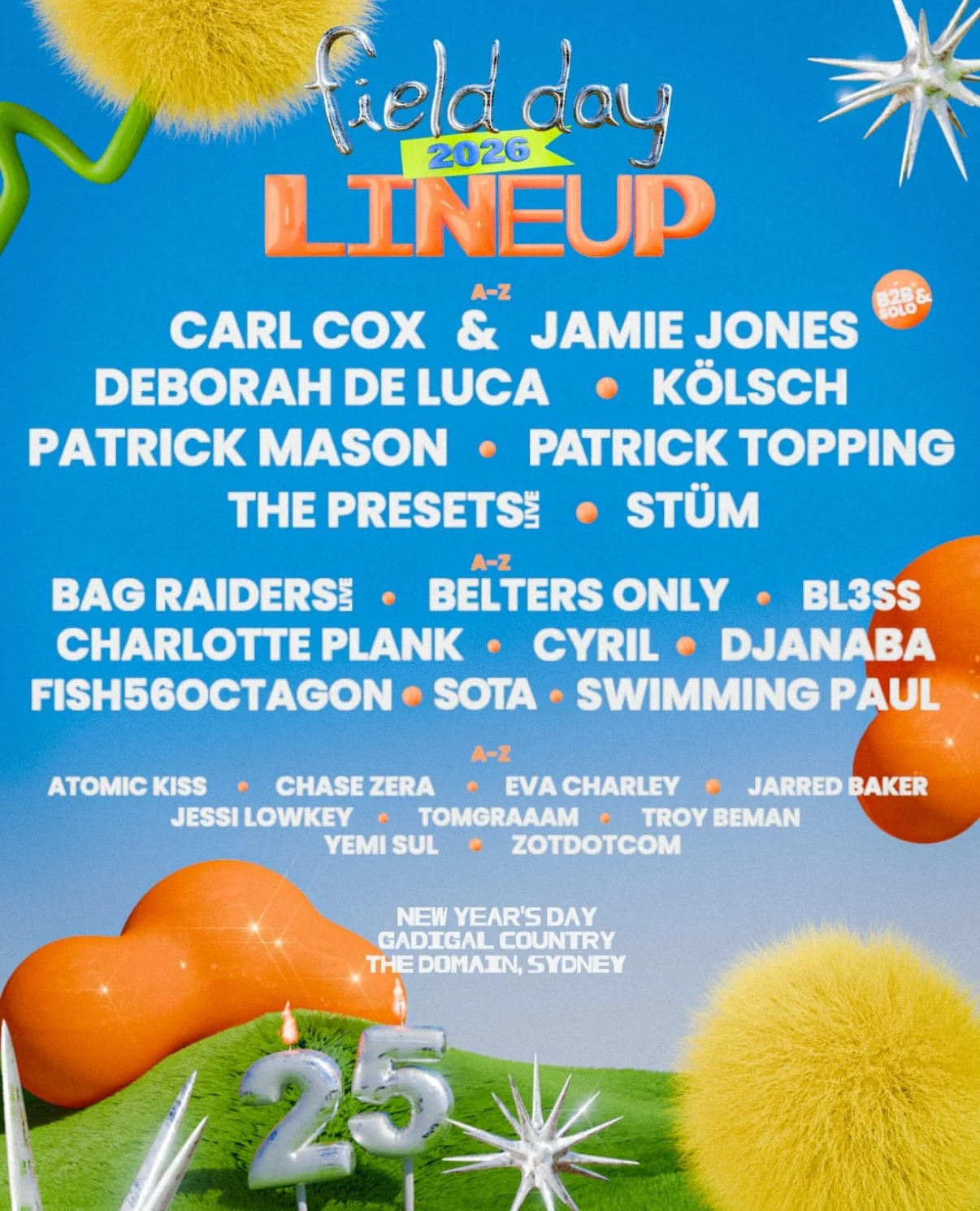
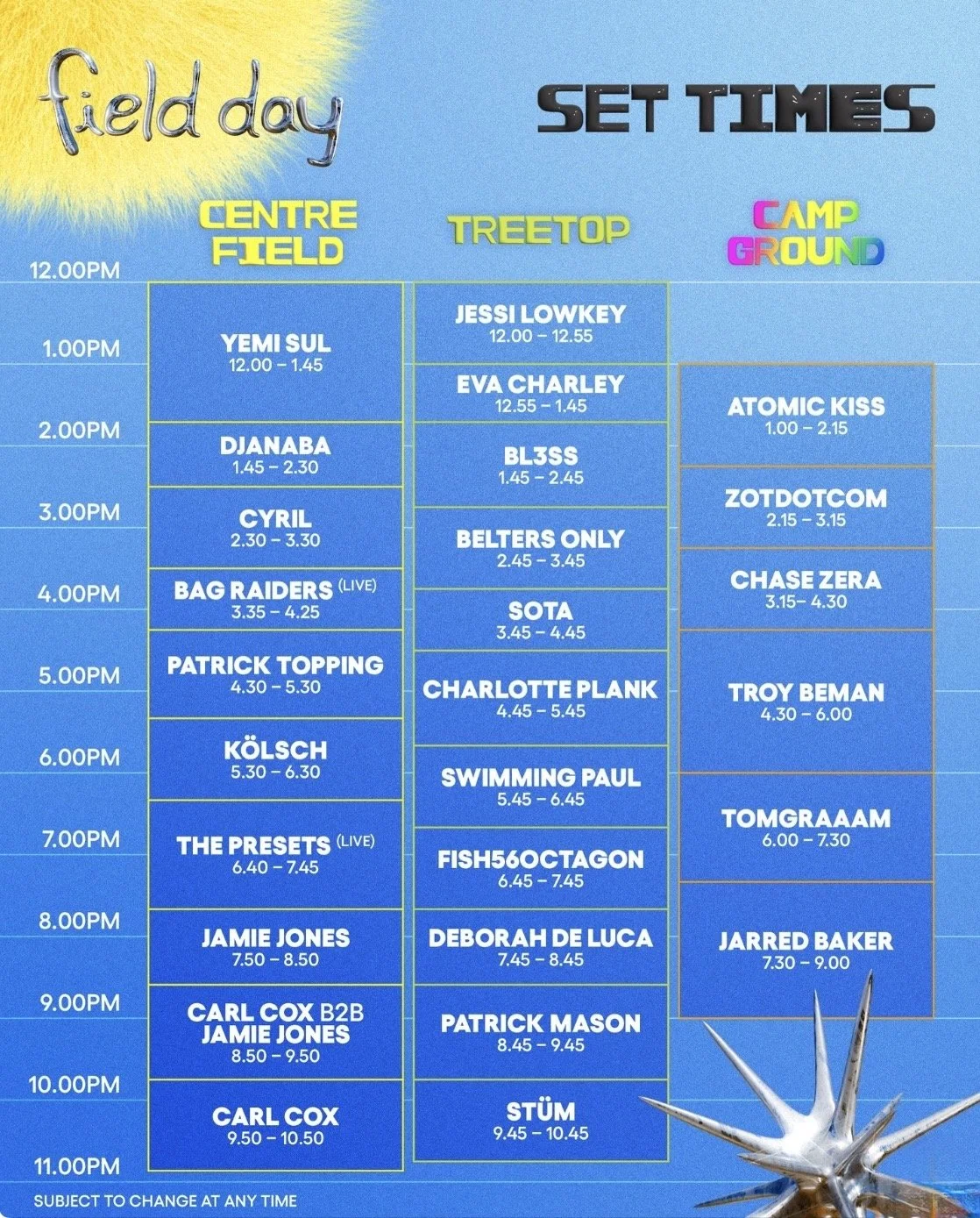
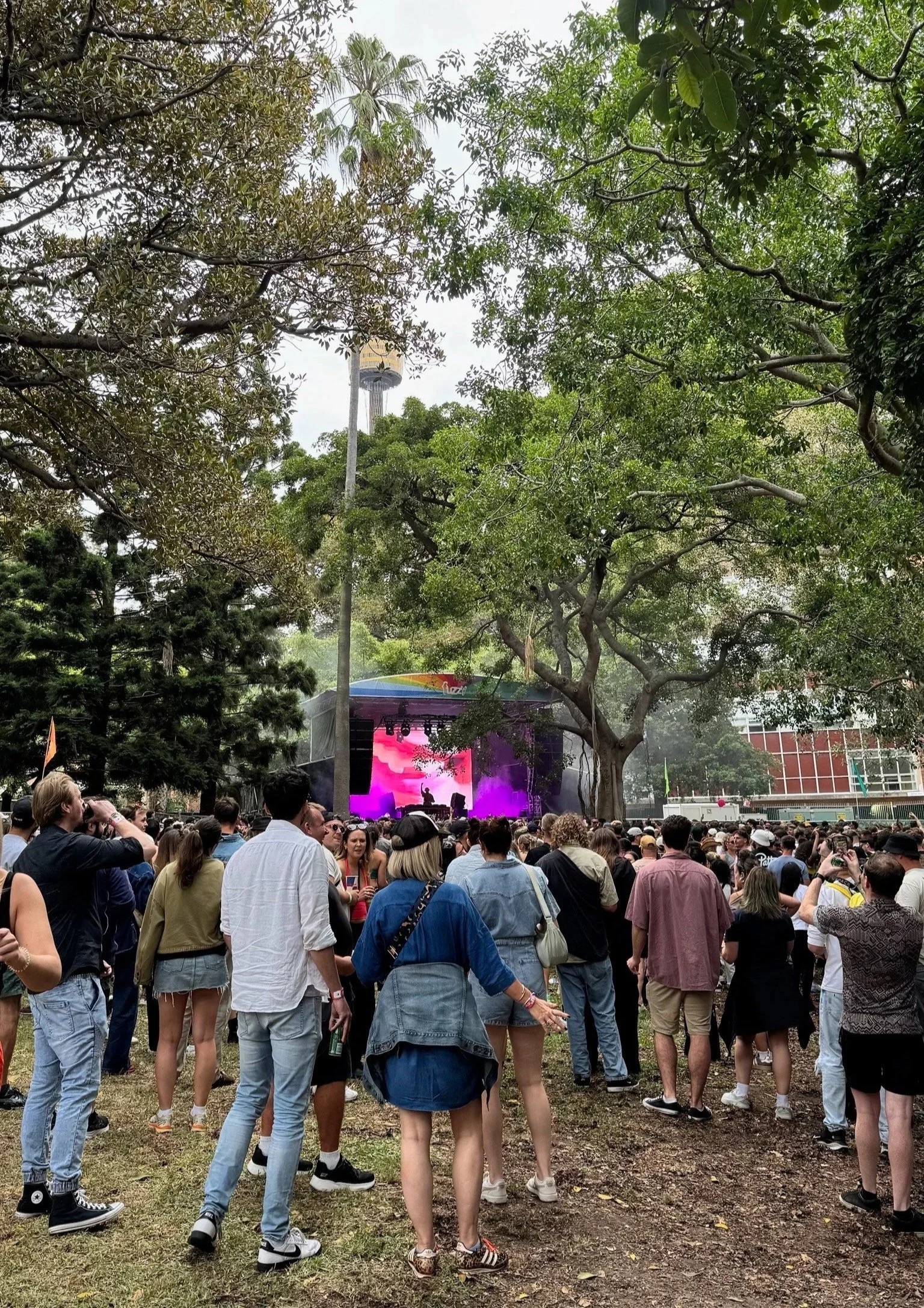
With the analysis done and knowing we were surrounded by a fully loyal crowd, it was time to actually experience the festival. Field Day 2026 was spread across three stages: the main one, Centre Field; Treetop—quickly nicknamed “the forest” by us—surrounded by trees and with a stunning atmosphere; and the smaller Camp Ground stage. And if there’s one thing that says a lot about a lineup, it’s when it makes you wish you could be in two places at once. That was exactly our situation. We liked everyone. We wanted to see every set in full.
That’s when Field Day stopped being theory and became a real experience.
We kicked things off with Kölsch, one of those names that needs little introduction if you’ve followed the evolution of melodic techno over the past decade. Tracks like Grey or All That Matters defined an era, and his close connection to the Kompakt label says a lot about his sound and artistic vision. Fresh off his own European tour, his set felt polished and intentional, moving smoothly between well-known classics, lesser-known gems, and brand-new material, without ever losing flow. It was the kind of set that pulls you in slowly, without rushing, but with a clear sense of direction.
Next came one of our most anticipated acts of the day: The Presets. An Australian duo we had never seen live before and one of our biggest expectations going in. We’re still not sure if it was national pride or if they’re simply that good, but the reality was clear: the crowd didn’t stop jumping or screaming for a second. Us included, obviously. That blend of electro-pop, house and dance might make you wonder at first whether it will work in a mostly electronic context, but as the set progresses, everything clicks. Each track feels stronger than the last, and before you know it, you’re fully in. Without a doubt, a duo that elevates any lineup.
One of the toughest moments of the day arrived with the classic impossible choice: Jamie Jones or Deborah De Luca. Knowing that Jamie Jones would return later for a B2B with Carl Cox, we decided to see the queen of Naples and her unmistakable brand of hard-hitting techno. And it was the right call. Deborah De Luca never disappoints. Ever. Her sets are intense, direct and explosive, with no unnecessary detours but enough variety to keep things constantly moving. She shifts naturally between mainstream success and underground credibility, blending hard techno with groovier moments and clean, powerful transitions. There’s a reason she sells out wherever she goes. Easily one of the strongest performances of the entire festival.
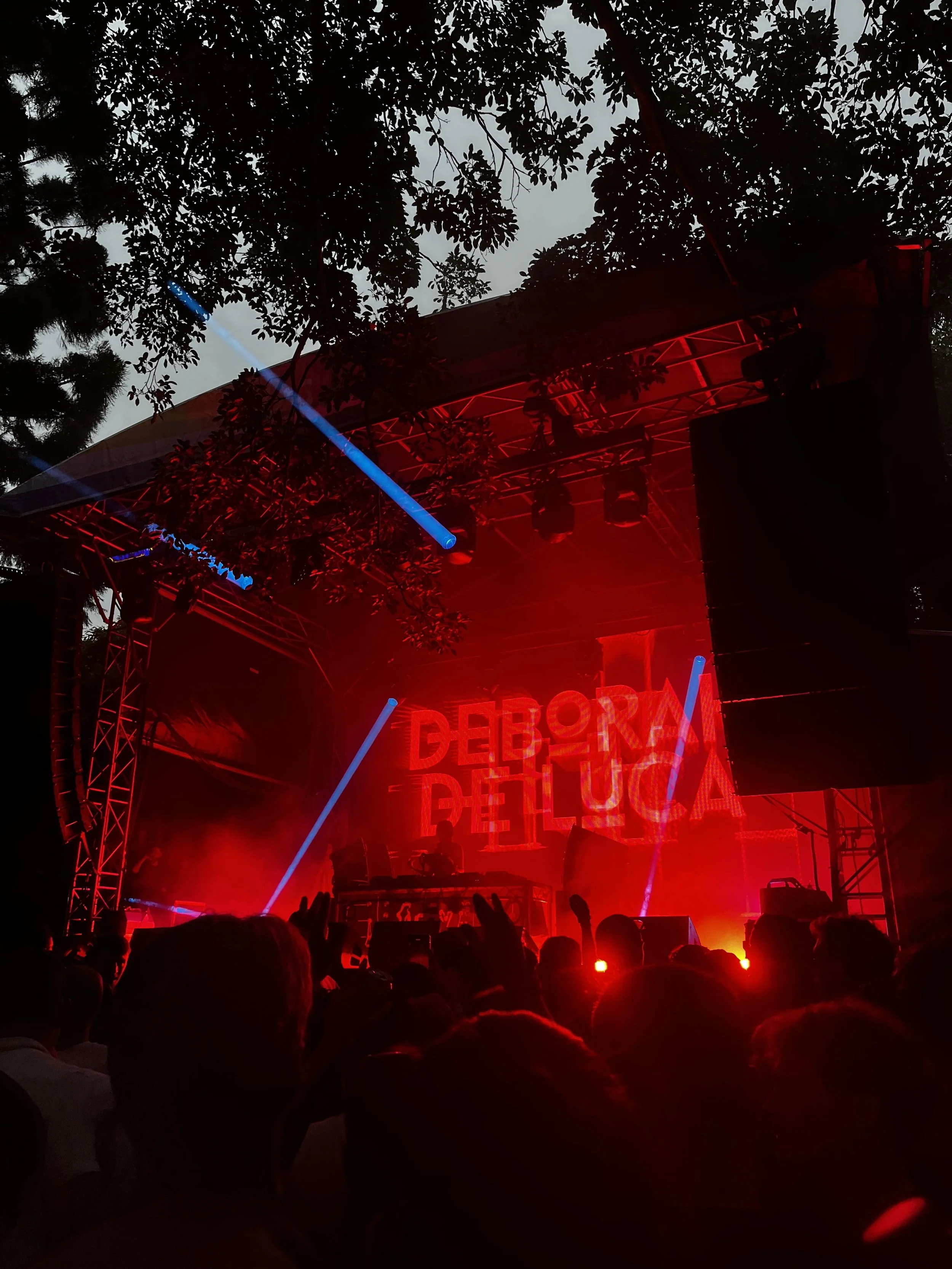
As the night moved toward its final stretch, we couldn’t miss one of the defining moments of Field Day 2026: the Jamie Jones B2B Carl Cox, followed by Carl Cox’s solo set. The B2B was pure madness. Watching two giants share the booth, feeding off each other’s energy, with tech house as their common language, felt like a gift. They brought back classics from other eras and achieved what might seem easy at their level, but never really is: completely winning over the crowd.
Then came Carl Cox on his own, and that’s where everything came full circle. Carl Cox needs no introduction. He’s one of the true living legends of electronic music, someone who has shaped generations from his early days in London, through the UK rave scene, to becoming a global reference for techno and house. Founder of influentiallabels, a key figure in historic club residencies, and still carrying unstoppable energybehind the decks.
Many of us—myself included—expected him to start with something more house-driven, warmer, matching the sunset vibe. But Carl Cox did exactly what Carl Cox does best: surprise. He went straight into classic, dark, solid techno. A bold move for some, but completely true to who he is. Throughout his extended set, he gradually opened up the sound: heavy techno sections, tech-house moments to release tension, and more groove-focused passages where expected tracks like Finder (Remix) finally dropped, triggering an explosive reaction from the crowd.
And in the end, without really trying, I answered my own question. Field Day isn’t just a big festival because of its lineup. It’s a festival with identity, with a loyal crowd, and with a date firmly marked on the Australian calendar. So yes, now it’s just a matter of waiting for 2027. Because I already want to go back to Field Day.
Thank you to Fuzzy Events and Beehive PR for having us along.
Review by Ester Lozano for Music Festivals Australia