Golden Hour
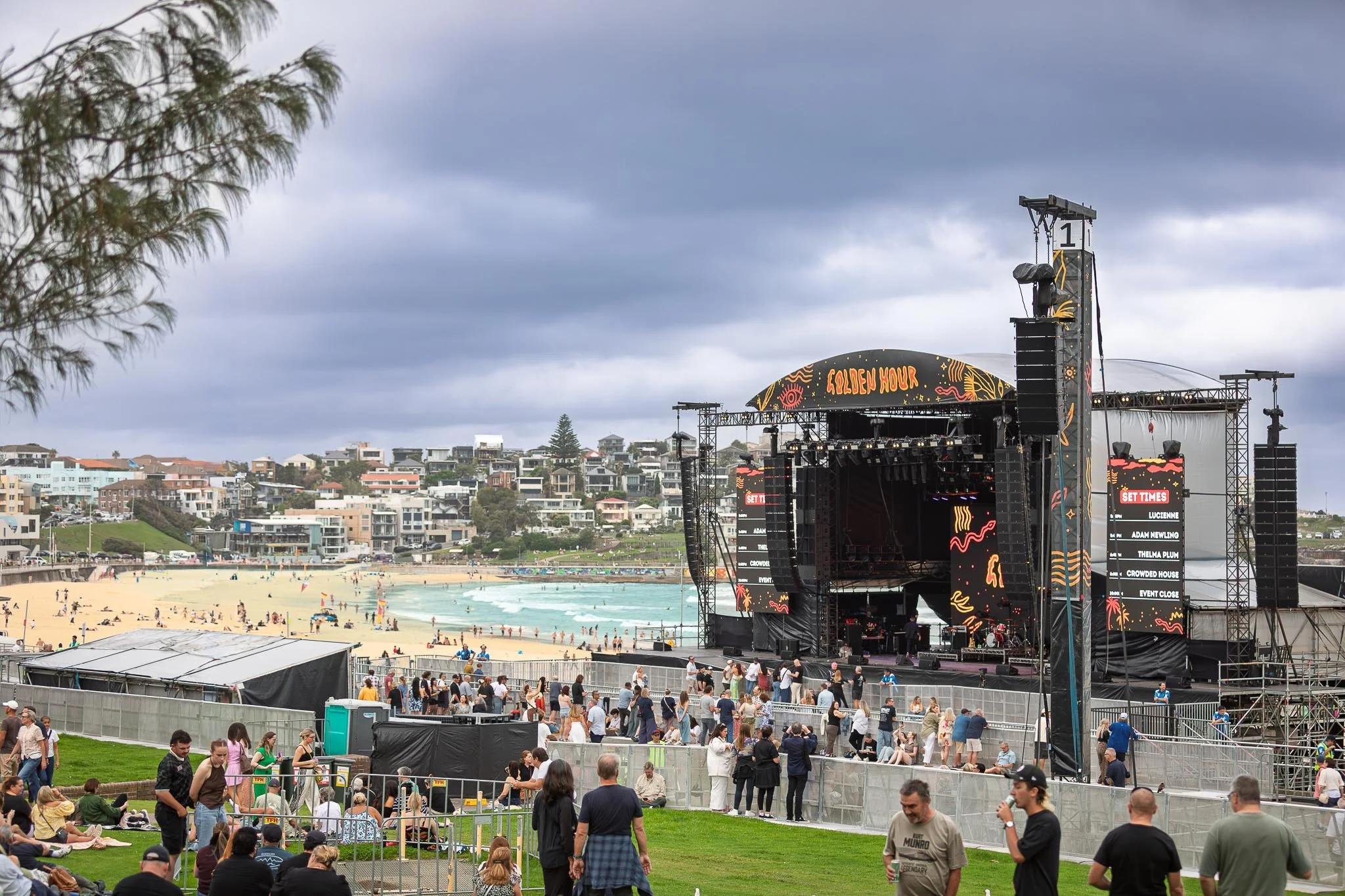
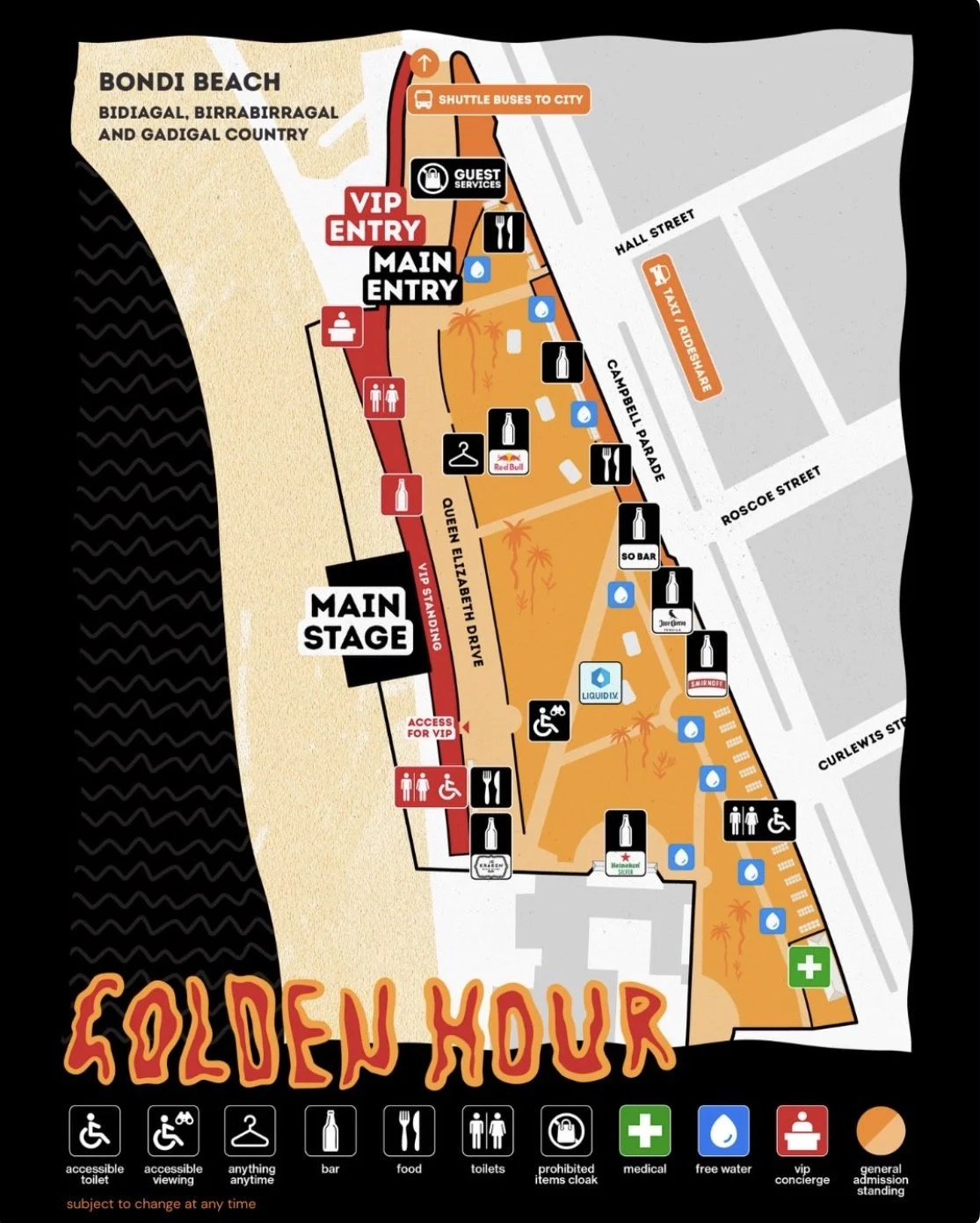
By the time 5pm rolled around, it already felt like the night had been waiting all day to begin. The light was doing that late-summer thing where everything looks a little more cinematic than it has any right to. Overcast skies kept it soft and silver, but the sun still managed to slip in low and golden whenever the clouds blinked. People streamed in with purpose, rugs tucked under arms, wristbands flashing, that polite hurry you only see when everyone knows they’re about to share something special. The grassy hill above the sand filled in layers, the bar queues buzzed, and beyond the barriers the beach crowd steadily grew, faces turned toward the stage like it was a lighthouse. Surfers hovered out past the whitewater, seagulls perched like tiny opportunists, keeping one eye on the music and one eye on anyone foolish enough to leave hot chips unguarded. It felt like a new kind of Sydney gathering, part beach day, part pilgrimage, and entirely ready.
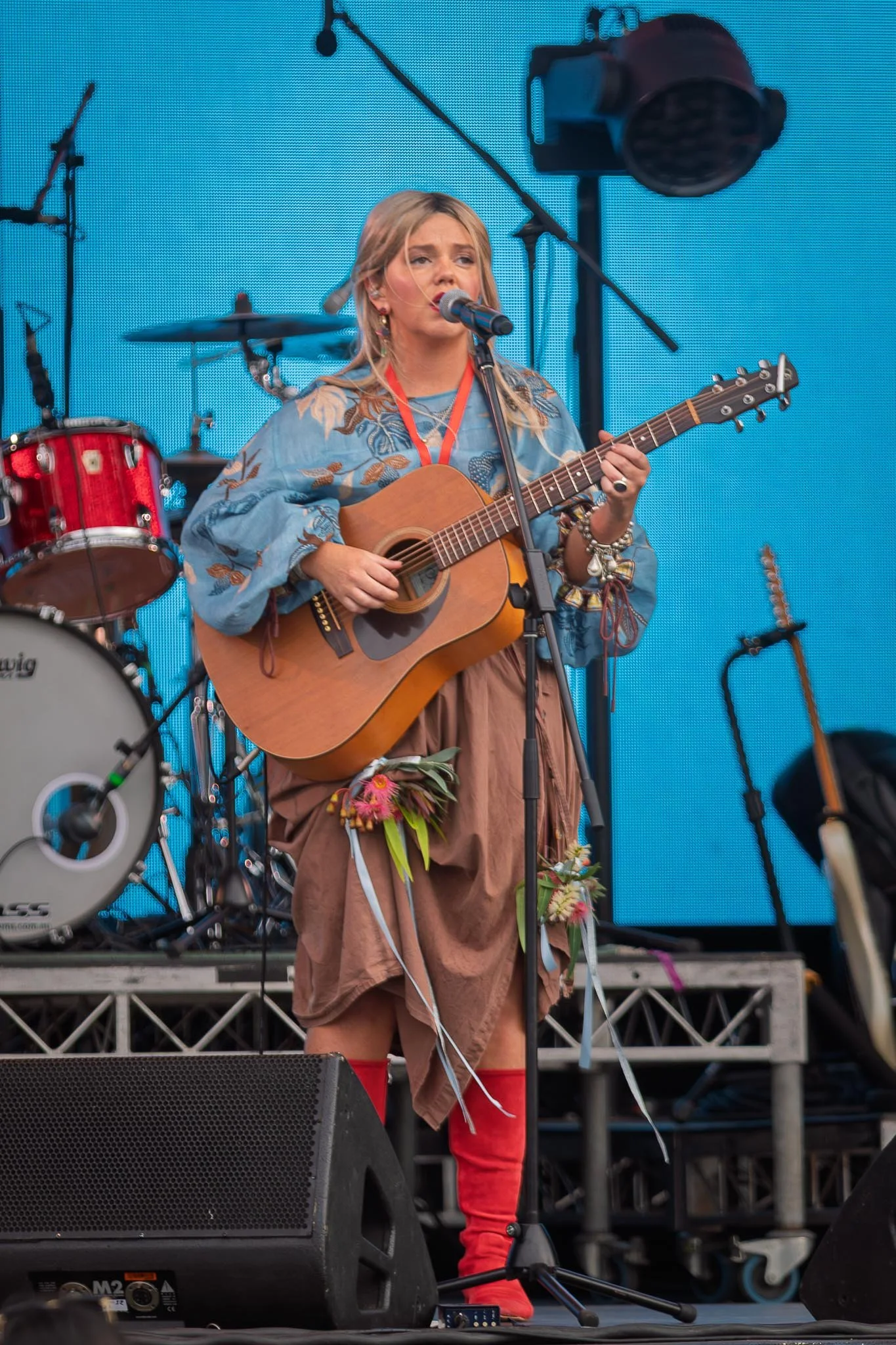
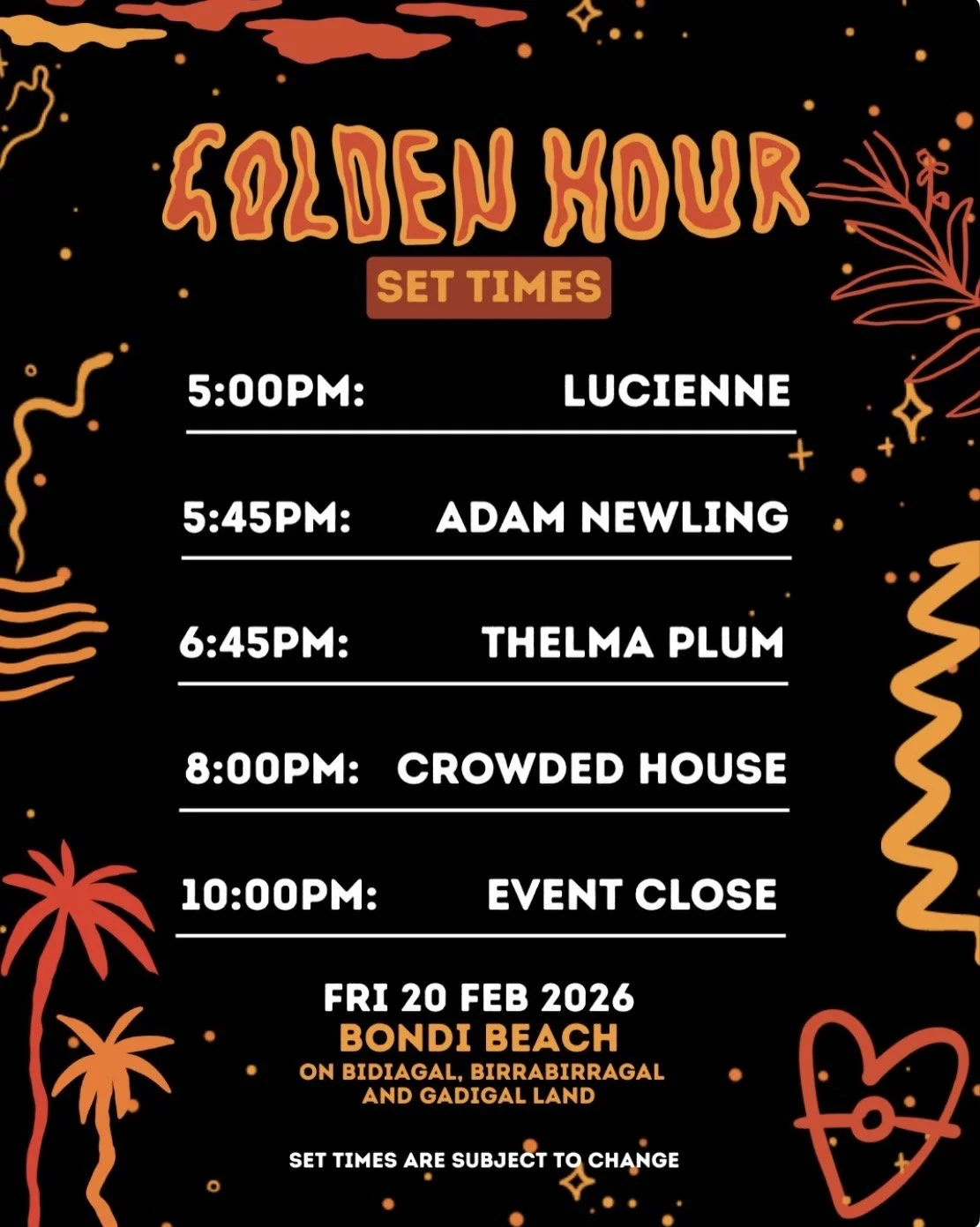
Lucienne walked on at 5pm and did the rare opener thing. She stopped conversations. Not by demanding attention, but by earning it with a voice that had weight, warmth, and real control. Soulful pop with a subtle retro thread, but delivered with modern confidence, like she could shift the whole park’s focus with a single breath. People were still settling, still negotiating their patch of grass, still half mid-sentence. Then she started singing, and heads lifted. You could actually see it happen, that moment where chatter fades because someone’s talent is too obvious to ignore.
She looked like she’d been styled by spring itself. A brown skirt adorned with flowers, flowers on her top, flowers in her hair, and knee-length red-pink suede boots that somehow made perfect sense under beach skies. She acknowledged the traditional custodians of the land, Bidiagal, Birrabirragal and Gadigal Country, and it landed the way those moments should. Simple, respectful, grounded. Then she closed by dedicating her final song to the people who’d told her she wasn’t good enough. In the wrong hands that can feel like a line. In hers it felt like a statement, and a little bit like closure. Even with the venue still warming up, she earned a proper burst of whistles and applause as she left. That early in the evening, that is not nothing.
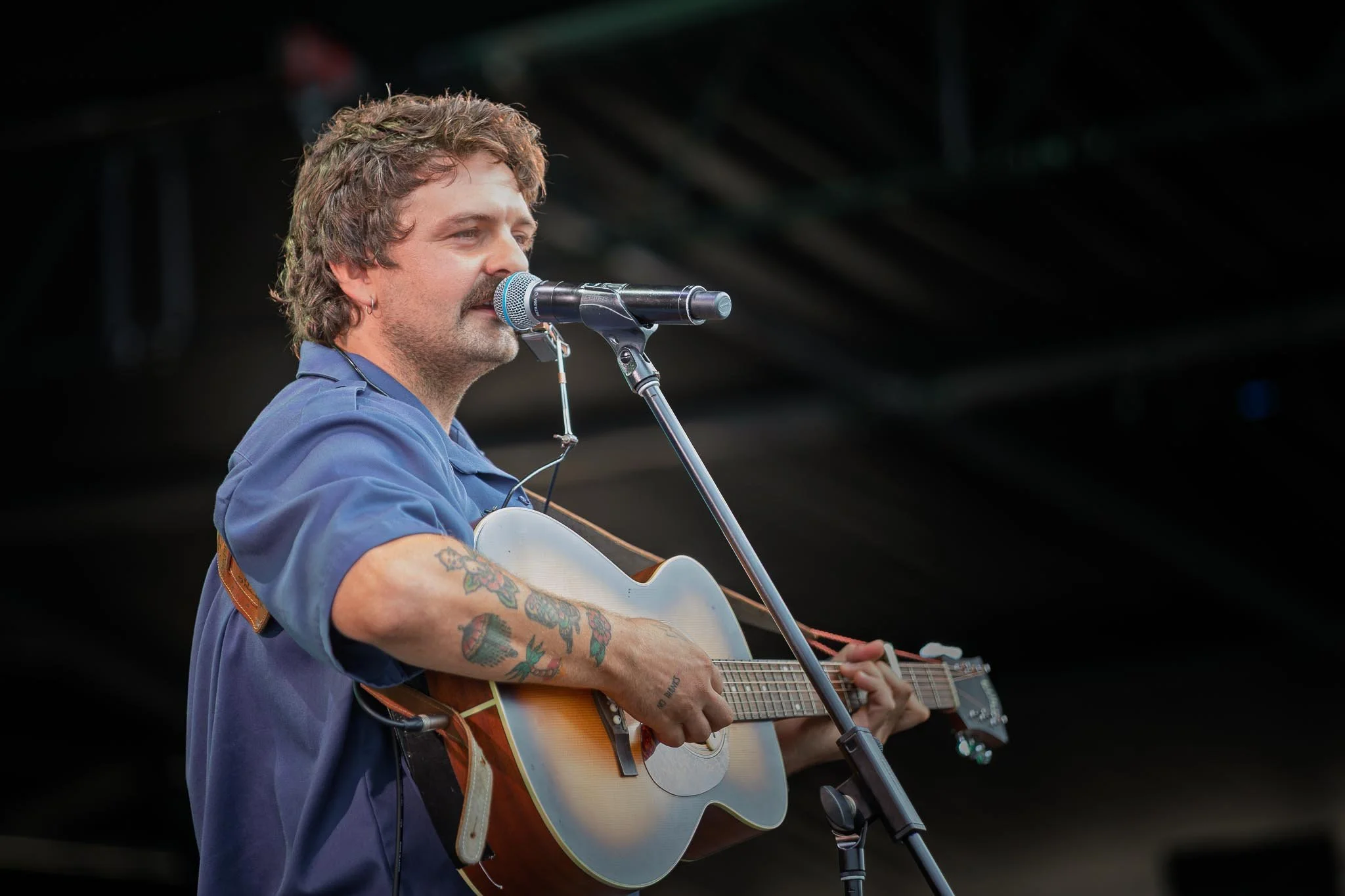
Adam Newling came on at 5:45pm and shifted the mood in exactly the right way. Less shine, more grit. Just him, a guitar, harmonica, and a husky voice that sounded lived-in, in the best possible sense. He introduced himself with a dry shrug of confidence that instantly made him feel like your mate’s mate. “My name’s Adam. Adam Newling. I’m gonna sing you some songs, and they’re gonna be good.” Someone near me laughed and said, “I like him already.” Same.
He’s a slow-burn performer, not a showman, and that suited the early-evening light perfectly. His songs sat in that alt-rock/folk lane where the guitar leads and the feelings follow. He mentioned he’s a local, raised in Cronulla, and you could sense that extra pride in being on a stage like this, in a place like this. “It’s a pleasure and an honour to be here singing songs for you,” he said, almost like he was surprised by his own luck. “What better place to do it?”
Then he delivered the story behind Morning Breath and it was pure Newling. Not a cute hangover, an evil one. Waking up naked in a bed you don’t recognise, boots still on, looking in the mirror and not recognising what’s staring back. Teeth crooked. Hair gone. “Have you ever drunk so much that it’s made you bald?” The park cracked up, that immediate shared laughter that makes strangers feel like they’re on the same team. Later he talked about writing a song for his girlfriend, now fiancée, how the song must’ve worked, and how a road trip somehow turned a love song into something about the car. The Nissan Sex-trail. The general crux being that if you drive a good car, maybe a nice girl would marry you. Ridiculous. Charming. Weirdly convincing. When he waved and walked off, the cheers were louder again, as if the crowd had decided he’d officially earned his place on the night’s story.
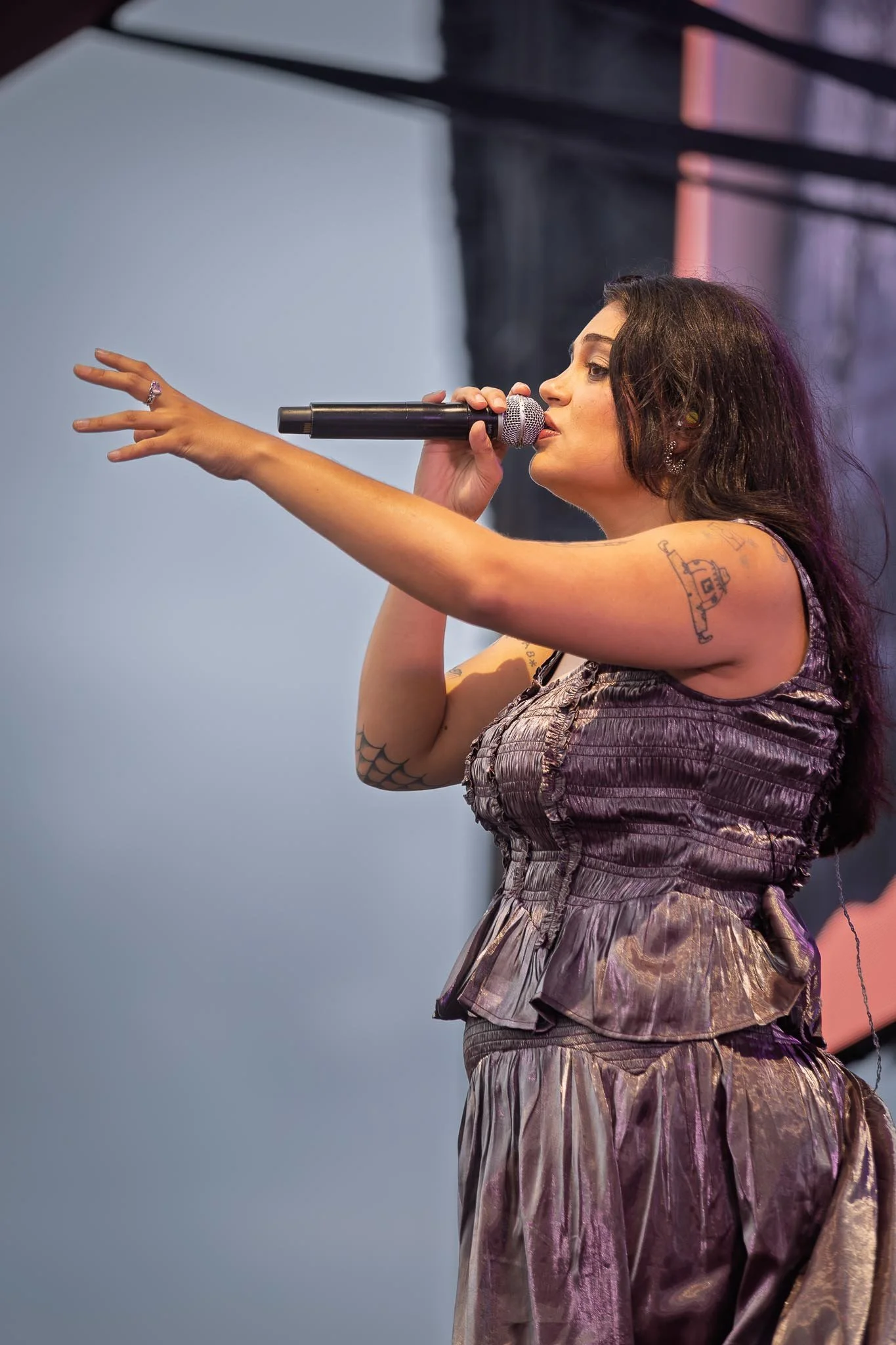
By 6:45pm, with Thelma Plum stepping out, the park was close to full and the beach-side crowd had thickened too, standing and sitting wherever there was a view, including right up toward the surf lifesaver tower and stretching down toward the Icebergs end. Thelma brought instant presence. Pop that’s sharp, emotionally intelligent, and unafraid. She can go intimate one minute and defiant the next, and she holds both with total ease.
“Never did I ever believe that I’d be singing at Bondi Beach,” she said, and it didn’t feel like scripted gratitude. It felt like a genuine moment of “how is this my life.” Her set moved quickly and landed hard, the way a strong festival set should. Don’t Let a Good Girl Down arrived with a grin and a warning. “And I suggest you don’t.” The younger fans were right up the front singing with that full-throttle devotion, while all around the hill you could see older faces smiling like they were delighted to be discovering something new in real time. Homecoming Queen brought a gorgeous sway through the middle of her set, that lovely 6/8 ballad feel that made the whole place soften for a few minutes.
She closed with Better in Black, thanked everyone with real warmth, told us the amazing Crowded House were going to be so good, and left to a roar that felt like a proper handover, not just a polite goodbye. The sky was fading. The buzz rose. The night had that “now we’re here” feeling.
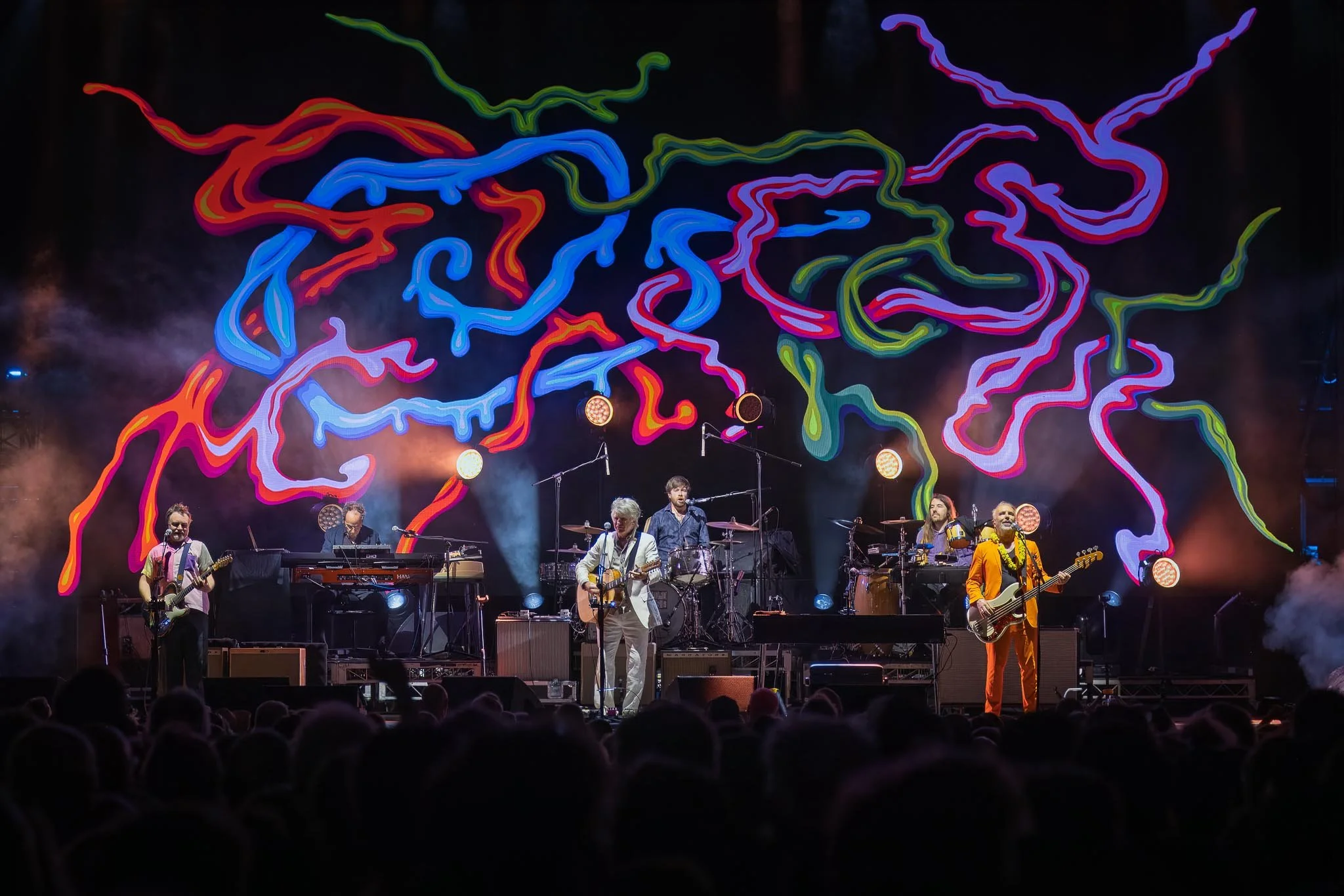
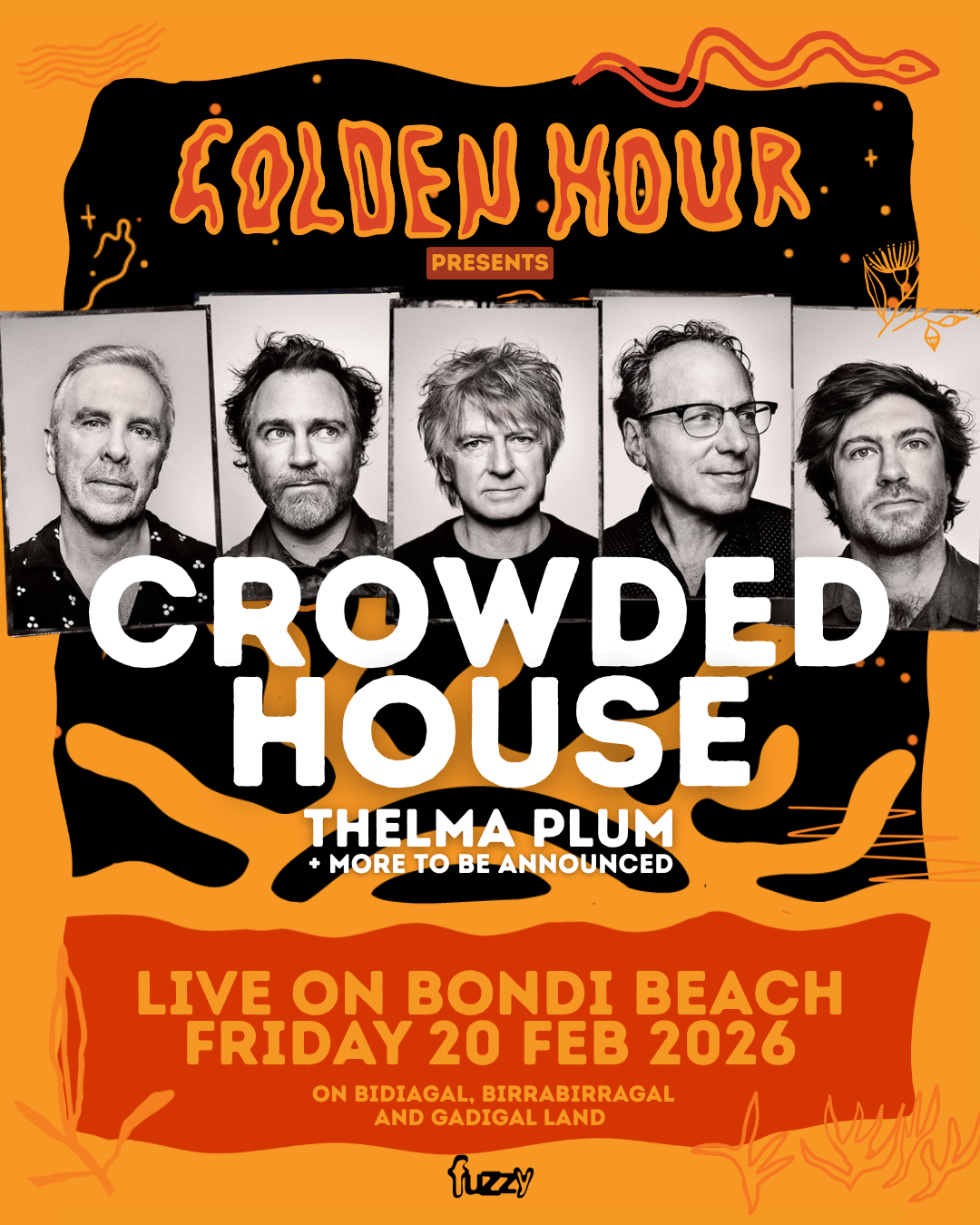
Crowded House walked on at 8pm and the whole coastline seemed to snap into focus.
There are bands who age into nostalgia. Crowded House don’t. They age into truth. The songs still feel alive, still capable of surprising you, still able to hit in places you thought were already healed or already hardened. Neil Finn stepped out looking impossibly crisp in a white suit, Nick Seymour beside him in bright orange that he’d probably call burnt sienna if you asked nicely. Liam Finn and Elroy Finn took their places like this was the family business and the family business was making 14,000 people feel something. Mitchell Froom sat behind keys with quiet authority, and Paul Taylor’s percussion was there like seasoning. Never too much. Always exactly right.
They opened with Distant Sun and it made immediate sense. That song has always felt like it belongs outdoors, like it was written with a horizon in mind. From there, the set unfolded like a conversation between old friends rather than a museum tour. Mean to Me drifted in and you could see couples do that small glance that says, yep, this one. Someone behind me whispered, “This takes me straight back,” and went quiet again, smiling at the sand like it had answered something.
One of the first proper chills came with World Where You Live. The band pulled back and let the crowd carry the chorus on their own. No messy shouting. No ego. Just a respectful, surprisingly in-tune choir across the hill and down along the sand. Then the band rejoined and it hit harder for the contrast. A guy near me laughed and said, “We’re actually singing properly,” like he couldn’t quite believe it.
Neil’s between-song warmth was peak Finn. He mentioned they’d been in the studio for a month, nineteen songs deep, and joked they’d play every one back to back. Then he laughed, spared us, and gave us Fall at Your Feet. That chorus was the first moment the whole place properly lifted as one. The kind of singalong that starts in your mouth and ends up in your chest. At the end, Neil looked out wide, clocked the growing crowd gathered along the beach, and called it. He talked about it being a night we all needed to sing together, even those along the sand who hadn’t paid a cent. Then he conducted another chorus, arms up, voices up, the whole venue joining in like it was the easiest thing in the world. For a few minutes, “everywhere you go, always take the weather with you” felt less like a lyric and more like a promise about the way music follows you through life.
He gave Small Detail a moment too, dedicating it to the people who turn out for Mardi Gras each year and calling it one of the things that makes Sydney a great city. It landed beautifully. Not as a speech, but as a nod, a thank you, a recognition of what community looks like when it chooses love.
Then came the night’s big grin. Something So Strong started in familiar territory and then morphed into a funky disco groove that had the hill bouncing. Before you could fully process the pivot, Nick’s bass swaggered straight into Groove Is in the Heart. It was ridiculous and perfect. Neil told the story about first meeting Nick Seymour when Nick was on a catwalk modelling clothes Neil’s now-wife had made, and Nick, in that bright orange suit, leaned into it with a little strut across the stage. A woman near me laughed, “He’s loving this,” and her mate said, “Mate, he’s absolutely owning it.” It felt like a band so comfortable in their own skin they could throw in a left-field cover and somehow make it feel inevitable.
To The Island brought the mood back into something more textured. Haunting keys. Those perfect-imperfect harmonies. A lovely little guitar moment from Neil that felt aimed straight at the waterline. The set moved with that Crowded House magic: lightness, then weight, then lightness again, never letting you sit in one emotion long enough to get bored, but long enough to feel it properly.
And then Don’t Dream It’s Over arrived, and the whole night deepened.
Neil spoke carefully, referencing what we, as a community and a country, had recently experienced in this very same park. A moment that shook us, and reminded us how quickly ordinary life can be interrupted, and how loudly love and courage can answer back. He spoke about seeing the worst and the best of people in the same breath, about love winning the day, and asked us to sing in honour of those we lost. Then the song began, slightly more laid back, almost tender in its pacing, like it was being offered rather than performed. Mitchell Froom’s Hammond organ sounded rich and haunting at once, filling the gaps with something that felt like mourning and hope holding hands.
And when the lyric landed, it landed with full gravity.
“They come, they come to build a wall between us, we know they won’t win.”
On that line, you could feel the crowd lean in together. Not dramatic. Not performative. Just thousands of people meaning it. The harmonies from the band were beautiful, but it was the collective voice that made it seismic. Bondi unified into a single sound, and the applause that followed wasn’t just for the band. It felt like it was for each other. For being there. For remembering. For choosing softness in a world that sometimes tries to harden you. Goosebumps, whether you wanted them or not.
And then, like good storytellers, they didn’t leave us in the dark for too long. When You Come lifted the mood back up. Neil picked up the acoustic six-string and looked over toward Liam with that proud dad energy you could see from the back of the hill, and Liam tore into a scorching solo that snapped the whole crowd back into motion. A bloke to my left just exhaled, “That’s outrageous,” like he’d been holding his breath for the last five minutes.
Neil asked for help again with Private Universe, getting the crowd to drone the note of A to set it up. Fourteen thousand people holding one note should be chaos. It was weirdly good. Slightly wobbly, totally human, strangely beautiful. Then the band locked in and took it out into a jam that felt loose in the way only a perfectly rehearsed band can afford to be loose. The groove stretched just long enough to make time feel soft.
Four Seasons in One Day came dedicated to Bondi Surf Life Savers and the first responders who keep people safe, and it felt right that the night kept turning outward, toward gratitude, toward community. Mitchell took a keyboard solo that drew cheers mid-phrase, which is always the sign you’ve got a crowd properly with you. Elroy Finn sat deep in the pocket all night, solid and generous, with little flashes that nodded at Paul Hester’s spirit without ever trying to copy him. Paul Taylor’s percussion kept appearing in all the right places, like a wink in rhythm.
Then Chocolate Cake arrived with its sly grin, Neil at the piano having fun with it, even dropping a cheeky “I’m too sexy” ad-lib before his piano solo. After that, he didn’t just bask. He moved like it was 1987 again. He came running down into the pit to high-five the front row, and the contrast was perfect: back in the early days he would have jumped down and climbed back up over the bass bins. Tonight, under Bondi skies, there was a ramp installed, and it somehow made the whole thing funnier and more endearing. Same spirit. Slightly safer logistics. The crowd loved him for it.
He mentioned thinking about touring with Split Enz, and then Letter to My Girl landed like a gift, warm and nostalgic without feeling stuck in the past. The reaction was immediate. Not just cheers, but that audible “oh!” of people realising they’re getting something special. Right behind me, a bloke said quietly, “That song still gets me,” and his mate just nodded. “Yeah. Same.” It was simple, and somehow that made it truer.
As the night moved toward the finish line, the crowd along the beach had grown again, dotted right and left of the stage. Toward the end, Neil thanked those gathered stage right out toward the surf lifesaver tower, and Nick extended his thanks to the people who’d gathered stage left out toward Bondi Icebergs. It was a small touch, but it mattered. It made the whole beach feel included, like the music had widened its arms.
Weather With You did what it always does. It turned the hill and the sand into a choir. People sang to strangers. People sang to the sky. The line “everywhere you go, always take the weather with you” floated through the salt air like it belonged there. And when Neil thanked us again, it wasn’t rushed or routine. He took it in. You could feel him taking it in. He spoke about hope, about seeing everyone out there together, and believing that love will prevail. That idea had been threaded through the night in different colours, from joy to grief to gratitude, and here it was again, gently insisted upon.
Then the familiar opening strums of Better Be Home Soon came through and you could feel the emotion tighten, that last wave that hits you only when you realise you’re about to lose the moment. Voices rose one more time, not to prove anything, but because nobody wanted to waste a second of it. When the final note landed, the roar that followed wasn’t just loud, it was long. The kind of cheer that keeps going because people are trying to seal the night inside themselves before the lights come up.
As the tide crept quietly toward the shoreline and the curfew hour nudged closer, Bondi still didn’t feel ready to let go. Crowded House had taken an entire city’s worth of stories and set them gently on the sand, then watched us pick them up and sing them back. Songs older than some of the crowd travelled across the hill, across the waterline, and out toward the people gathered along the beach who’d been listening from the edges all night.
If this truly was Golden Hour’s first chapter, it didn’t just begin well. It began with the kind of collective joy and meaning that makes you walk away a little lighter, a little prouder of your city, and a little more convinced that music can still do what we hope it can do.
Some nights feel like a concert. This one felt like Sydney, singing back.
Gallery https://musicfestivalsaustralia.com/new-blog/golden-hour
Thank you to Fuzzy Events and Beehive PR for having us along.
Review and Photos by Andy Kershaw for Music Festivals Australia