It was supposed to be a day of great Australian music. Nobody mentioned the possibility of having to survive a small natural disaster along the way.
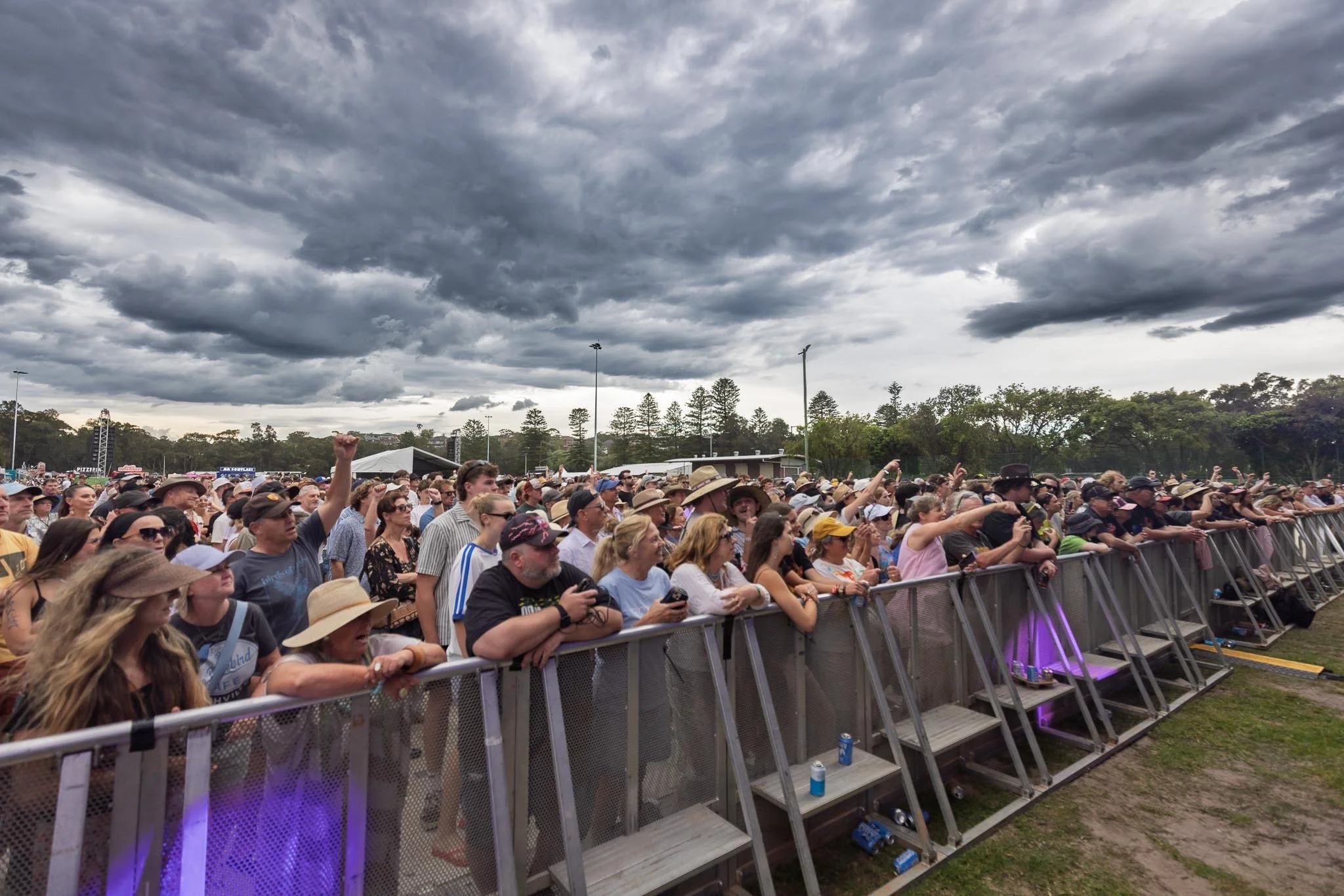
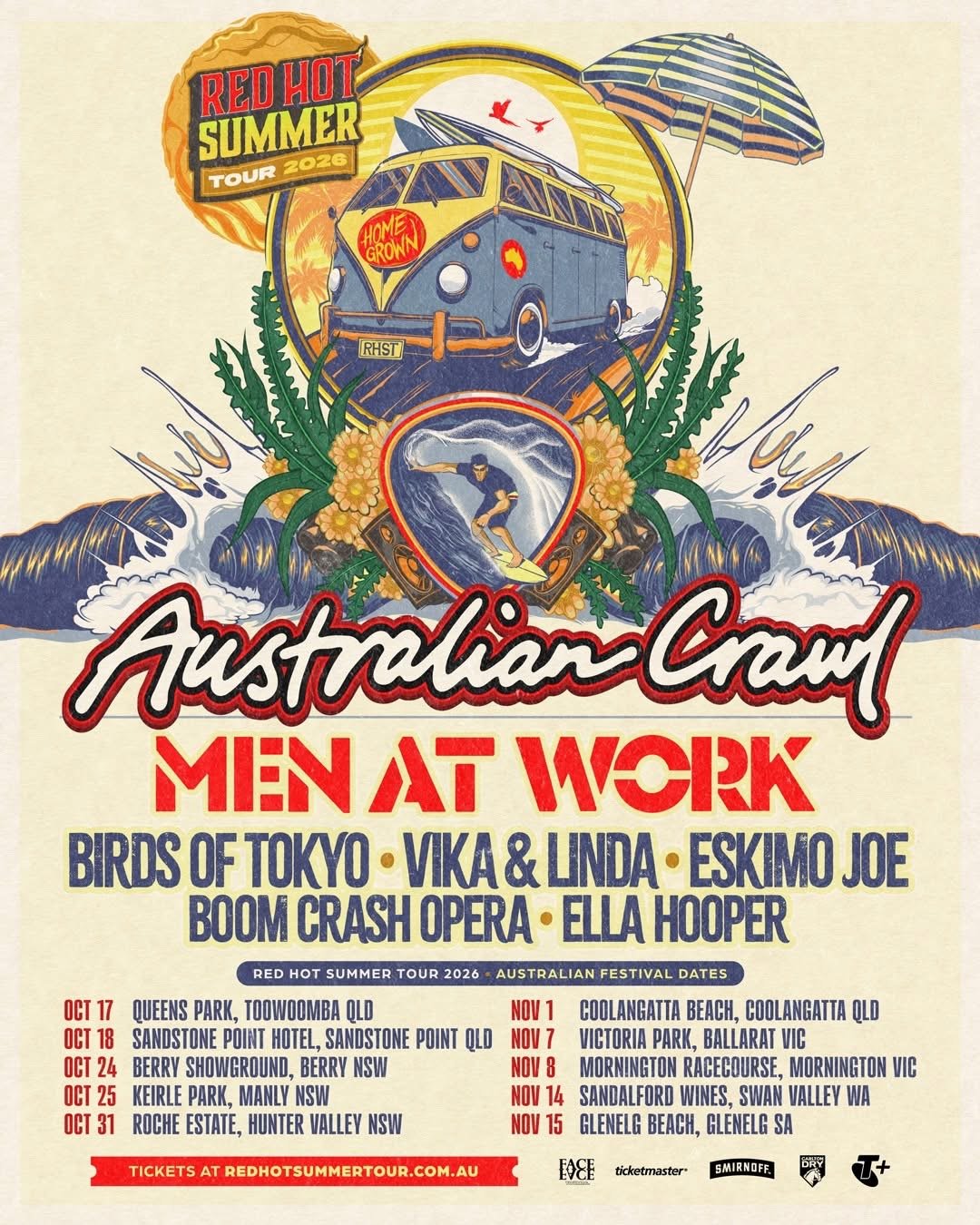
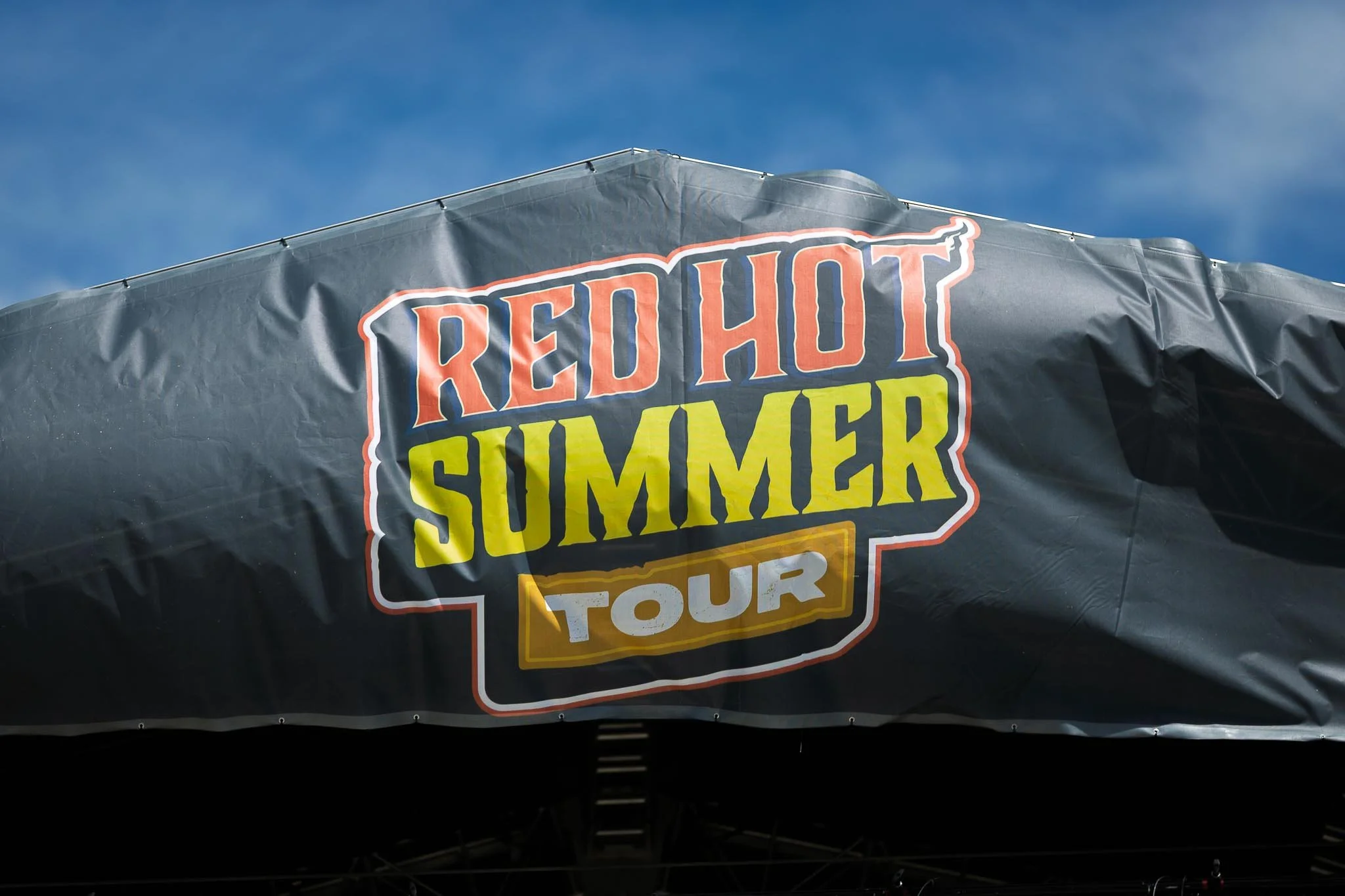
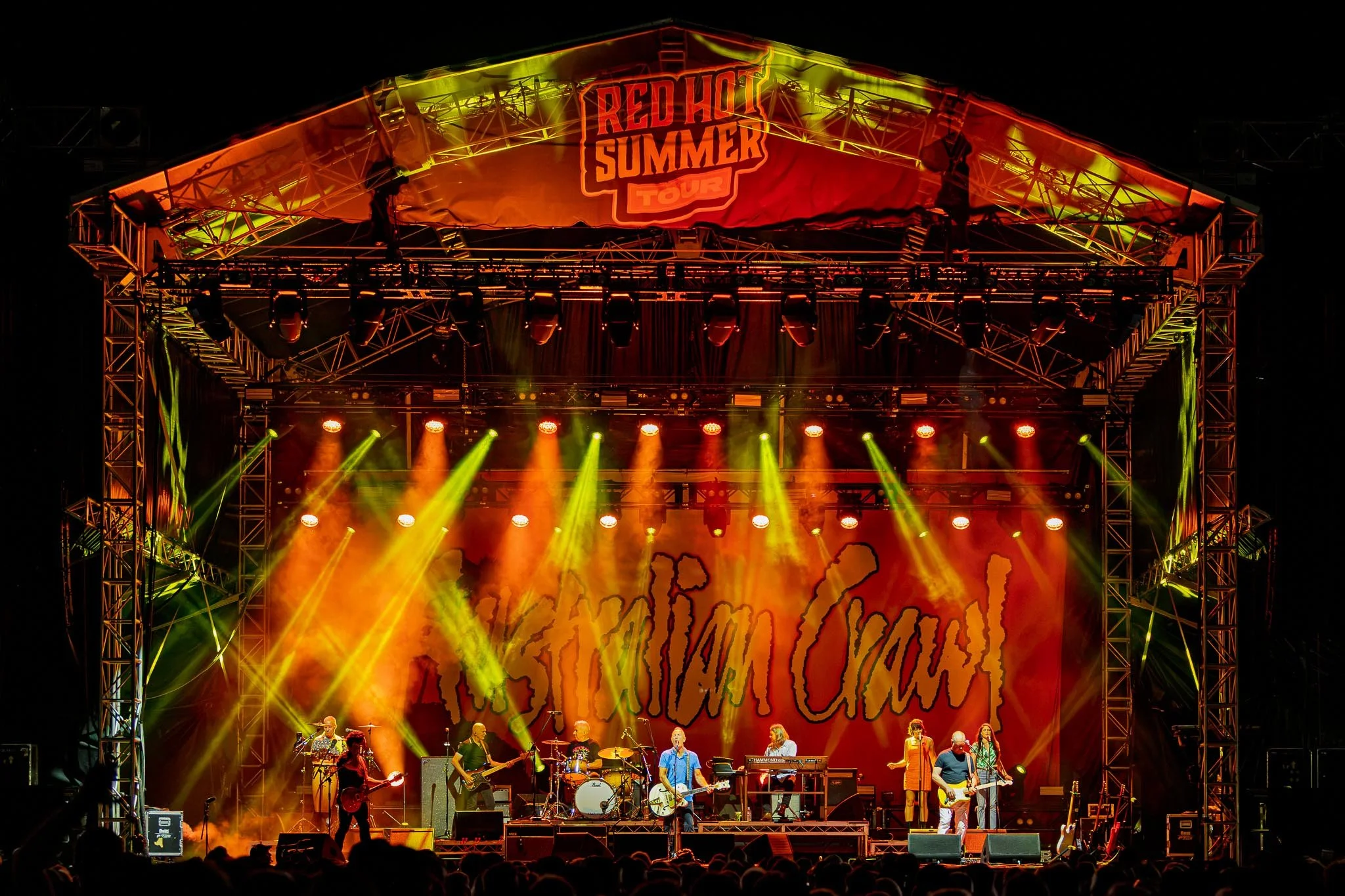
Seven acts, almost nine hours of live music, a sold-out crowd, and enough Australian rock history to make you wonder whether someone had accidentally turned the calendar back forty years. The Red Hot Summer Tour had arrived at Keirle Park in Manly for the first time, and Sydney had obligingly turned on a glorious, if slightly oppressive, 30-degree afternoon. Blue skies, sunshine, cold drinks, camping chairs, and thousands of people settling in for what promised to be a musical marathon. The stage was spacious, beautifully laid out, and looked magnificent in the sunshine, with banks of lighting waiting for darkness and an impressive sound system that would prove exceptional throughout the day. There was that lovely sense of anticipation, the sort you get when everyone knows they're in for something special, but nobody quite knows how special. And as it turned out, nobody could have scripted what was about to unfold.
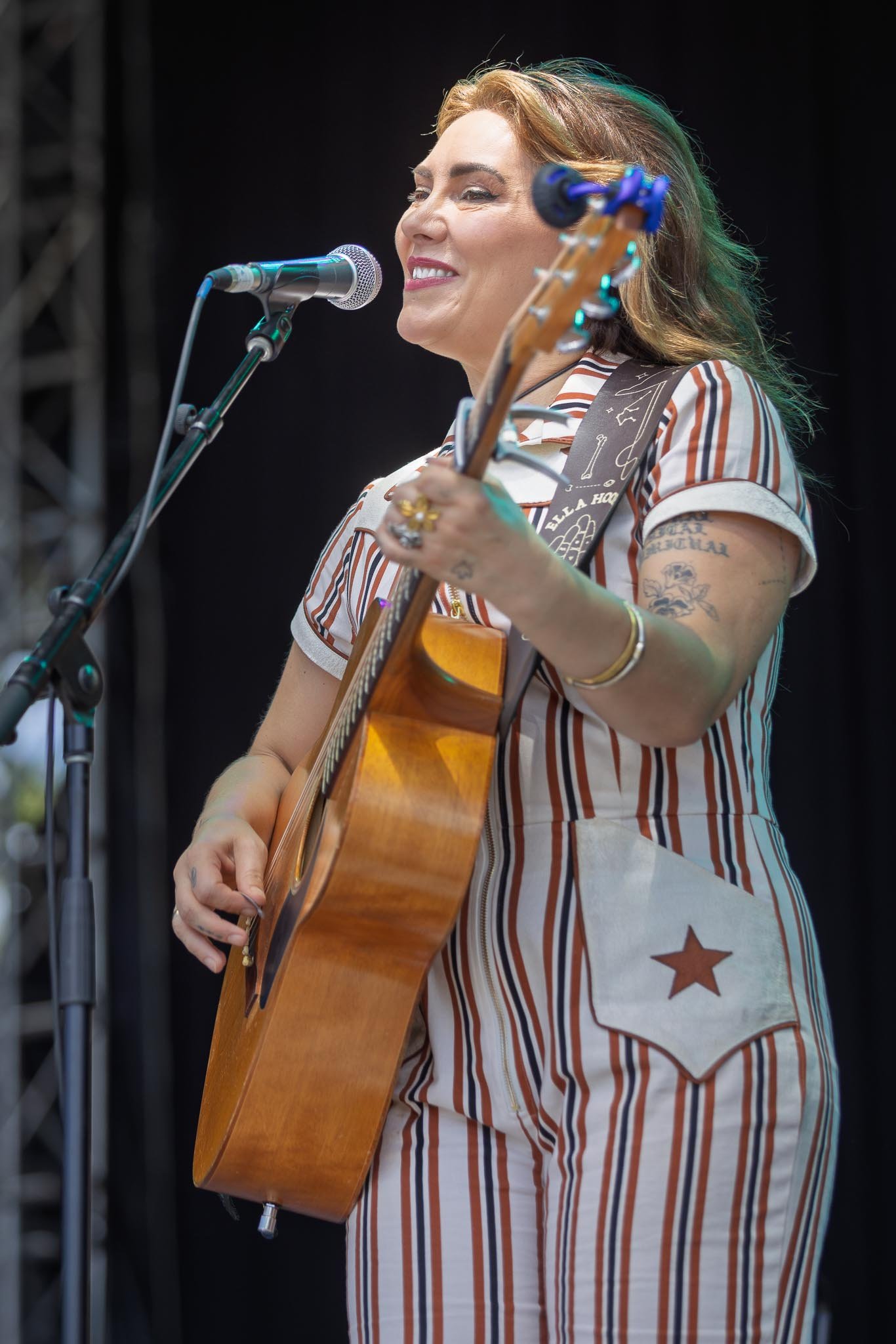
The unenviable task of opening proceedings fell to Ella Hooper, best known as the wonderfully charismatic frontwoman of Killing Heidi. Except there was nothing remotely unenviable about the way Ella approached it. Bounding onto the stage in a fabulous vertically striped red, white, and blue jumpsuit, armed with an acoustic guitar and a smile almost as bright as the midday sunshine, she immediately established a relaxed relationship with the gathering crowd. She spoke warmly about how privileged she felt to be opening for a line-up containing so many of her own musical idols, before promising a mixture of solo material and perhaps a few older favourites. During Cowboy Man, she spotted a gentleman at the barrier wearing a cowboy hat and cheekily acknowledged him. His response, "Yes ma'am. Fancy a drink sometime?" was met without missing a beat: "Meet me at the merch desk!" It's difficult not to like someone who can command a stage, play beautifully, and flirt with an entire audience before most of them have finished their first beer.
There was plenty of humour, but also an honesty to her songwriting that made this much more than a nostalgic warm-up. Having, as she put it, made a living out of teenage angst, she explained that the angst doesn't necessarily disappear with age. It just develops a mortgage and additional responsibilities. Growing Up Is Hard to Do explored that territory beautifully, while Bad Word received the rather splendid introduction that it was a song about arseholes. Then came a lovely, stripped-back rendition of Killing Heidi's Mascara, a song she admitted she hadn't performed alone for some time. Without the full-band treatment, its vulnerability became all the more apparent. Grow Wild was dedicated to her country upbringing, before Weir provided the inevitable burst of recognition and collective affection. Ella thanked everyone and blew the crowd a kiss. A charming opening performance, delivered with warmth, wit, and the confidence of someone entirely comfortable in her own skin.
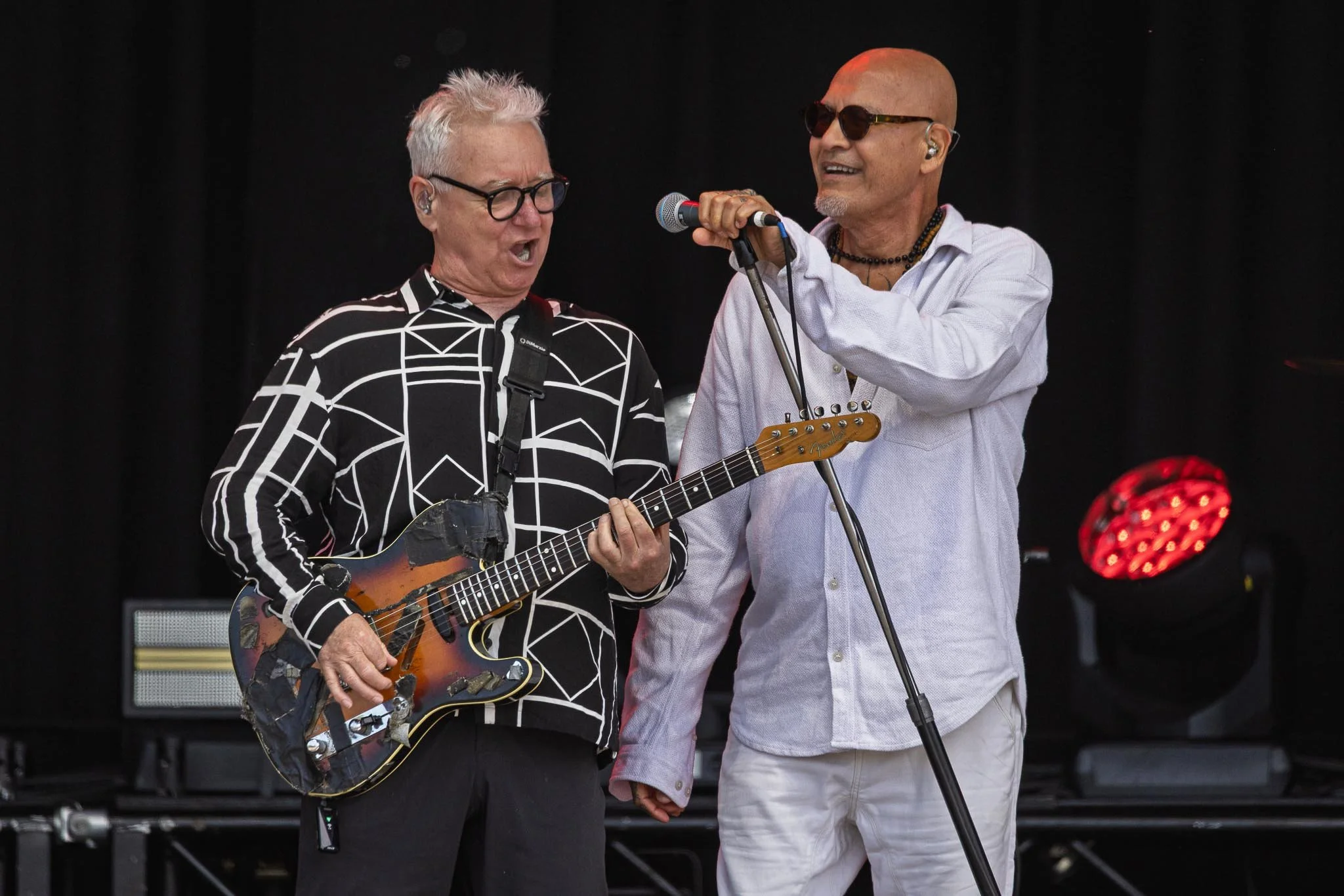
By the time Boom Crash Opera arrived, the crowd had grown considerably, along with the temperature. Dale Ryder emerged dressed almost entirely in white, looking impressively composed considering the heat radiating from the stage. Guitarist Peter Farnan, meanwhile, clearly hadn't received the memo about conserving energy. His guitar looked as though it was being held together by gaffer tape, good intentions, and perhaps a little divine intervention. Whatever was keeping it in one piece, it certainly wasn't affecting the sound coming out of it. Peter was absolutely tearing into the thing, his animated playing eventually prompting Dale to ask him to calm down a little because, at 71, he was roasting up there. It was an exchange that established the mood perfectly. These were old friends having a tremendous amount of fun, and we were all invited along for the ride. Great Wall immediately reminded everyone just how many memorable songs this band gave us, while Dancing in the Storm sounded particularly good. At that stage, nobody appreciated quite how prophetic the title might become.
What really struck me was the sheer size and clarity of their sound. Four musicians, no unnecessary clutter, just wonderfully balanced instruments occupying exactly the space they needed. Peter Maslen's kick drum and John Favaro's bass provided a physical punch you could feel in your chest, without swallowing the crisp vocals or Farnan's cutting guitar. Whoever was behind the mixing desk had absolutely nailed it. Hands Up in the Air received exactly the audience participation you'd expect, while Dale introduced Get Out of the House by joking that most of the crowd looked far too young to remember its release. Flattery will get you everywhere, Dale. During Bettadaze, Maslen delivered a superb drum break, followed by a bass solo because, apparently, it had been far too long since anyone had enjoyed one. Farnan then proceeded to remind everyone what an electric guitar sounds like when it's allowed to misbehave. His introduction of Dale, joking that guitarists exist to make frontmen look good but that he couldn't possibly improve on Ryder, drew a huge cheer. By the time The Best Thing and Onion Skin rolled around, a substantial proportion of Keirle Park was on its feet. We were barely two hours into the afternoon, and already it felt like we'd had our money's worth.
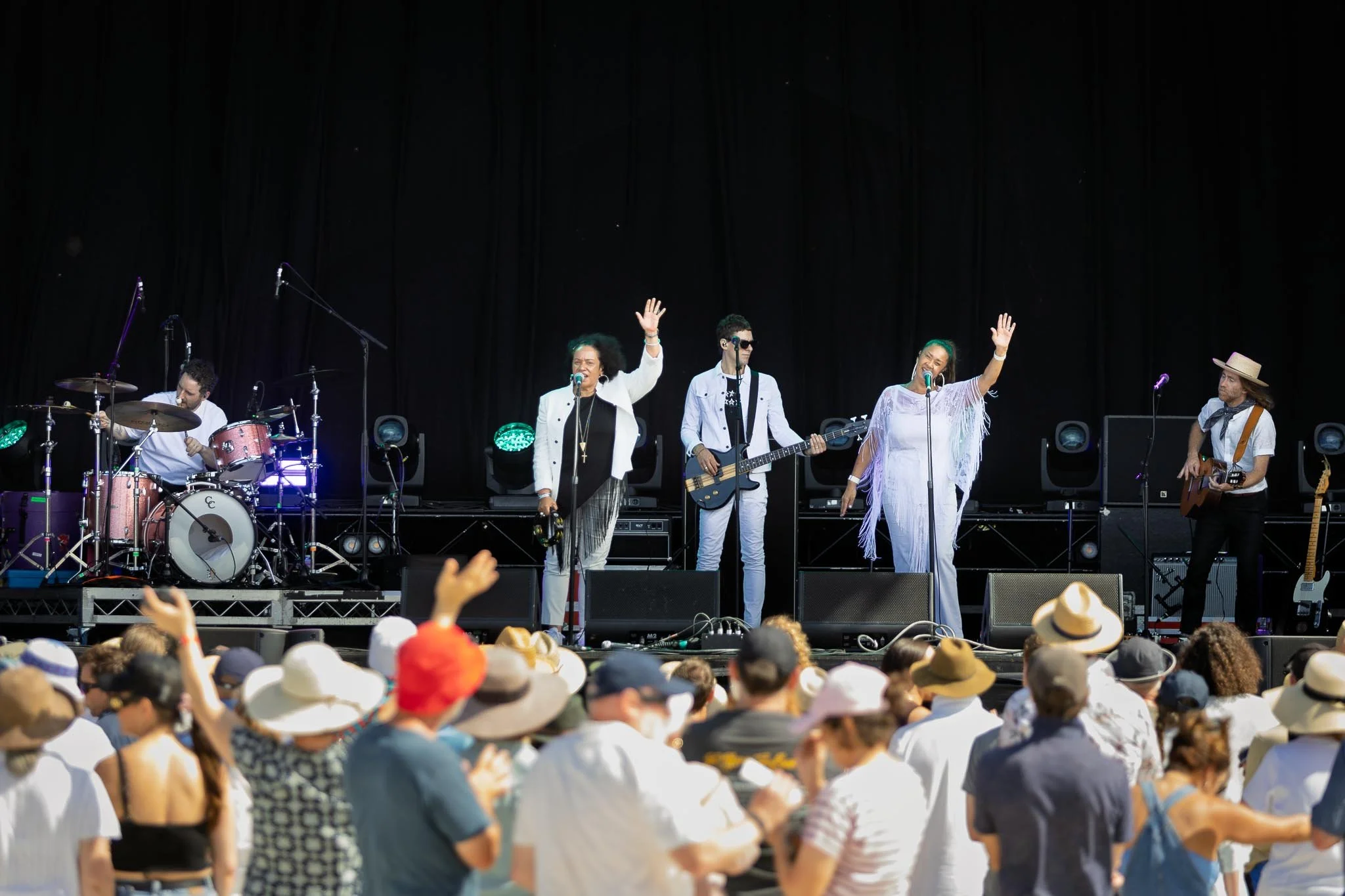
Vika and Linda Bull brought a different kind of energy to the stage. Introduced as the luscious ladies of the Red Hot Summer Tour, the sisters arrived with their band and immediately filled the park with those extraordinary voices. Individually, they're both magnificent singers. Together, there's something almost magical about the way their voices intertwine, sometimes in perfect harmony, sometimes in glorious contrast, but always with an instinctive understanding that can only come from decades of singing together. They cheerfully pointed out that they'd been doing exactly that for forty years, and remarkably, they still liked each other. Anyone who's spent forty minutes in a car with a sibling will appreciate the scale of that achievement.
What made their performance particularly special was the storytelling behind the music. Hard Love was introduced as a song about standing by someone through thick and thin, a sentiment that seemed especially appropriate coming from two sisters who have shared so much of their lives. They recalled performing with The Black Sorrows thirty-five years earlier, when a little girl standing beside her father at the front of a pub knew every word they sang. That little girl was Kasey Chambers, who would eventually write Raise Your Hand for them. It's a lovely illustration of how music travels through generations, occasionally finding its way back to where it began. There was another beautiful moment when they recalled Mark Seymour bringing them When Will You Fall for Me more than three decades ago. Songs with histories, sung by voices that have lived those histories. Their rendition of Feeling Good was particularly lovely, restrained where it needed to be, powerful when it mattered. No theatrics necessary. Just two remarkable Australian singers reminding everyone that soul isn't something you manufacture. You either have it or you don't.
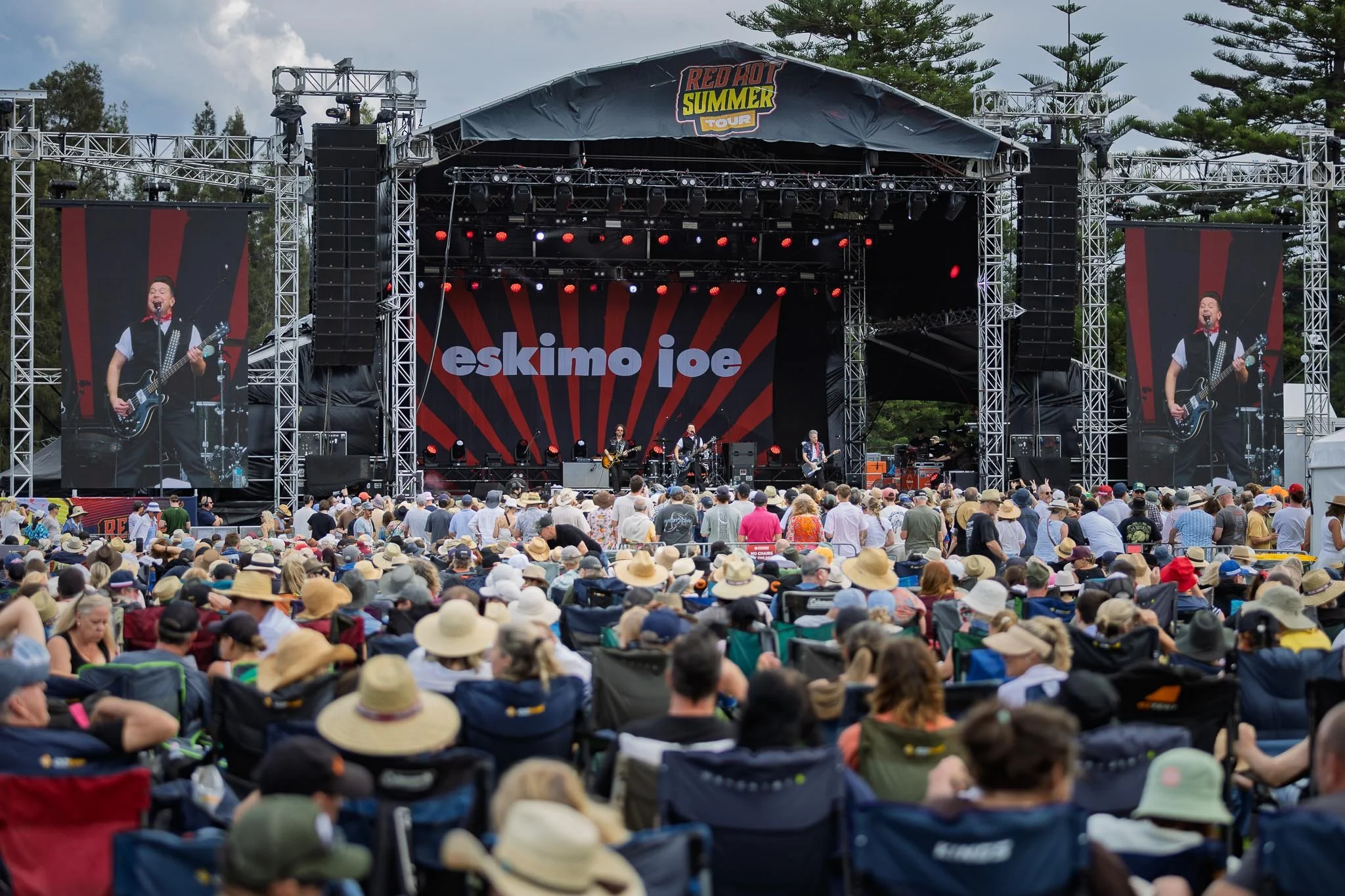
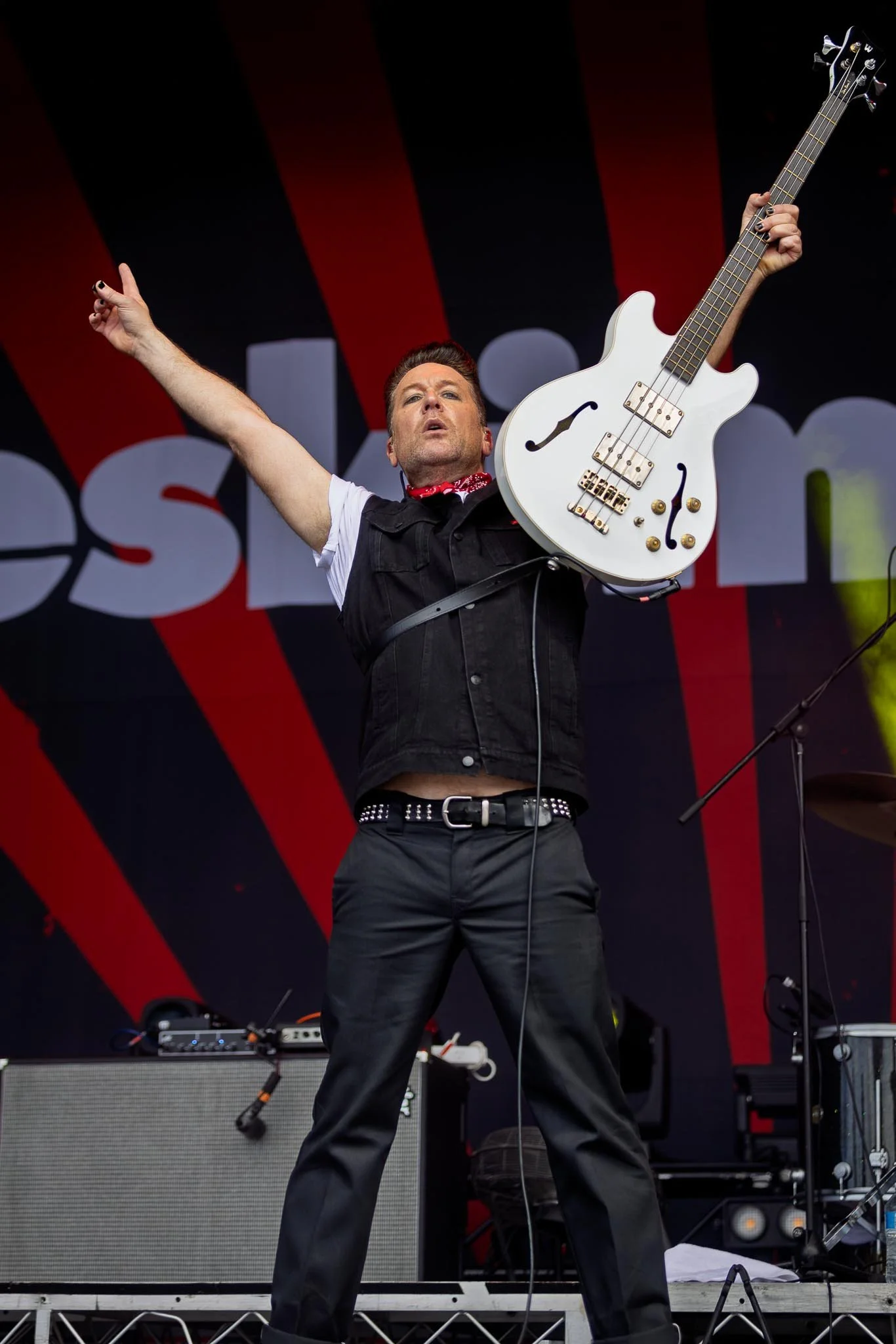
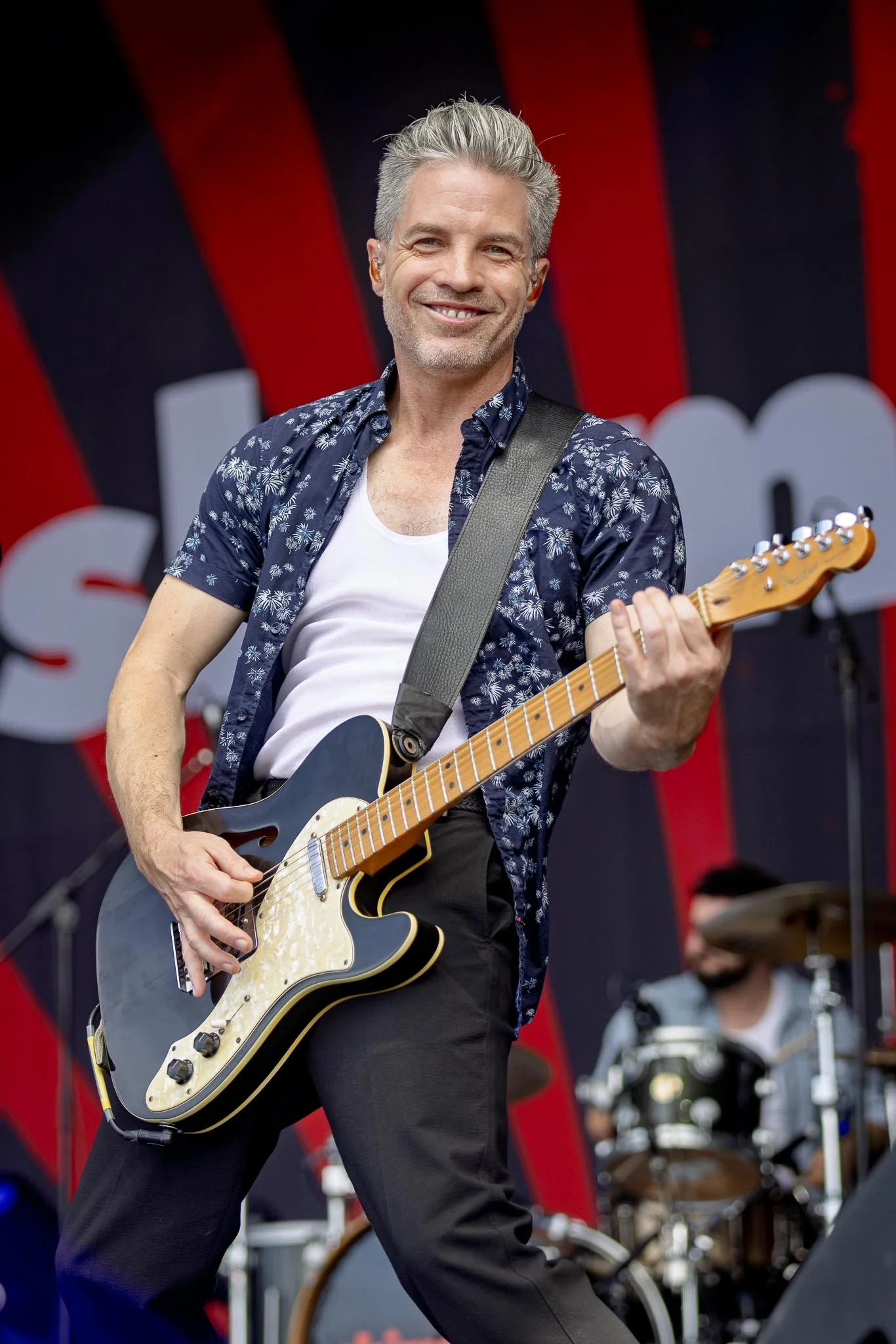
As Eskimo Joe prepared to take the stage, something began to change. The afternoon remained warm, but a strengthening breeze was moving across the park, and the blue sky was slowly surrendering to a blanket of pale grey. Backstage, members of the crew could be seen securing tarpaulins over equipment, an early indication that someone was paying rather closer attention to the weather than the rest of us. Up front, the band had other priorities. Kav Temperley explained that they had two jobs: make sure everyone had a great time, and play some rock and roll. And they certainly delivered on both. From the opening moments of Sarah and New York, the band sounded ferociously tight, with Paul Keenan driving everything forward from behind the drums and the guitars of Stuart MacLeod and Joel Quartermain creating that unmistakable Eskimo Joe sound.
Their set had a terrific sense of momentum. Older Than You and Foreign Land kept the energy building, while Kav's introduction to The First Time was beautifully ridiculous, announcing that the song was dedicated to camping chairs everywhere, written about camping chairs, and indeed called Camp Chairs. Naturally, it wasn't. There was also a moment of collective disbelief when he reminded everyone that Black Fingernails, Red Wine was now twenty years old. Twenty years! He reassured us that he understood the shock because he'd been there too. By now the wind was becoming a little more insistent, although the audience seemed largely unconcerned. Eskimo Joe certainly weren't. They were having an absolute ball, and when Kav announced that there was actually a third job, ensuring the audience made progressively more noise for every band that followed, it was met with enthusiastic approval. Black Fingernails, Red Wine sounded huge, but it was From the Sea that delivered the real knockout. Hands in the air, guitars roaring, the entire band throwing themselves into the final number. An exhilarating performance, and an increasingly ominous sky.
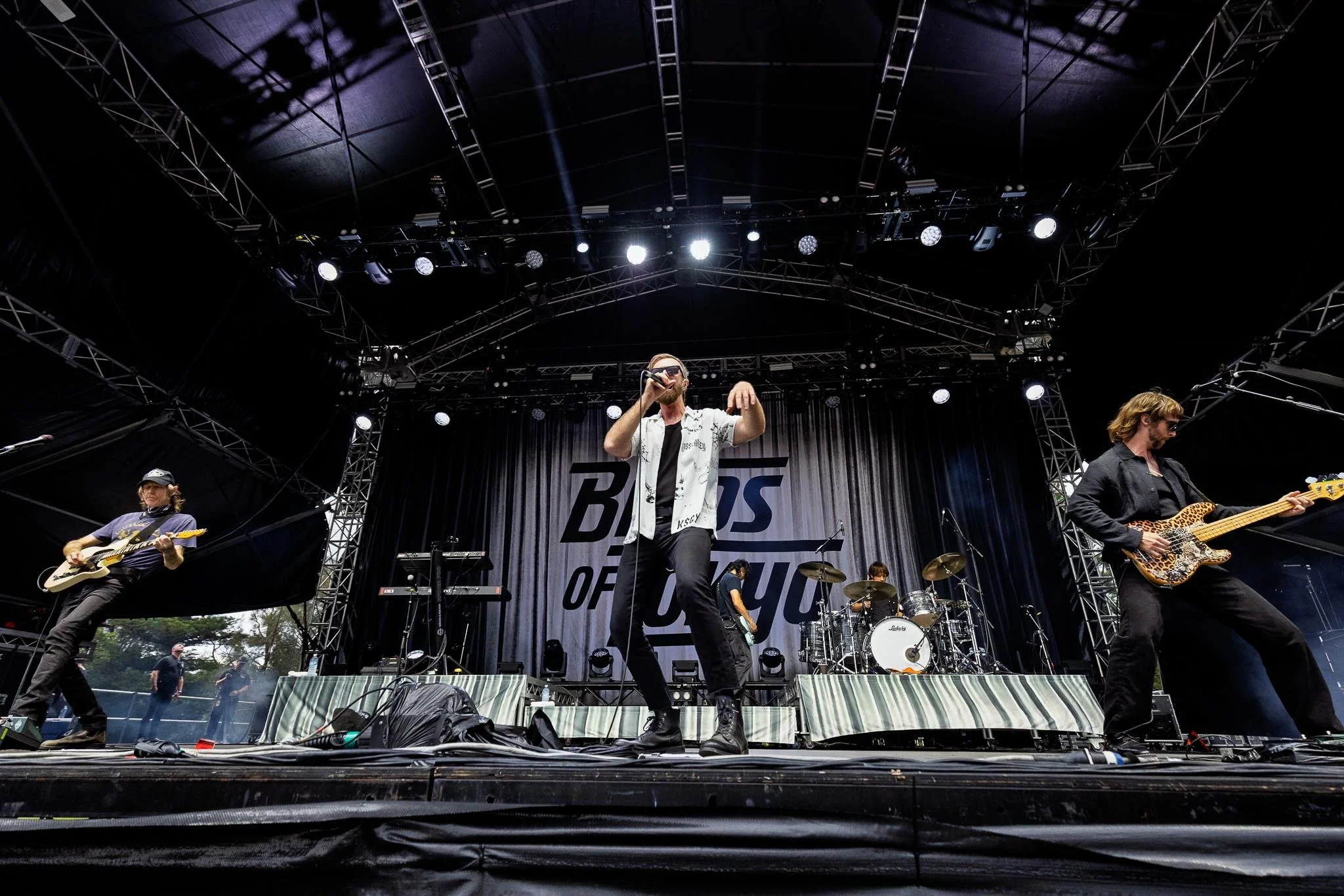
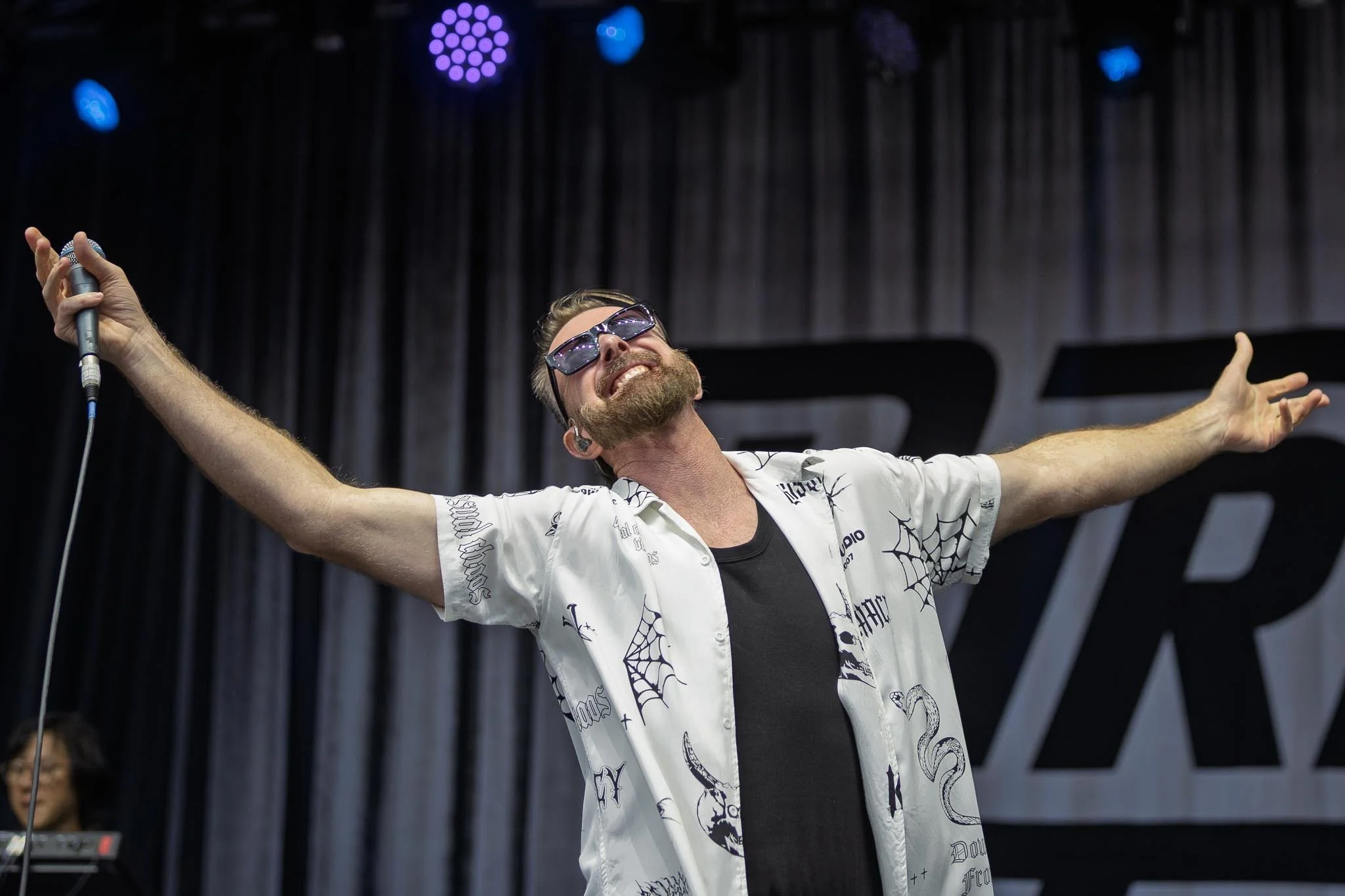
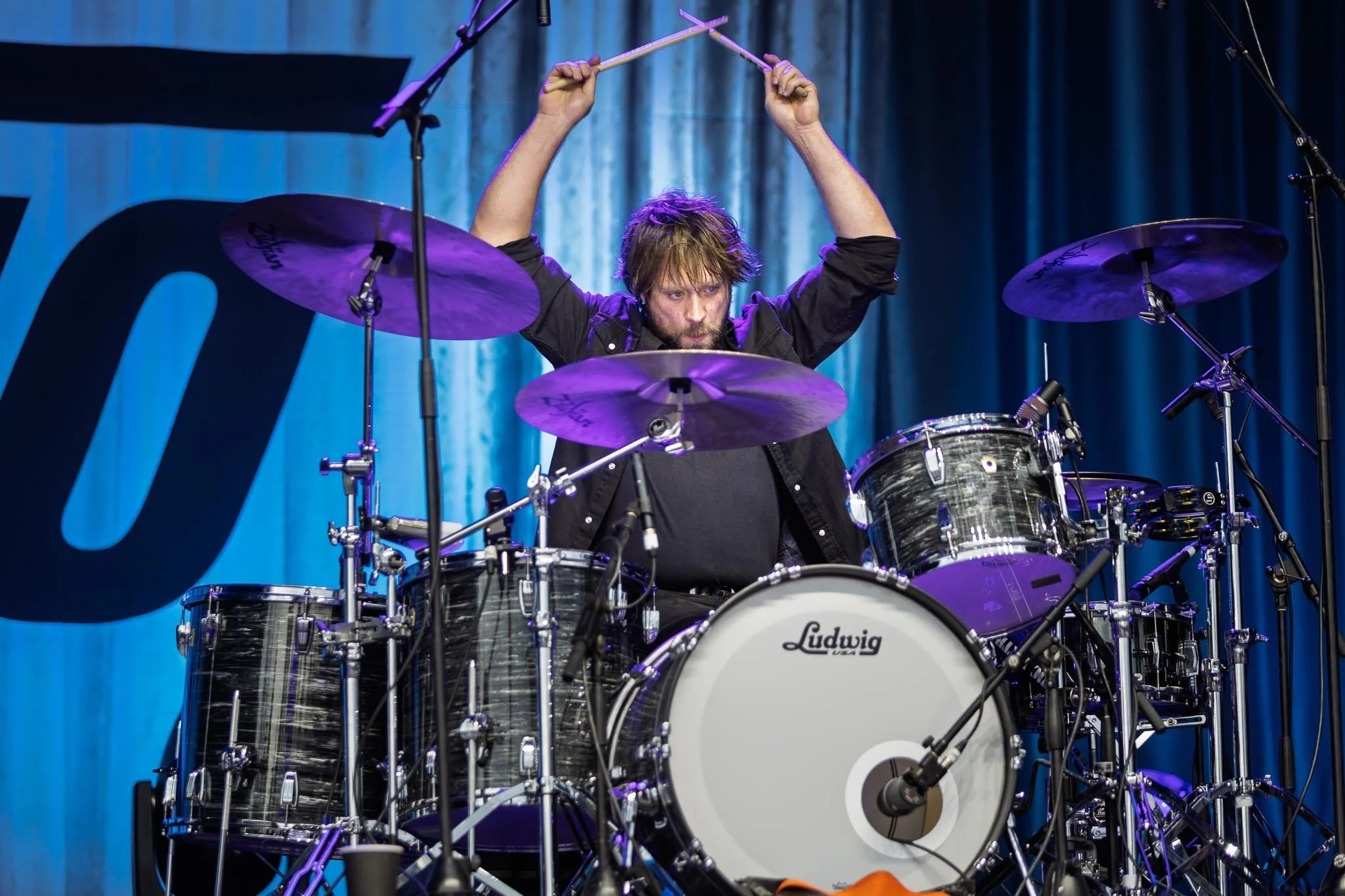
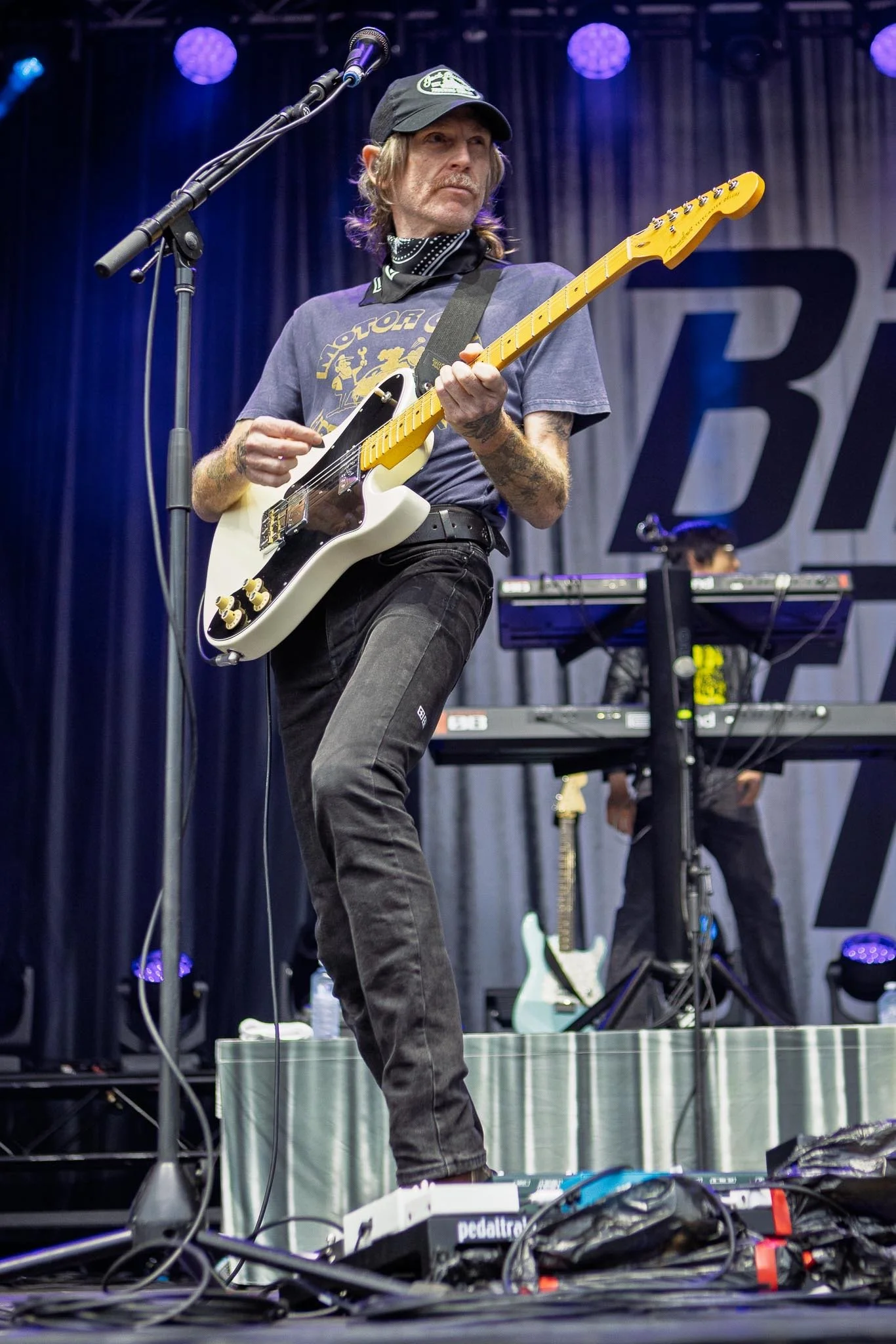
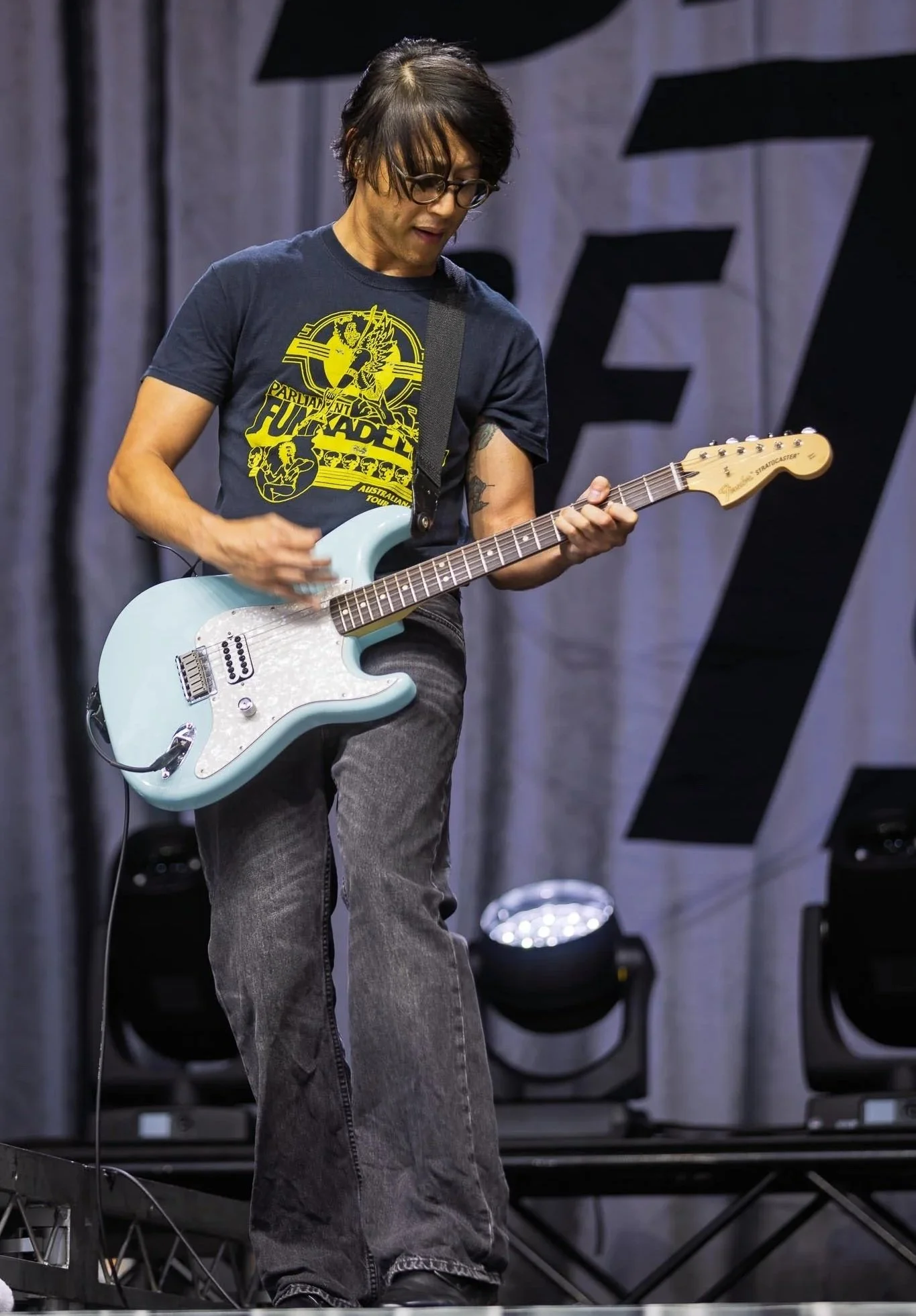
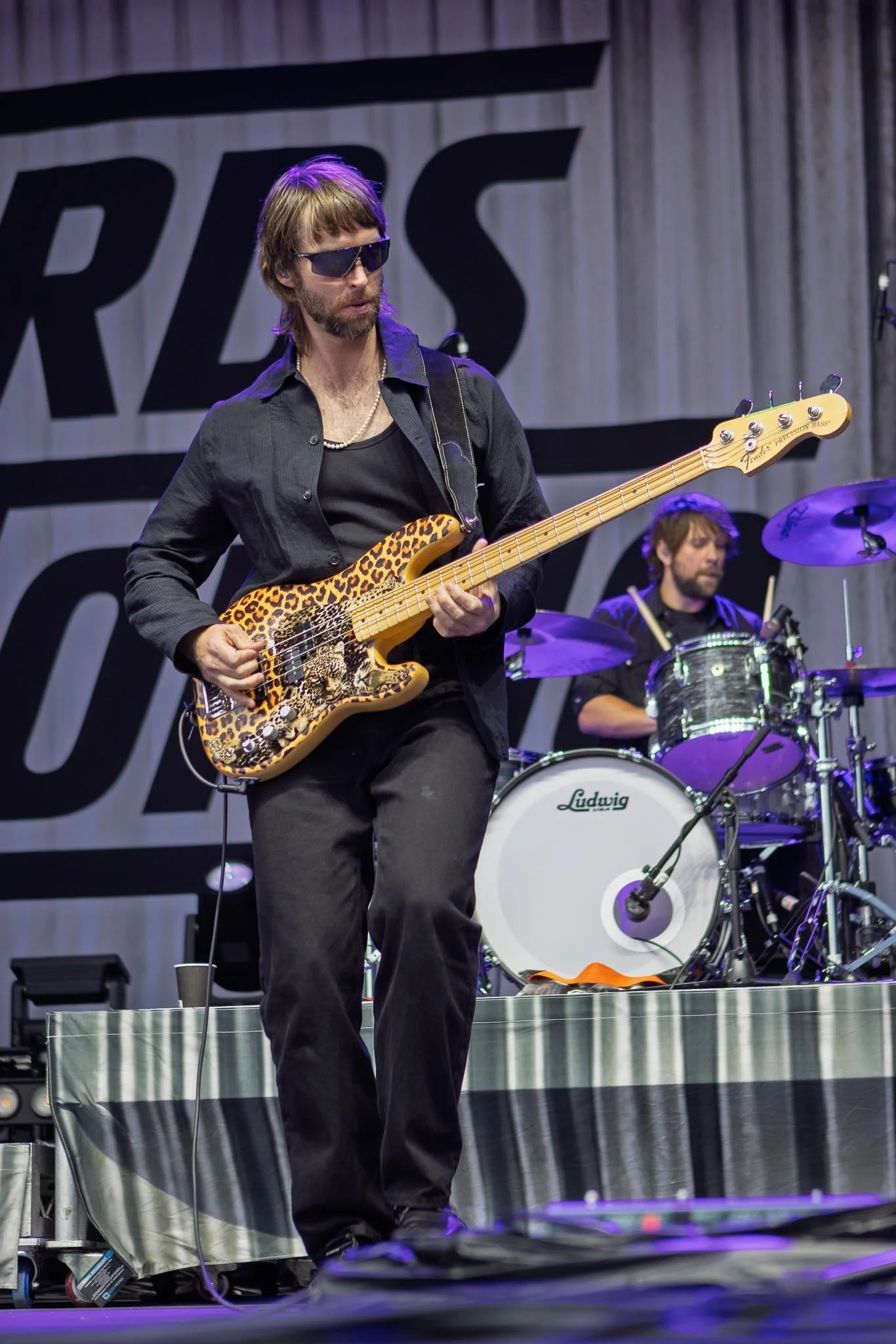
By the time Birds of Tokyo arrived, the atmosphere had taken on an entirely different character. The warmth remained, but the wind was now sweeping across Keirle Park, the clouds had darkened considerably, and there was an unmistakable electricity in the air, both figuratively and, as we'd soon discover, rather literally. Some of the people pressed against the front barrier were actually hoping for a storm. "Imagine Lanterns in the pouring rain," someone suggested, clearly picturing a spectacularly atmospheric performance. It was a lovely idea in theory. Unfortunately, Mother Nature appeared to be listening, and decided that subtlety was overrated.
Birds of Tokyo opened with I'd Go with You Anywhere, and immediately demonstrated why they are such an exceptional live band. Ian Kenny is an engaging frontman, effortlessly commanding the stage without appearing to try particularly hard. Behind him, Michael Hardy's drumming was precise and powerful, Ian Berney's bass provided a thunderous foundation, and Adam Spark's guitar work seemed to fill every available corner of the park. The band were in magnificent form. Smith Street was introduced as a song about heading out and having an awesome night, which felt particularly appropriate given the thousands of people doing precisely that. Silhouettic, Unbreakable, and The Greatest Mistakes continued the momentum, their expansive sound seeming perfectly suited to the increasingly dramatic sky overhead.
Then the first raindrops began to fall. Nothing especially concerning initially, just a few scattered drops carried on the strengthening wind. Here and there, brightly coloured ponchos began emerging from bags, while others optimistically looked skyward, perhaps hoping that ignoring the weather might somehow discourage it. The band had been working on new material before the tour and introduced a new song, giving us a tantalising glimpse of what might be coming next. They sounded terrific, and there was every reason to believe we were heading towards one of the performances of the day.
And then the sky exploded.
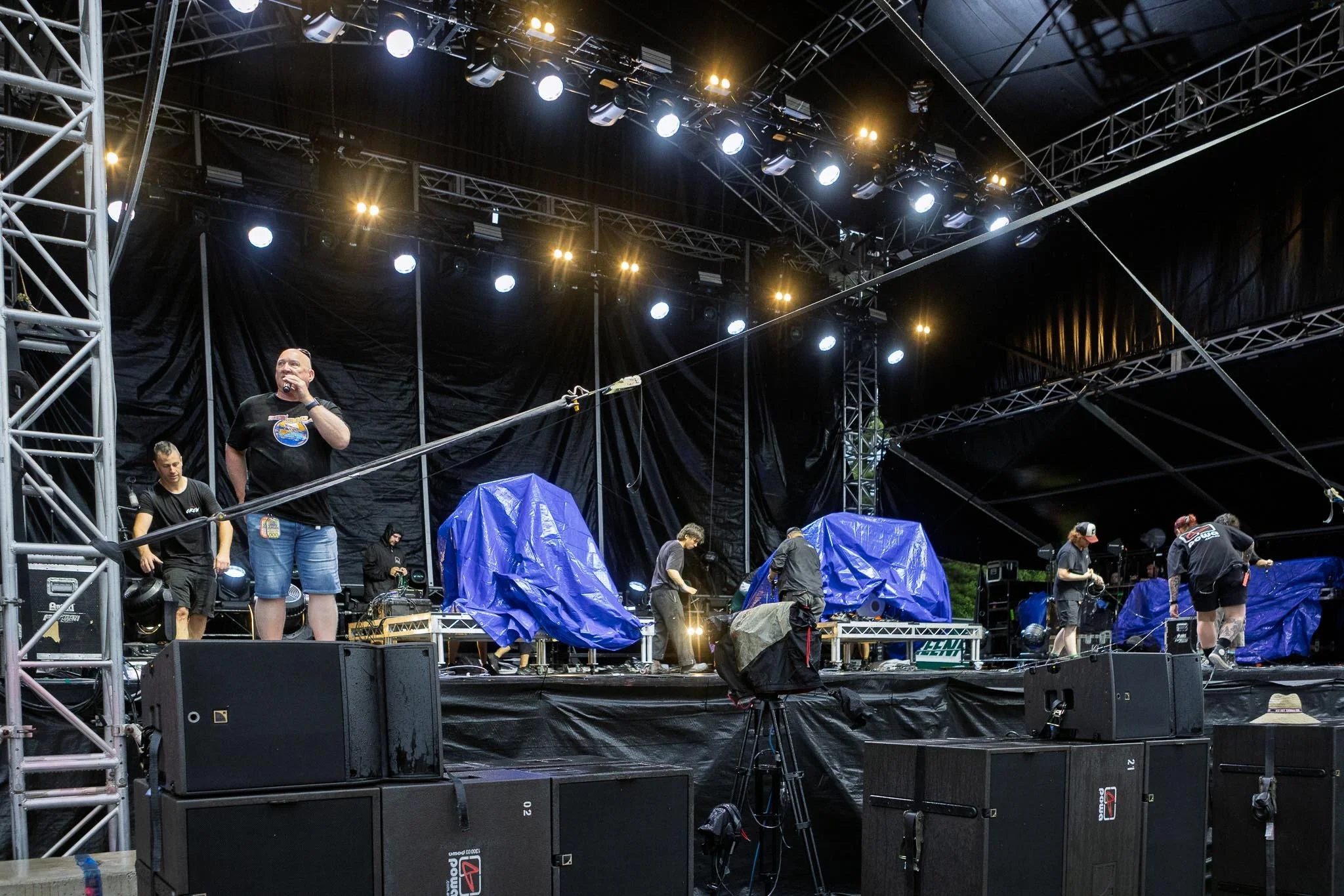
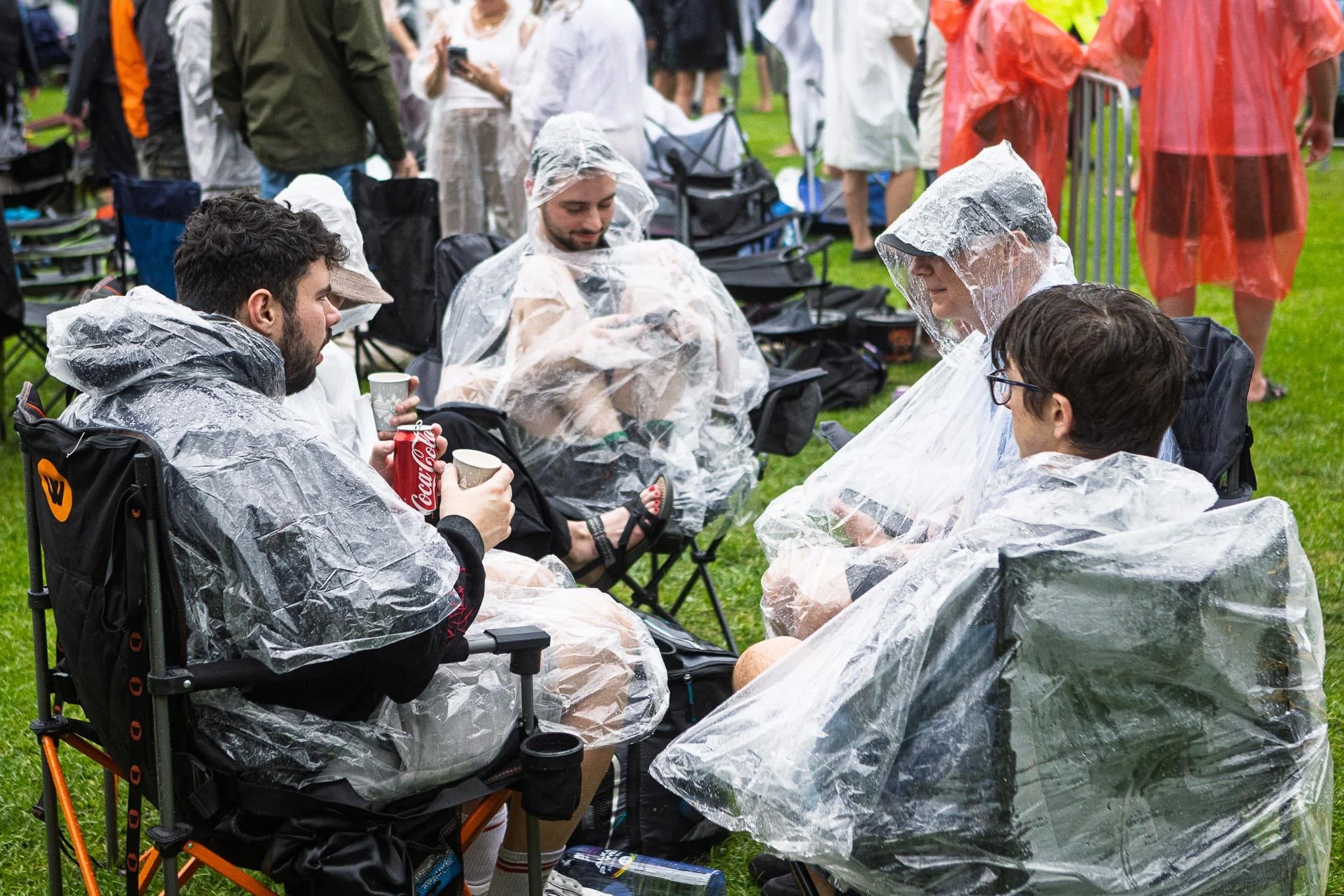
A tremendous clap of thunder, a brilliant flash of lightning, and suddenly the heavens opened with almost theatrical violence. Not a shower. Not even particularly heavy rain. This was the sort of downpour that makes you wonder whether someone upstairs has accidentally opened a swimming pool. The wind drove sheets of water across the stage and through the crowd, turning carefully prepared hairstyles into distant memories and testing the structural integrity of every disposable poncho in Manly. Crew members sprang into action, throwing tarpaulins across instruments, reinforcing equipment, and removing panels from security fencing before they became enormous airborne sails. But the storm had arrived with extraordinary speed, and despite everyone's efforts, much of Birds of Tokyo's equipment was thoroughly drenched. The band's set was brought to a premature end, and although the rain eventually eased, there was simply no safe way for them to continue. A tremendous shame, particularly because they were absolutely flying when it happened.
The giant screens displayed a lightning warning and instructed everyone to seek shelter in vehicles or permanent buildings, specifically advising against standing under trees or temporary structures. Having been leaning rather casually against a floodlight column, I decided this might be an excellent opportunity to reconsider my immediate surroundings.
Around me, the crowd responded with a mixture of resilience, humour, and improvised waterproof engineering. One gentleman had commandeered an ice bucket and was proudly wearing it on his head. I did briefly wonder whether putting what looked suspiciously like a metal bucket on your head during an electrical storm was entirely consistent with the safety advice. Probably not the first item you'd find on the SES recommended list of protective equipment. Then again, he appeared perfectly happy with his decision, and compared with some of the alternatives, it was undeniably effective at keeping the rain off his hair.
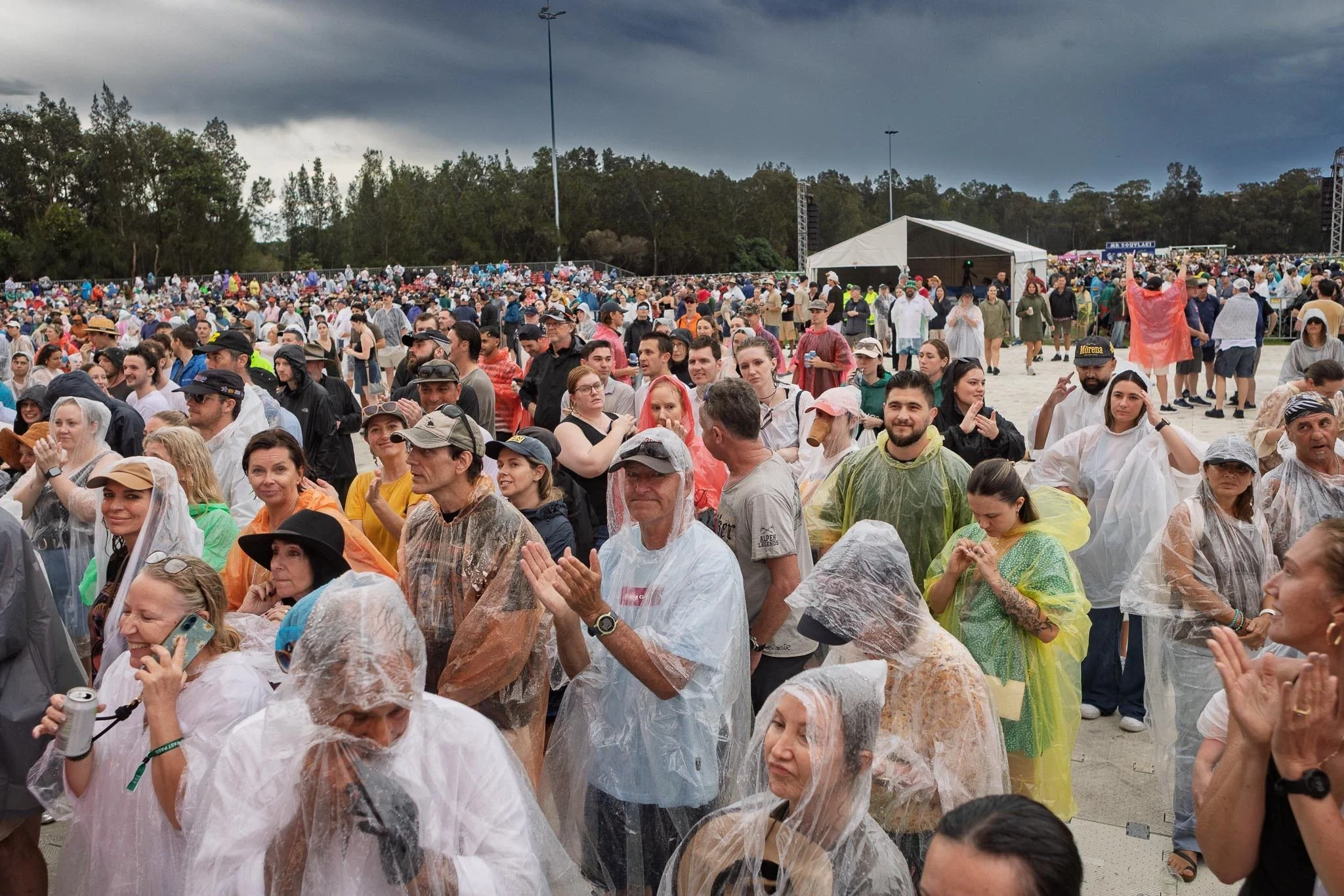
There was an astonishing variety of wet-weather attire on display. At one end of the spectrum, a couple in magnificent matching heavy yellow waterproof jackets and trousers looked as though they'd just stepped off a deep-sea fishing trawler, possibly after rounding Cape Horn. They were prepared for anything the Pacific Ocean could throw at them, let alone a passing storm in Manly. At the other end were the Bunnings ponchos, hastily acquired plastic coverings, and bin bags with armholes that suggested their owners had either extraordinary resourcefulness or very little concern for personal appearance. Somewhere between the two stood the ice-bucket gentleman, apparently convinced that he'd discovered a third way. Yet remarkably few people seemed interested in leaving.
And then, in what might have been the greatest example of musical comic timing all afternoon, Hamish, operating the front-of-house playlist, began his own little performance. First came Dragon's Rain, with its advice not to go out in the pouring rain arriving just a little too late, followed by AC/DC's Thunderstruck. Then I Can't Stand the Rain, November Rain, and a succession of weather-related selections that turned the delay into an increasingly entertaining guessing game. Surely Purple Rain had to be coming? Apparently not. Instead, Raindrops Keep Fallin' on My Head. Brilliant. People were laughing, singing, and comparing their increasingly ridiculous wet-weather arrangements. One bloke summed up the prevailing attitude rather neatly: "I've been here all day. I'm not bloody leaving now." And he wasn't alone. The mood remained surprisingly upbeat, with people more concerned about whether the concert would continue than the fact that most of their clothing was now considerably heavier than when they'd put it on.
Fortunately, the storm began moving away almost as quickly as it had arrived. The stage crews worked tirelessly to make everything safe, and the announcement that Men at Work were expected to take the stage at 6:45, conditions permitting, was greeted with an enormous cheer. There was something wonderfully surreal about watching people emerge from their improvised shelters and begin drifting back towards the stage. The couple in their yellow fishing gear looked as though they might have been slightly disappointed that the conditions hadn't been more challenging. The rest of us were simply grateful that the lightning had stopped.
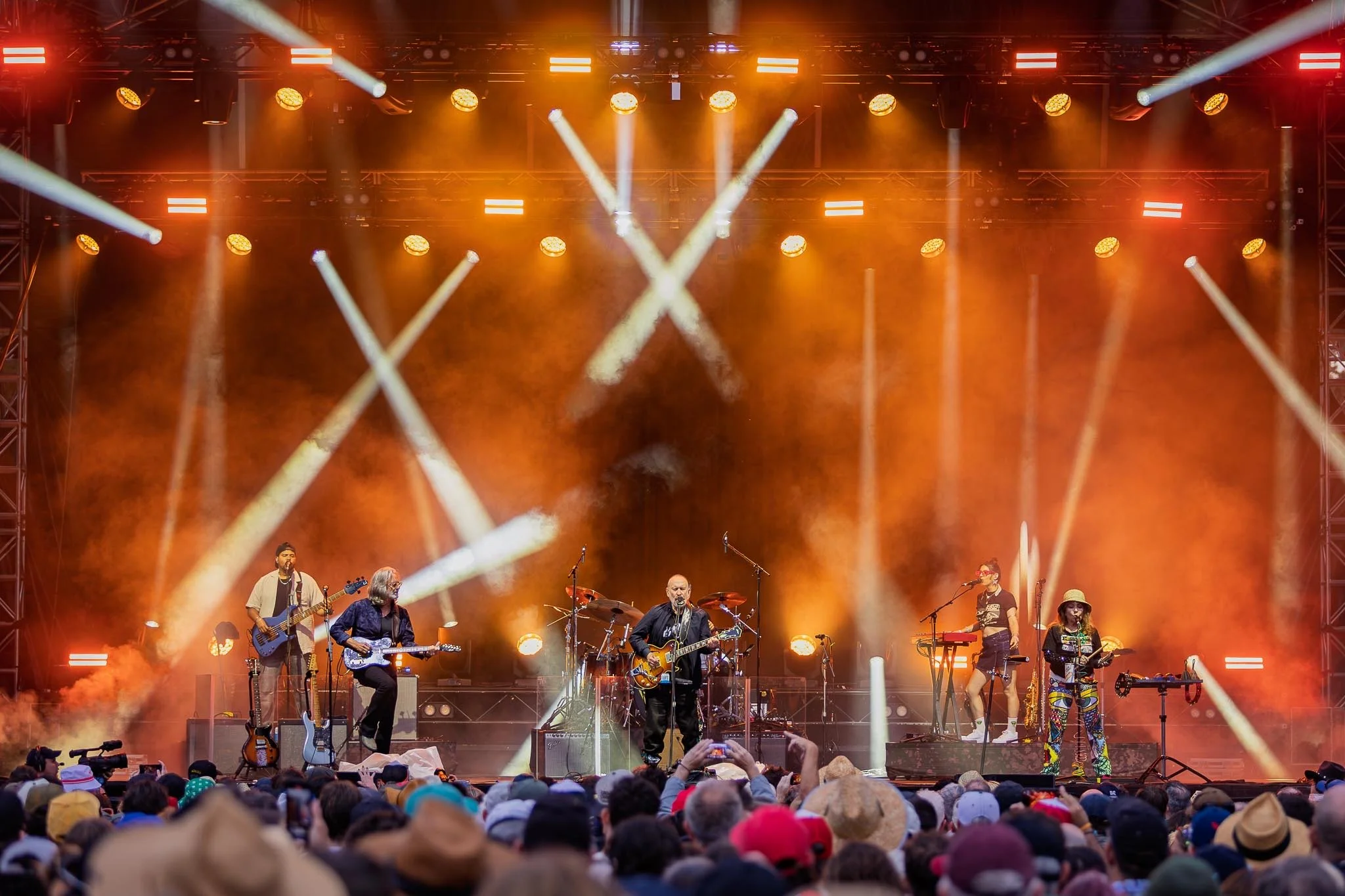
Men at Work emerged to a reception that suggested everyone had suddenly remembered exactly why they'd endured the downpour. With Colin Hay out front, guitar in hand, and an outstanding collection of musicians behind him, the band launched straight into business. Jimmy Branly's drumming was crisp and dynamic, Yosmel Montejo's bass locked beautifully into the rhythm, Allen Hinds provided wonderfully fluid guitar work, while Rachel Mazer switched between keyboards, saxophone, and flute with effortless versatility. Cecilia Noël brought infectious energy on percussion and backing vocals, frequently wielding a pair of tambourines with considerable enthusiasm. Best of all, the sound system had survived the storm completely intact. The bass still had weight, the drums still cracked, and every instrument could be heard clearly.
Colin greeted Manly in that distinctive Scottish accent, promising that Men at Work would give us everything they had before moving into Down by the Sea. His voice remains instantly recognisable, with that slightly wry, conversational quality that makes even the most familiar songs sound like stories being told directly to you. Can't Take This Town had a deliciously funky edge, accompanied by some exceptional guitar playing. There was also plenty of musical exploration, extended passages that gave the band room to stretch, accompanied by the sort of keyboard, guitar, and drum work that occasionally suggested a progressive rock band had wandered onto the wrong stage. At one point Colin reflected on the band's earliest songwriting days, back in 1979, joking that one of their early compositions had originally run for four hours and forty-nine minutes. Given the quality of the musicians on stage, I suspect a few people might happily have stayed for all of it.
What I particularly enjoyed was how much personality every musician brought to the performance. A familiar rhythmic figure from Down Under appeared unexpectedly within another song, tucked into the toms as a little musical wink for anyone paying attention. Dr. Heckyll & Mr. Jive featured a tremendous guitar solo that flowed almost seamlessly into a saxophone solo, while the band introductions were affectionate, funny, and genuinely appreciative. Cecilia introduced Colin as her hero, the man of her dreams, and, rather more revealingly, the man she'd be sleeping with that night. It's the sort of introduction that might have been slightly awkward had she been talking about anybody else, but it was delivered with such affection and humour that the audience loved it.
And through it all, Colin remained a master storyteller, delivering his dry humour with impeccable timing. Before Who Can It Be Now?, he recalled being in a supermarket only the other day when one of his own songs came over the speakers. He found himself involuntarily pointing upwards and saying, with a smug smile, "I wrote that." The checkout operator's response? A raised eyebrow and a polite enquiry about whether he'd like a bag. It's a wonderfully self-deprecating story, and the perfect introduction to one of the most recognisable songs in Australian popular music. The moment that unmistakable melody arrived, the crowd erupted. Thousands of people singing along, grinning at strangers, and suddenly behaving as though the previous hour's weather-related trauma had been nothing more than a minor inconvenience.
But if that was a highlight, Down Under was something else entirely.
There are songs that are popular, songs that are iconic, and then there are songs that somehow become part of a country's collective identity. Down Under belongs firmly in that final category. From the opening notes, Keirle Park went absolutely berserk. People were bouncing, shouting, dancing, and enthusiastically performing their own interpretations of the famous flute riff, often with accompanying gestures that suggested varying degrees of musical competence. The call-and-response sections were joyous, Colin conducting several thousand willing participants who needed absolutely no encouragement whatsoever. For a few glorious minutes, it felt as though every person in the park was part of the band. It was easily the biggest collective release of energy we'd experienced all day, and a reminder of just how deeply these songs are woven into our lives. Men at Work eventually brought their set to a close with a gloriously rambunctious Be Good Johnny, leaving the audience euphoric, a little hoarse, and thoroughly ready for the main event. A few more drops of rain drifted through the air as they departed, but surely the weather gods had exhausted their repertoire by now.
And then came the moment we'd all been waiting for.
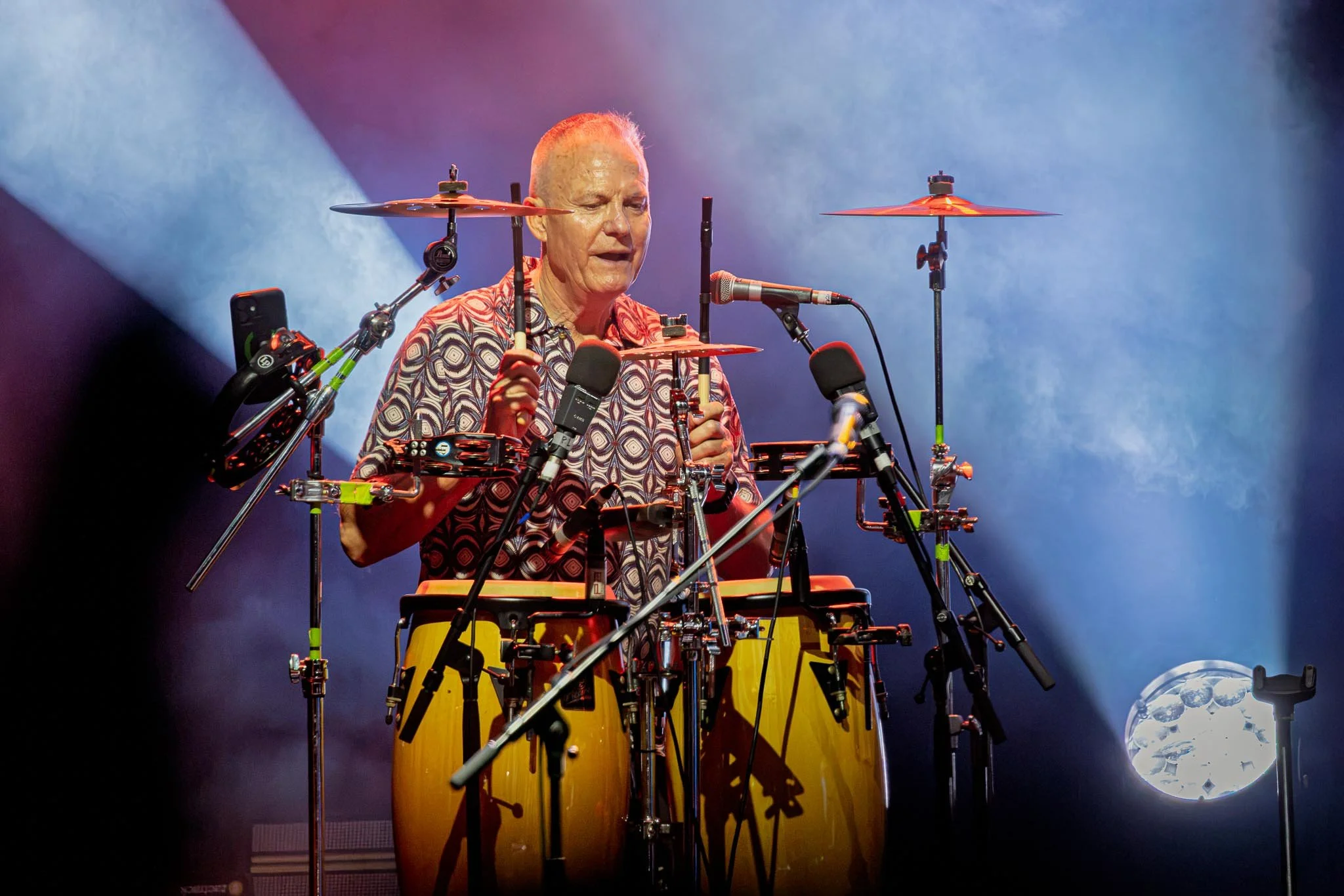
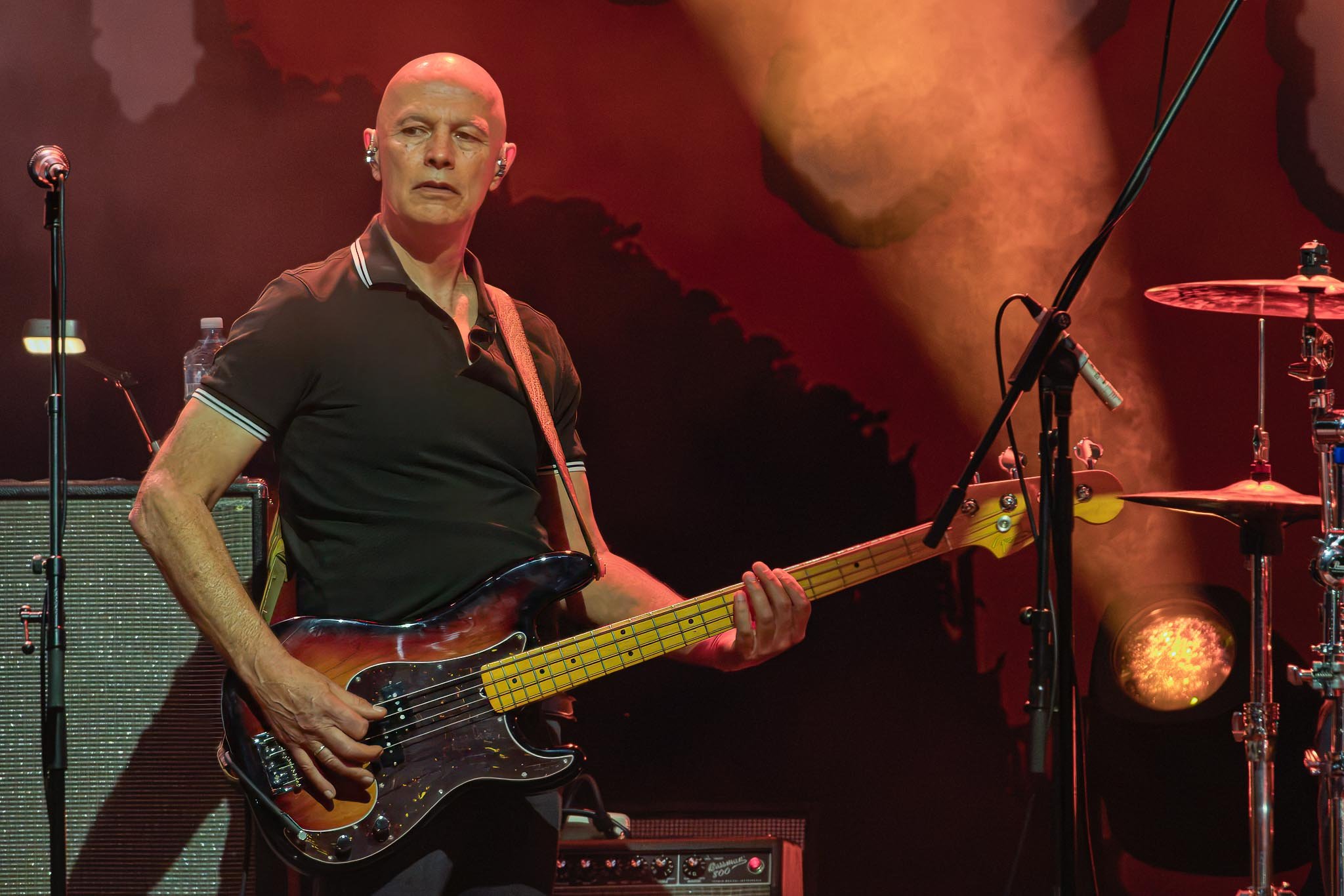
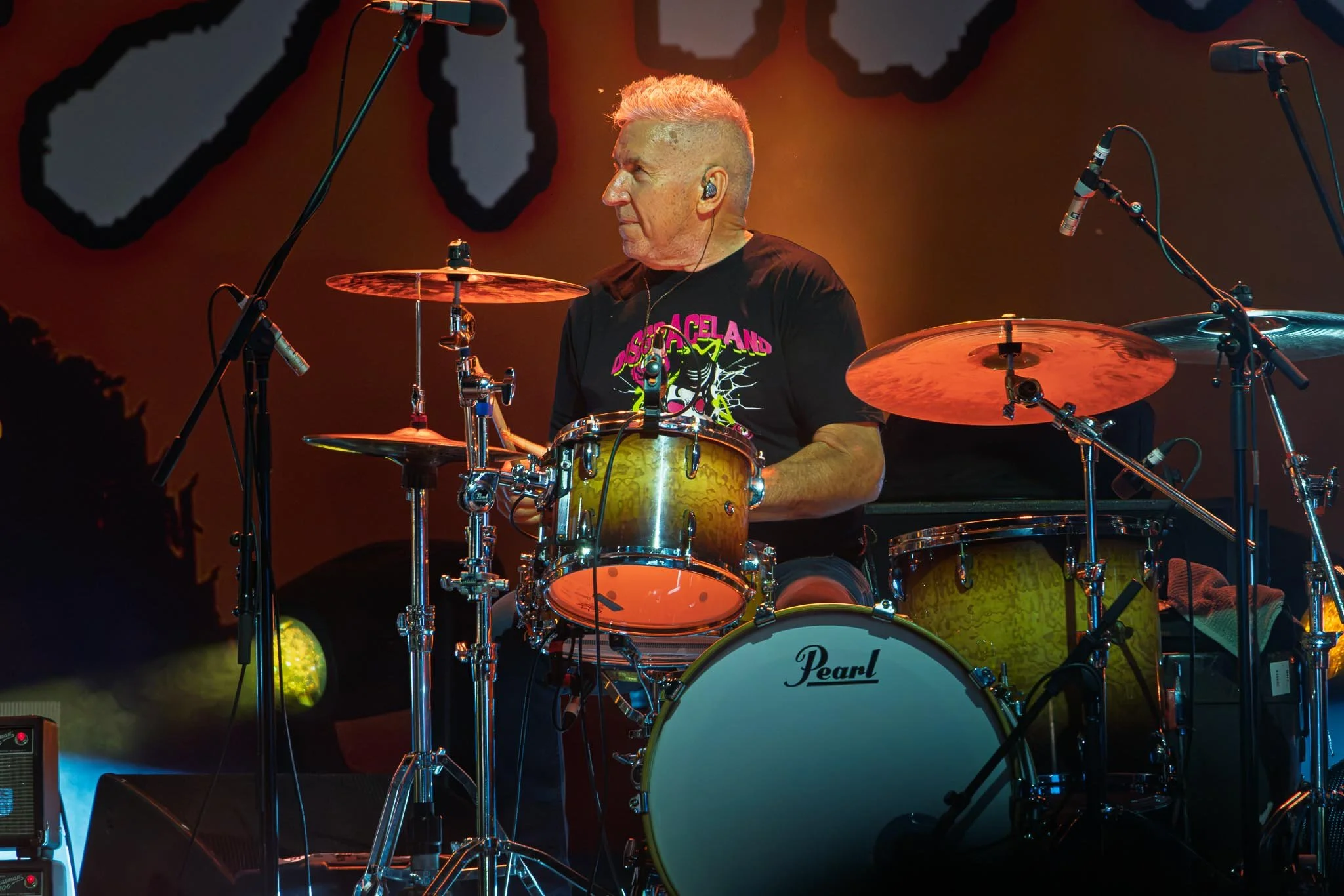
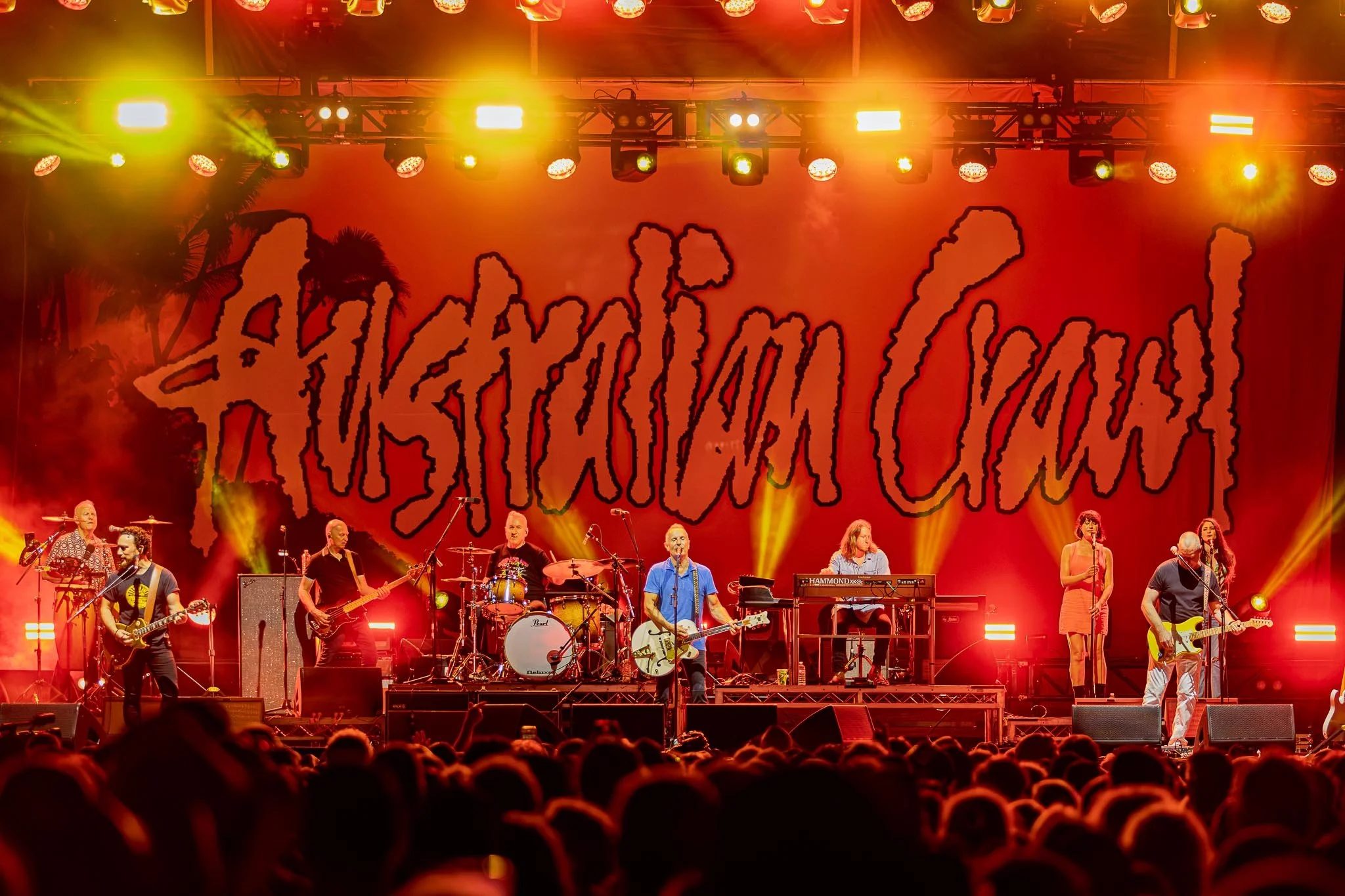
For the first time in forty years, Australian Crawl were returning to the stage. Not merely a collection of musicians performing a tribute to a much-loved band, but a genuine reunion featuring James Reyne (Lead Vocal & Guitar), Simon Binks (Lead Guitar), David Reyne (Percussion & Vocals), and John Watson (Drums), alongside a formidable line-up of outstanding players.
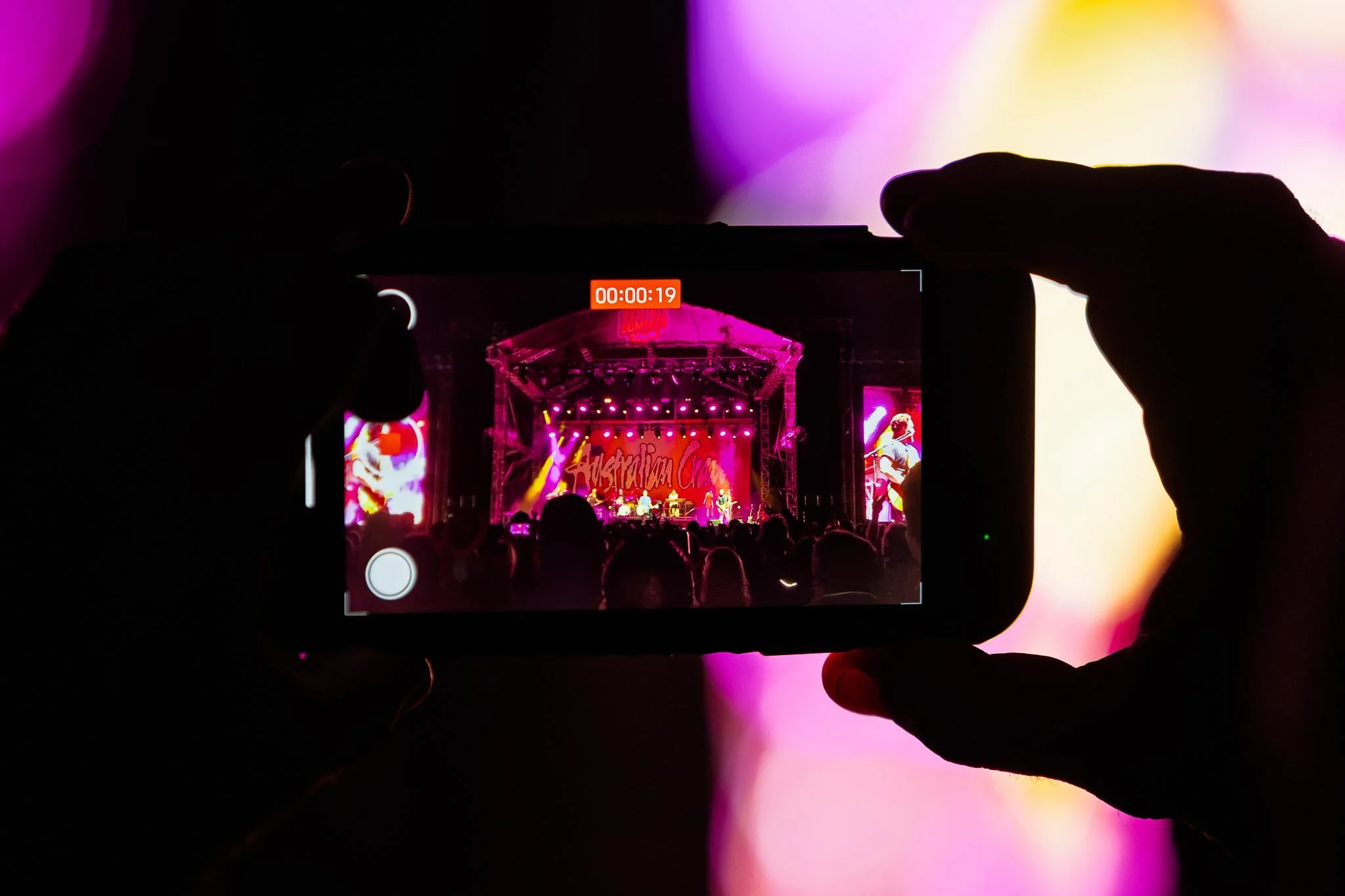
As the last of the daylight disappeared, the stage took on a different character. Rich blue light spilled across the instruments, catching the chrome hardware of the drum kit and reflecting from the guitars waiting patiently on their stands. The Australian Crawl backdrop was clearly visible behind the microphones. Technicians moved carefully around the stage, checking connections, adjusting microphone positions, tuning instruments, and making those final little changes that most of an audience barely notice, but which can make all the difference once the music starts.
After the afternoon's drama, there was something wonderfully reassuring about watching everything come together so carefully. The crowd, meanwhile, had flooded back towards the stage. The bars had temporarily lost their appeal, a beach ball was bouncing above a sea of heads, and the people who'd been occupying the front barrier since lunchtime remained resolutely in position. Their dedication deserved recognition, along with some sort of medal for extraordinary bladder control.
There was a palpable tension in the air now. The good kind. That wonderful, almost physical anticipation that builds when thousands of people know they're about to witness something they'll remember for years. And perhaps there was an equal measure of nervous excitement backstage. After four decades, how would this feel? How would it sound? Could the band capture that unmistakable spirit again?
Just before they appeared, a simple message filled the screen.
"For Brad and Guy."
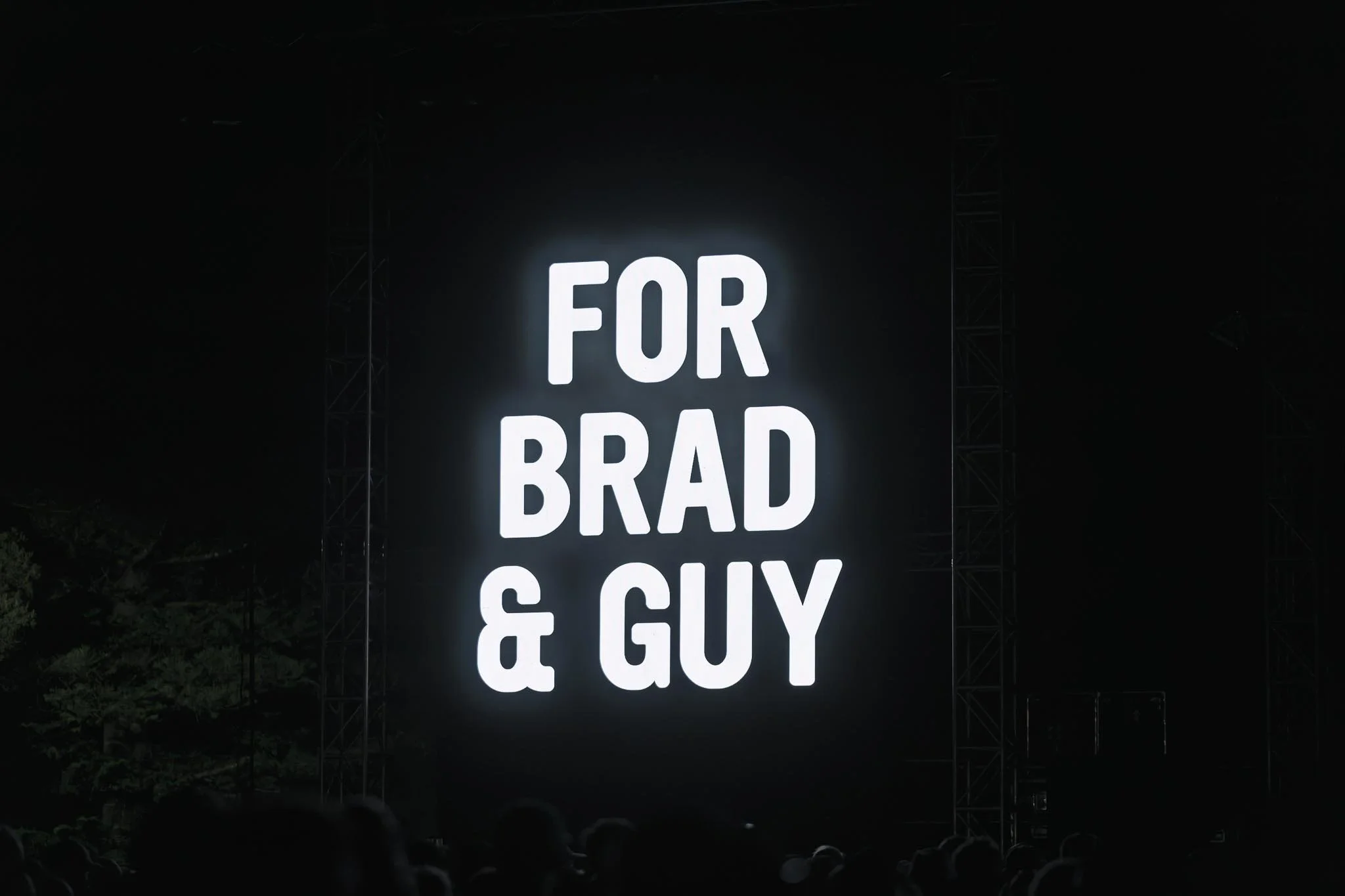
Four words. No elaborate explanation necessary. A quiet acknowledgement of two important members of the Australian Crawl story who couldn't be there to share this moment. After so much laughter, noise, and drama throughout the afternoon, it was a beautifully understated reminder that this reunion was about more than music. It was about people, friendships, memories, and the passage of time.
The opening was unexpected and absolutely perfect.
Rather than launching immediately into an explosive rock anthem, James Reyne appeared at the microphone and began a stripped-back rendition of Hoochie Gucci Fiorucci Mama, accompanied by the gentle piano playing of Sean Johnson, seated at the keyboards behind him. The effect was almost cinematic. After all the anticipation, noise, and excitement, the evening suddenly became intimate, with one of Australia's most distinctive voices gently drawing everyone into the moment.
And then the rest of the band joined him, and The Boys Light Up burst into life.
Bloody hell, they were good!
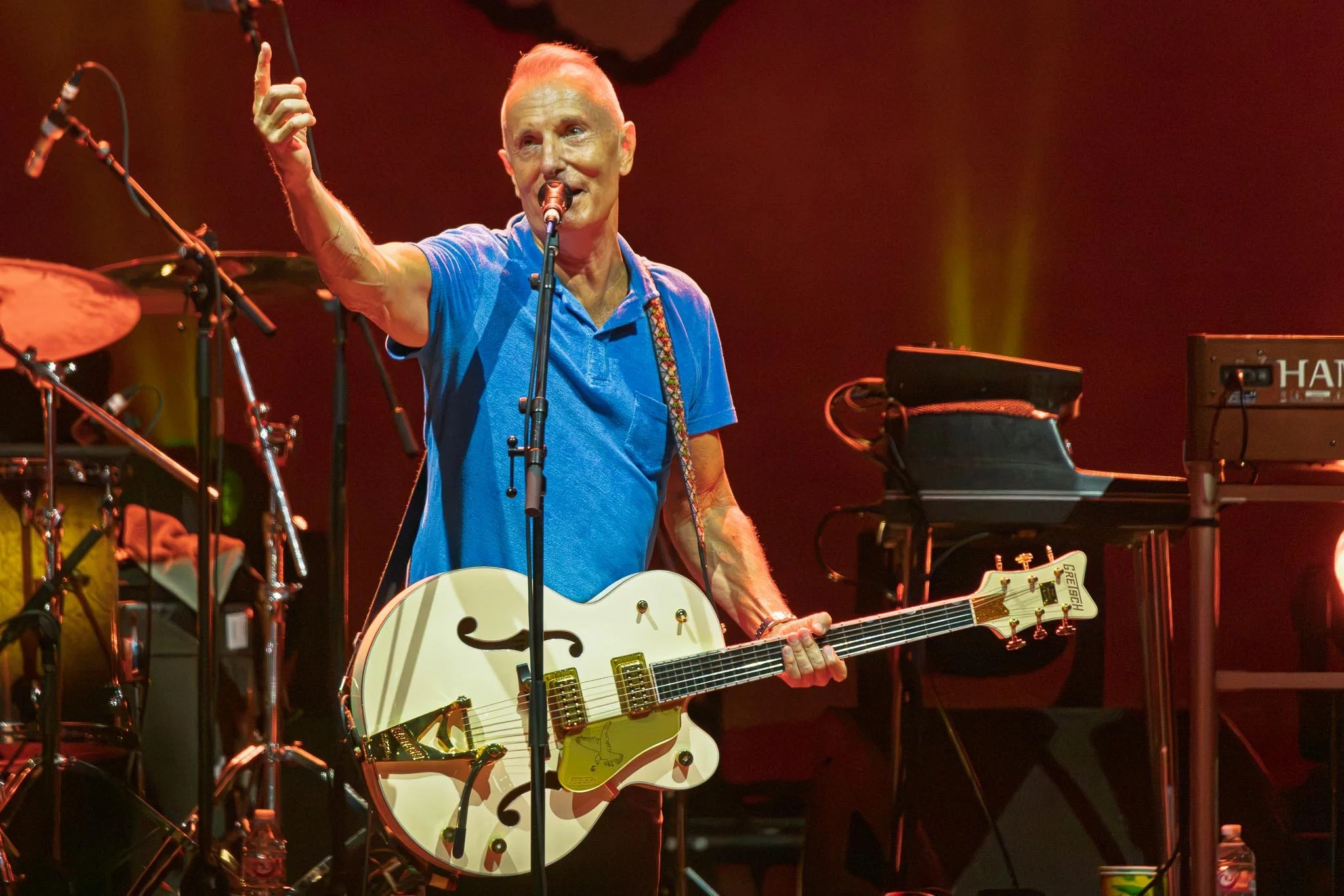
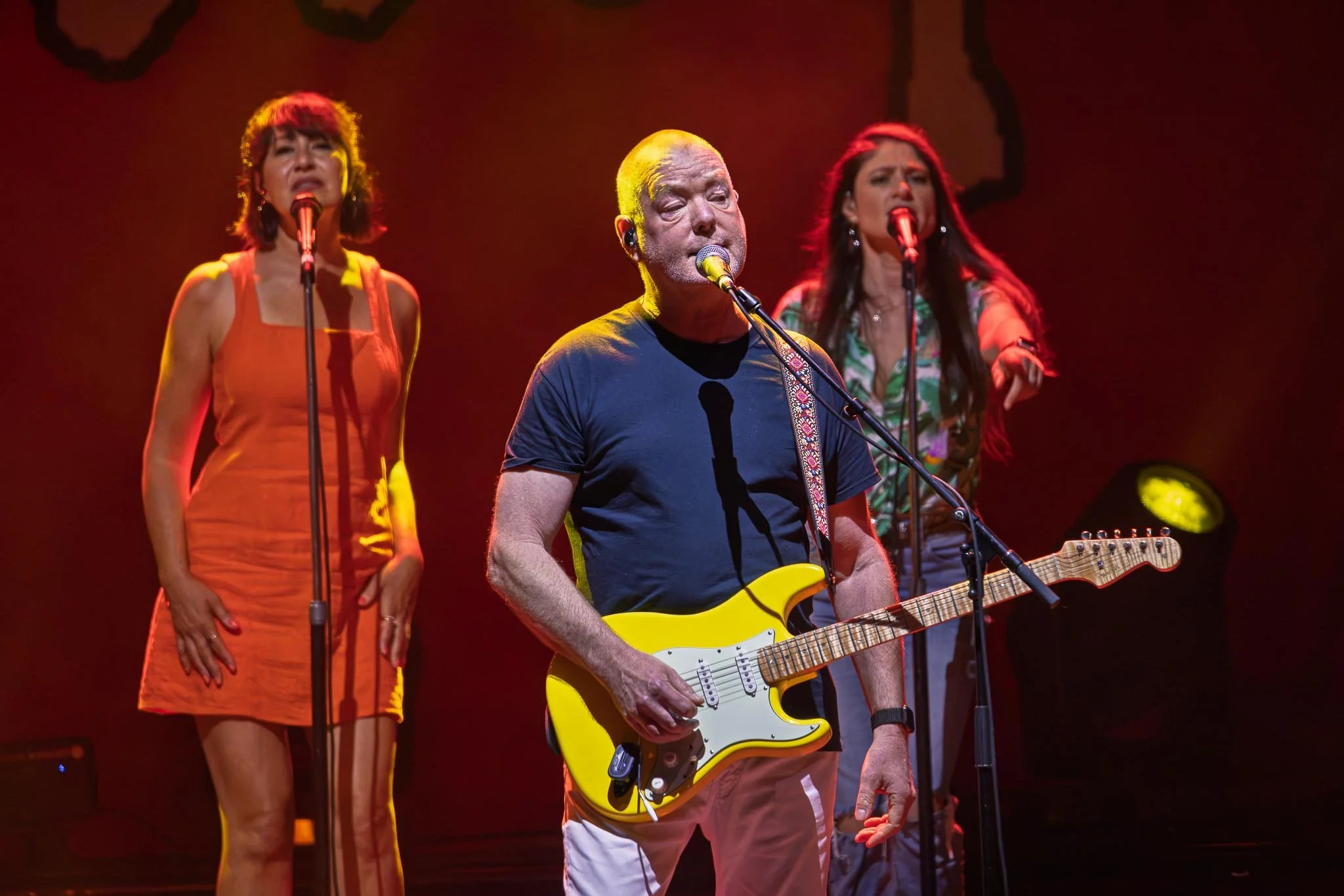
Whatever doubts anyone might have harboured about a band returning after forty years evaporated almost instantly. They weren't merely good. They were magnificent. The sound was fresh, powerful, beautifully balanced, and astonishingly tight. Simon Binks and Brett Kingman were delivering exceptional guitar work, Andy McIvor and John Watson formed a muscular rhythm section, and the combination of keyboards, percussion, additional guitar, and backing vocals gave the music tremendous depth. James's voice retained that unmistakable phrasing and character, a voice that could probably sing a shopping list and still sound like Australian Crawl. And the chemistry was immediately apparent. This wasn't a collection of musicians cautiously trying to recreate something from the distant past. This was a band playing with confidence, authority, and obvious delight.
James paused to thank everyone for staying through the wind, rain, storms, and general meteorological chaos, admitting that there had been a point when they genuinely didn't know whether they'd be able to perform. The crowd responded with a roar. They'd already survived one storm, and they certainly weren't going anywhere now. Daughters of the Northern Coast followed, feeling particularly appropriate in a location so closely associated with Sydney's beaches, before James introduced the musicians sharing the stage. Beautiful People kept the energy high, with the band settling into an extraordinary groove. There was no sense of trying to impress anyone through sheer volume or unnecessary showmanship. Every player was contributing something meaningful, and the songs were being given room to breathe.
Before Indisposed, James casually explained that it had been written after he'd been hit by a car, an incident which, as he rather colourfully pointed out, happened a very long time ago. His delivery was wonderfully dry, drawing a laugh before the familiar song brought another wave of recognition. Lakeside followed, then La Califusa, and by this point I found myself returning to the same thought over and over again. How can a band that hasn't played together like this for four decades sound so extraordinarily good? There was nothing tentative about it. Nothing tired or nostalgic in the way the music was being performed. If you closed your eyes, you'd have struggled to believe this wasn't a band in the middle of a hugely successful tour at the peak of its powers.
And yet opening your eyes was half the pleasure.
The lighting had become increasingly dramatic against the darkness, washing the musicians in rich blues and warm highlights, catching the edges of guitars, cymbals, and microphone stands. During White Limbo, the harmonies were simply beautiful, with the backing singers and multiple voices on stage adding a richness that elevated the song beyond the original recording. The guitar work was equally impressive, fluid and expressive without ever becoming excessive. There was an almost Eagles-like quality to some of those vocal arrangements, particularly when several voices came together in perfect harmony. It was the sort of musicianship that rewards attentive listening, with little details revealing themselves throughout the performance.
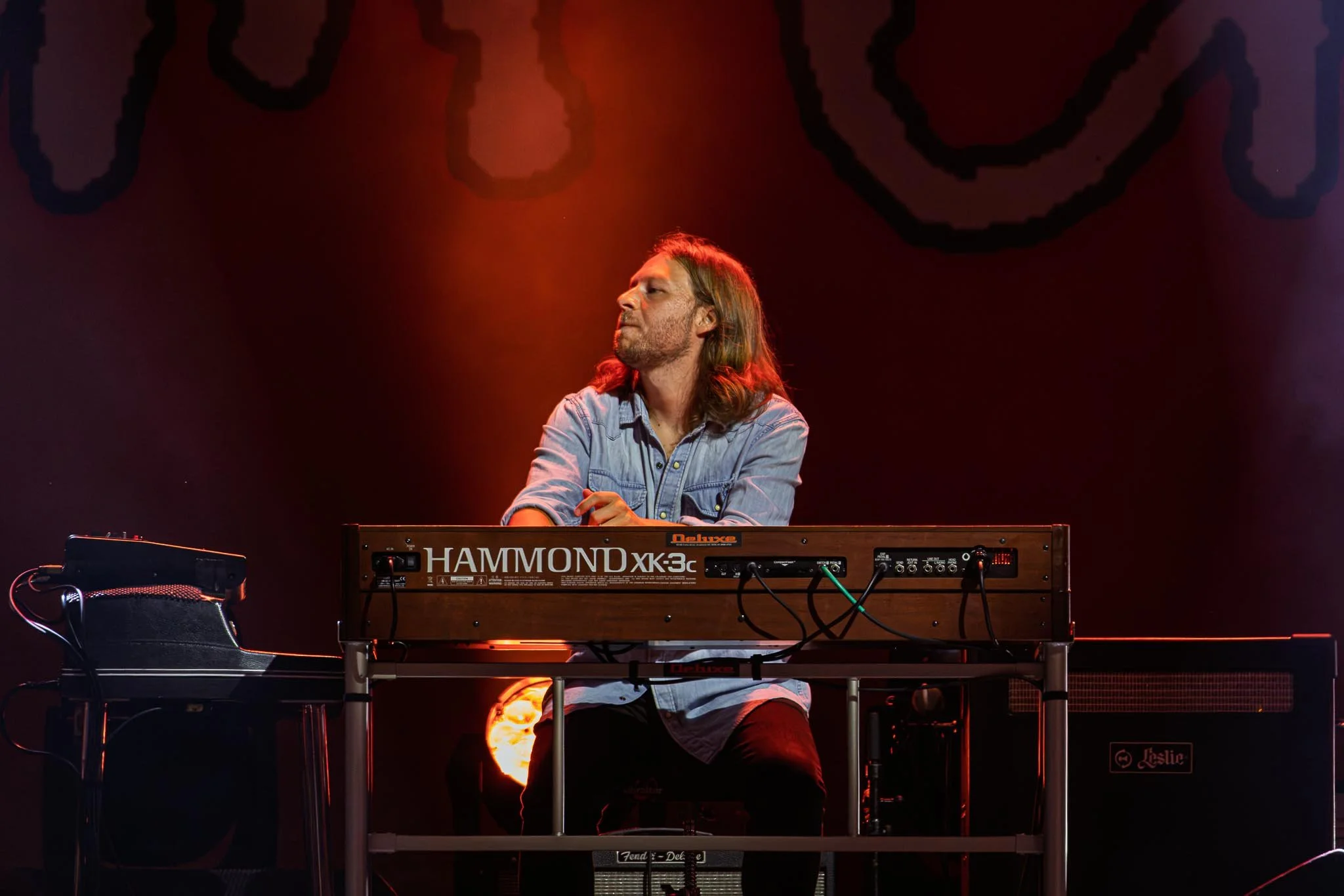
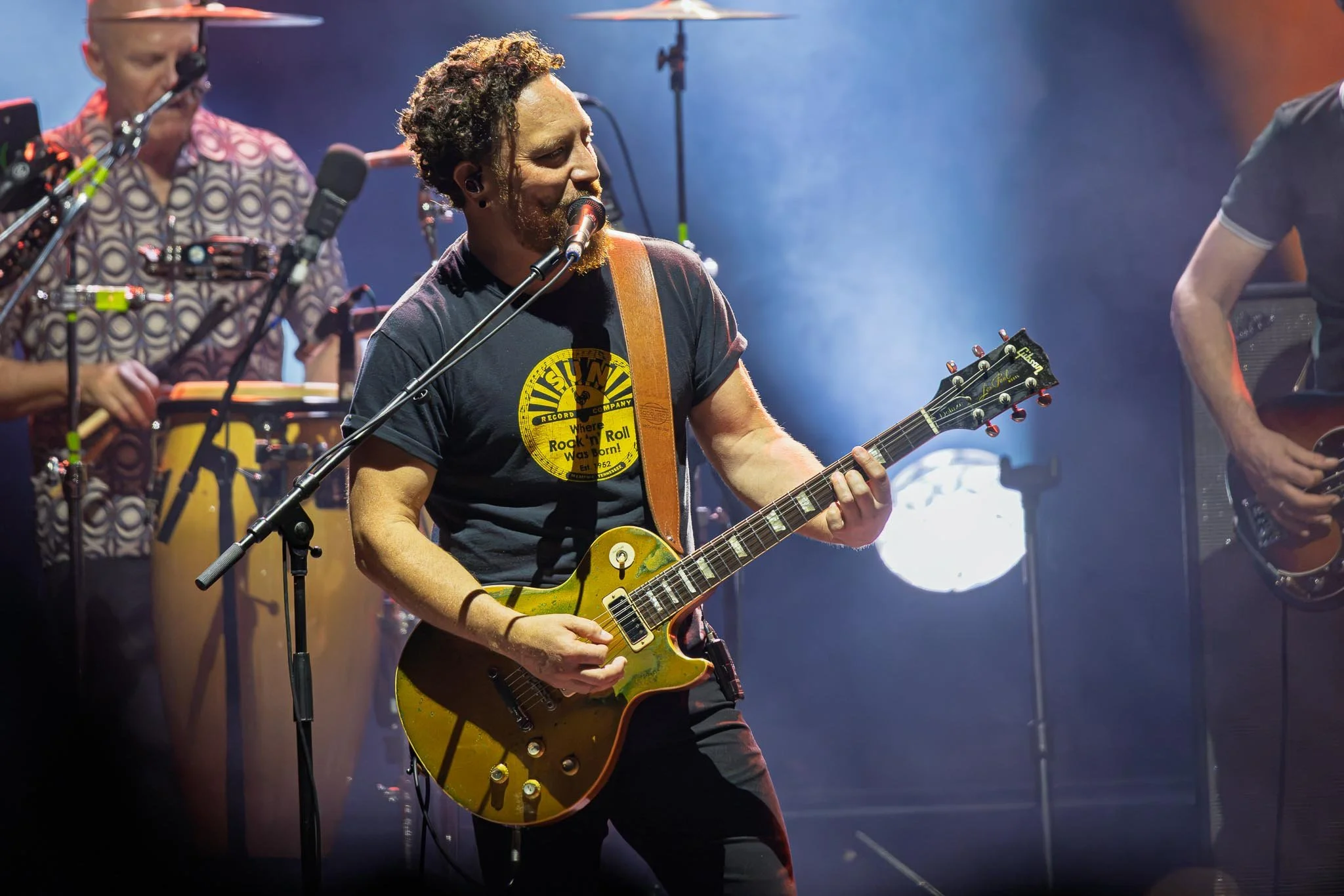
And there were plenty of wonderful visual details too. Before Trouble Spot Rock, James drew attention to Brett Kingman's rather special guitar, a magnificent 6/12 Danelectro double-necked instrument, the upper neck carrying twelve strings. Apparently, it only comes out for special occasions. If ever an occasion qualified, surely this was it. Brett made wonderful use of it, adding another distinctive texture to an already rich sound. Unpublished Critics was another highlight, with more glorious harmonies and an absolutely cracking keyboard solo from Sean Johnson. There's something immensely satisfying about a proper keyboard solo, particularly when the player knows exactly when to step forward and when to let the song breathe. Too few bands make room for them these days, and this was a lovely reminder of what we're missing.
Then the evening shifted gear again.
James picked up an acoustic guitar and casually invited everyone to sing along if they felt like it. As though anyone needed permission. Downhearted was beautiful, one of those moments when the enormous crowd suddenly felt strangely intimate. Voices rose around the park, not competing with the band, but becoming part of it. People who'd spent the afternoon dancing and laughing were now standing shoulder to shoulder, singing words that had accompanied them through different stages of their lives. Some songs have a remarkable ability to transport you back to a particular time, place, or person. This was one of them. There was something genuinely moving about hearing those familiar melodies performed by the people who made them famous, surrounded by an audience who had carried them for decades.
And then John Watson began playing.
A beautifully controlled hi-hat pattern. A deep, thunderous kick drum. That sharp crack of the snare. Nothing extravagant, just an unmistakable rhythmic invitation. A guitar began to creep into the arrangement, and the recognition spread through the crowd almost before the melody had fully formed.
Reckless (Don't Be So...).
For me, this was one of the defining moments of the entire day. There's an extraordinary melancholy woven into that song, a mixture of beauty, longing, and something almost impossible to articulate. Heard live, under the evening sky, after everything we'd experienced, it carried even greater emotional weight. James delivered the vocal with that familiar, slightly detached intensity, while the band created a gorgeous musical landscape around him. Brett's guitar solo was exquisite, soaring without becoming indulgent, allowing the melody to do the emotional heavy lifting. For a few minutes, the noise and chaos of the day seemed very far away. It was simply a beautiful song, beautifully performed, and a privilege to experience.
Of course, Australian Crawl weren't about to let us drift off into a state of sentimental reflection. Oh No Not You Again brought everyone crashing back to earth with an enormous cheer and a full-throated singalong. Sean delivered another wonderfully tasteful Hammond organ solo, and the energy on stage was infectious. James introduced the band again before they launched into Errol, the song about one of Australia's most famous Hollywood exports. It was a tremendous way to finish the main set, with the crowd singing enthusiastically and the musicians clearly enjoying every moment. James thanked everyone once more for staying through the storm, waved goodnight, and the band disappeared backstage.
Nobody moved.
Not an inch.
After forty years, did they seriously think we were going to fall for that?
The cheering continued, the anticipation built, and eventually the band returned. James announced that they'd like to finish the evening with an Australian Crawl song, a declaration that was particularly amusing given that they'd spent the previous hour and more playing nothing but Australian Crawl songs. But this one, he told us, had been chosen especially for us.
Things Don't Seem.
And what a finish.
The band absolutely tore into it, delivering a performance that was louder, rockier, and more explosive than anything that had preceded it. The guitars were magnificent, the rhythm section thunderous, and the harmonies remained remarkably tight even as the intensity climbed. Then, in a glorious piece of musical mischief, the guitarists slipped into part of the famous Hotel California solo, reimagined with considerably more muscle and played in harmony. It was an unexpected and absolutely joyous flourish, the sort of moment that makes you grin like an idiot while simultaneously wishing you could somehow bottle the experience. The final notes rang out across Keirle Park to a thunderous reception, and this time, reluctantly, we knew it really was over.
As people began making their way out of the park, there was something almost surreal about the atmosphere. The storm that had threatened to derail everything seemed like a distant memory. People were laughing, singing fragments of their favourite songs, comparing performances, and conducting animated debates about who had been the best act of the day. "Reckon they'll do it again next year?" I heard someone ask as we joined the slow procession towards the exits. I certainly hope so. Every artist had brought something different. Ella Hooper's warmth and humour, Boom Crash Opera's effortless energy, Vika and Linda's extraordinary voices, Eskimo Joe's ferocious musicianship, and Birds of Tokyo's exhilarating but cruelly interrupted set. Then Men at Work reminded us just how joyous truly iconic songs can be, before Australian Crawl delivered a reunion performance that exceeded even the most optimistic expectations. None of it would have been possible without the extraordinary efforts of the Red Hot Summer Tour team, the production crews, sound engineers, lighting technicians, stagehands, security teams, bar and merchandise staff, and everyone else who kept things running in exceptionally challenging conditions. Their work, particularly during the storm and its aftermath, deserves enormous credit.
But what I'll remember most is the spirit of the day. Thousands of people brought together by music, refusing to let a little thing like an electrical storm spoil their fun, and sharing an experience that was funny, chaotic, occasionally emotional, and ultimately unforgettable. We arrived expecting a wonderful afternoon of Australian music. We left with something much more valuable: another collection of memories to carry with us, and a reminder of why live music, at its very best, is unlike anything else. As for the gentleman wearing the ice bucket, I hope he enjoyed the evening as much as the rest of us. And if the Red Hot Summer Tour does return to Manly next year, perhaps somebody could have a quiet word with him about the difference between waterproof and lightning-proof.
Same time next year, Manly? Bring the music, bring the sunshine, and don't be surprised if the merch truck is selling hats that look suspiciously like upturned ice buckets.
Gallery https://musicfestivalsaustralia.com/new-blog/red-hot-summer-tour-manly
Thanks to the Red Hot Summer Tour, Face To Face Touring, Menard PR for having us along.
Review and Photos by Andy Kershaw for Music Kingdom Australia