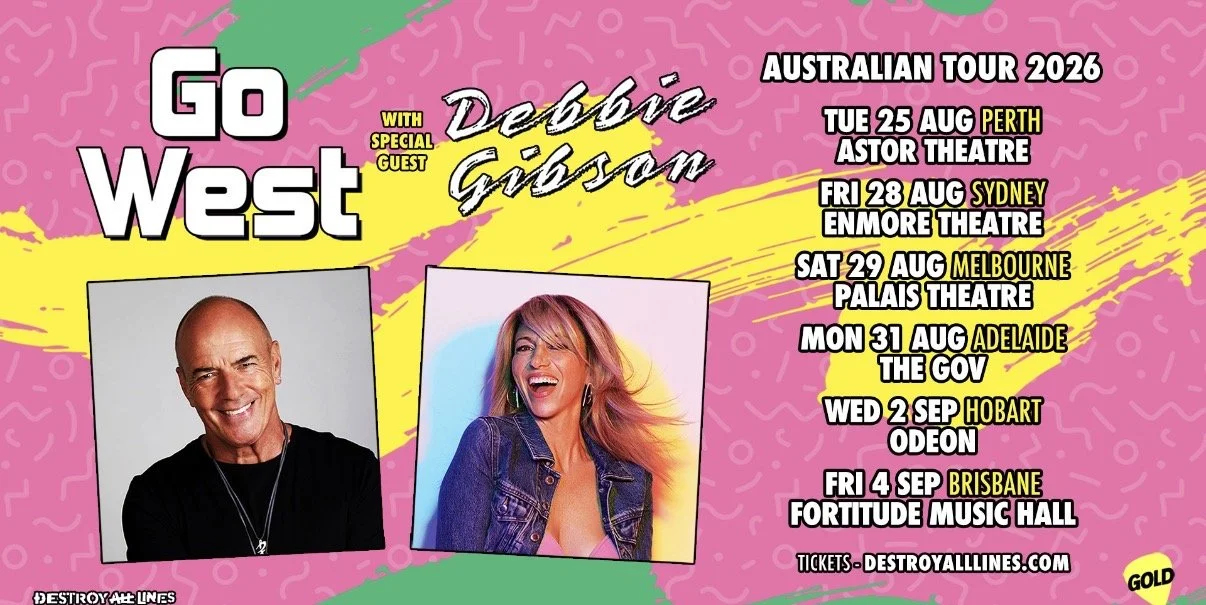
Go West & Debbie Gibson - Australian Tour 2026
For one glorious Friday night at the Enmore, wishful thinking turned out to be everything we hoped it would be.
Sydney had settled into one of those cool late-winter evenings where staying home might have seemed like the sensible option. Thankfully, nobody at the Enmore appeared remotely interested in sensible. There was an electric buzz around the place as drinks were collected, familiar faces spotted and generations of pop memories made their way inside. Unusually, the stalls were seated, with no barrier or photography pit between the audience and the stage, and somehow that made the old theatre feel even more intimate. Up front, blue light washed across the stage while neon pink glowed behind it, perhaps accidentally, perhaps very deliberately, giving a gentle nod towards Out of the Blue and Electric Youth before a note had even been played. Debbie Gibson’s silver keyboard sparkled beneath the lights, the familiar triangular EY pennant hanging proudly from the front. Guitar amps waited nearby and an enormous Tama kit dominated the rear, complete with a giant pair of boxing gloves hanging somewhat inexplicably from a cymbal stand. For anyone who came of age in the late eighties, the memories were already starting to stir.
Which feels like an appropriate moment for a confession. As a schoolboy growing up in the UK, I went to one of those old schools that still had traditional wooden desks, the sort with an ink well and a lid you could lift to hide books, pens, illicit sweets and anything else you didn’t particularly want your teacher to discover. Under the lid of mine was a Debbie Gibson poster torn from Look-In magazine. Right next to Tiffany. It has taken me nearly 40 years to admit that publicly, so I’d appreciate everyone treating this information with the dignity it deserves. Any remaining dignity disappeared when the lights went down.
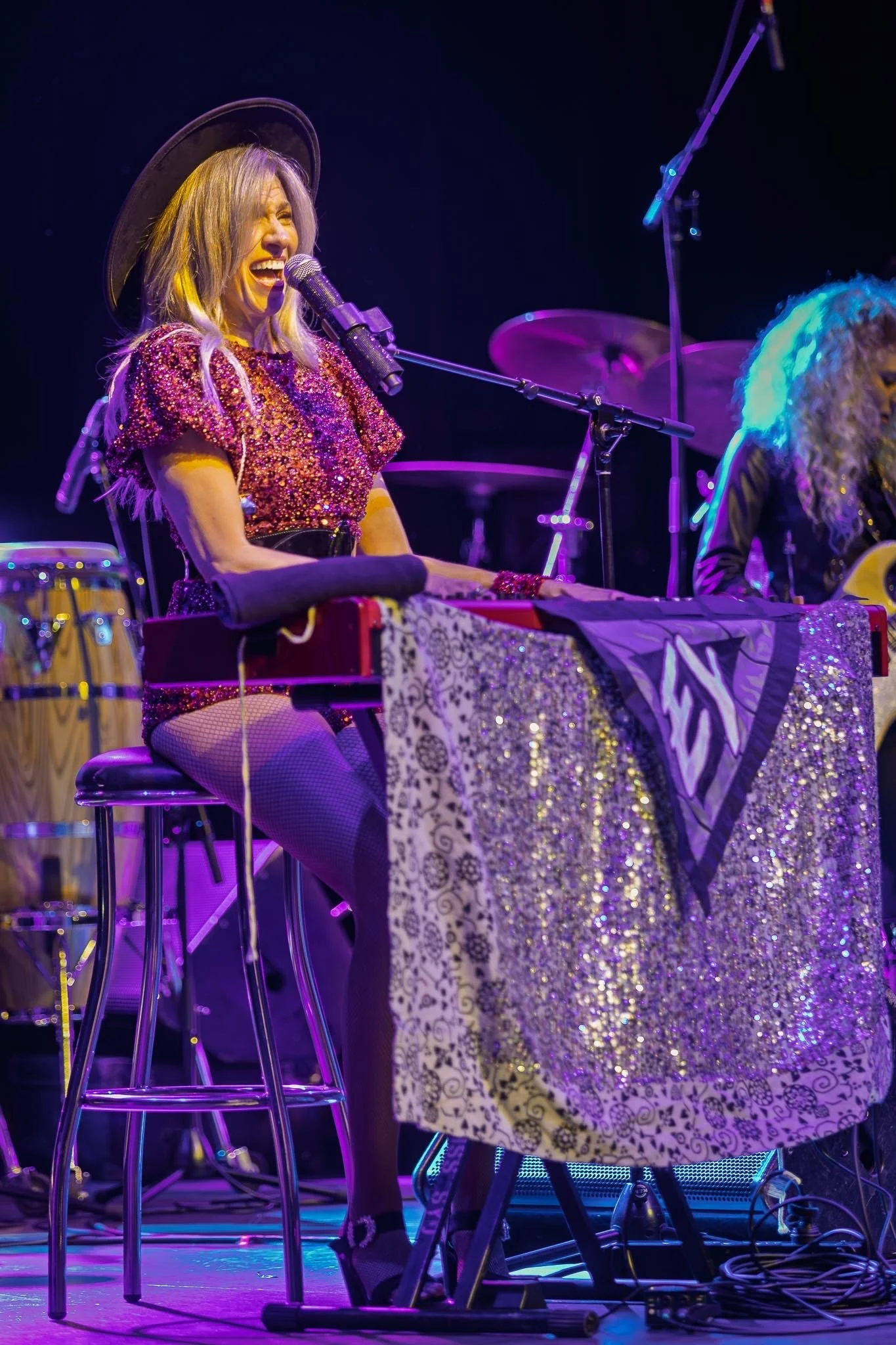
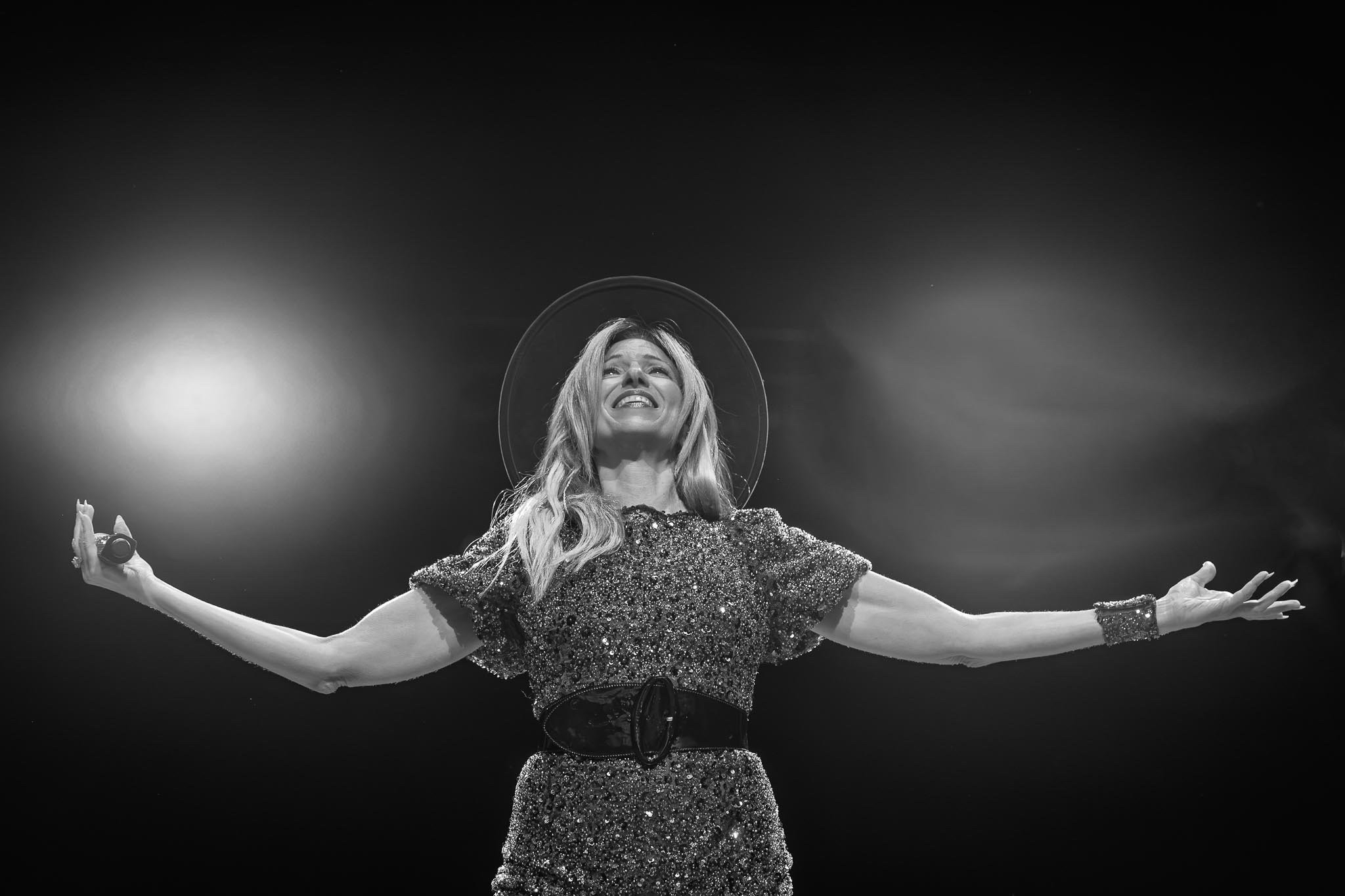
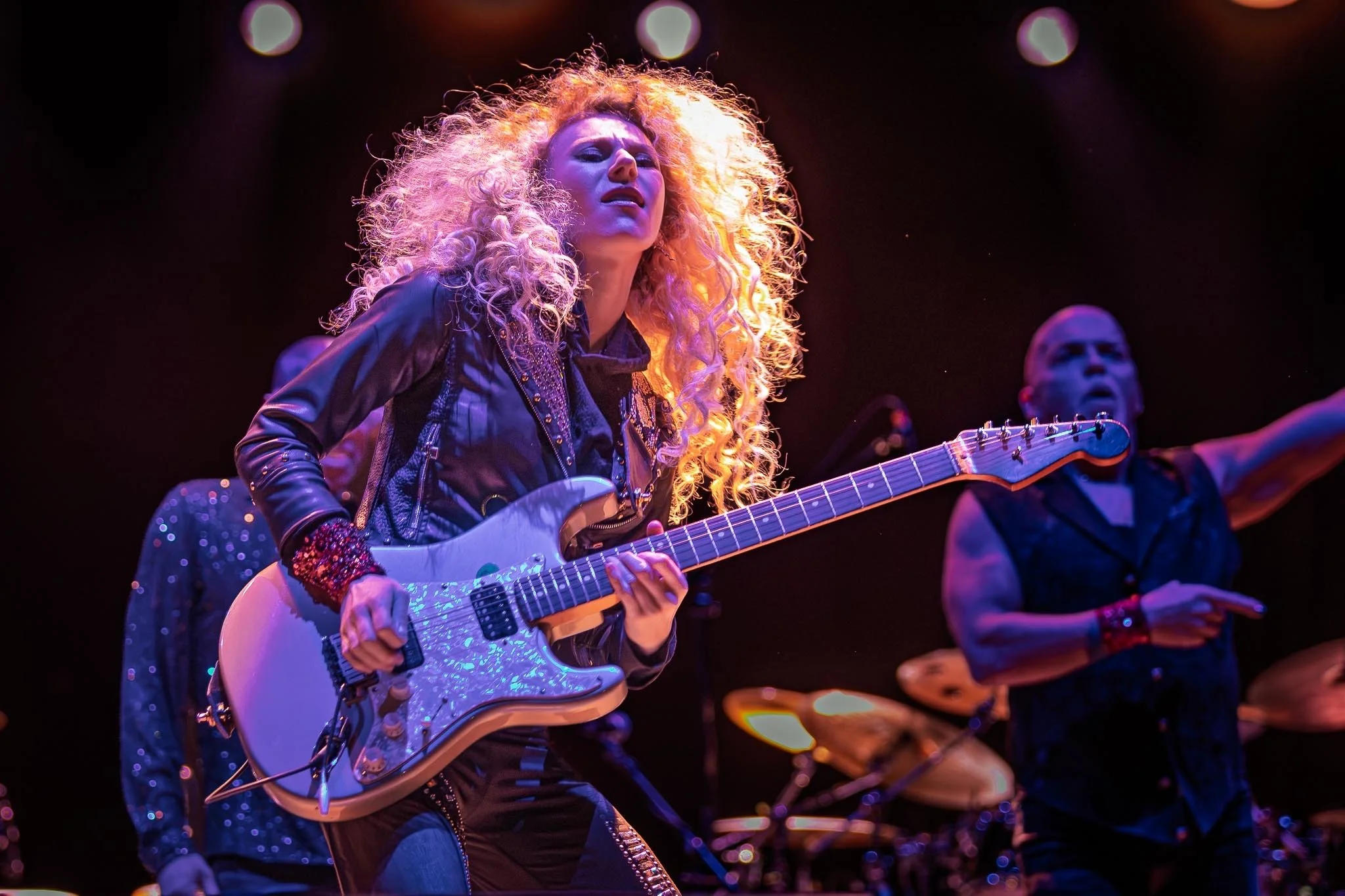
The overture began and three dancers appeared one by one, dressed in black, each getting their own few seconds beneath the lights as the cheers grew louder with every entrance. Percussionist and saxophonist Adam Tese followed, then drummer Phil G behind that huge Tama kit, and finally guitarist Ariel Bellvalaire, blonde hair cascading around her shoulders with more than a hint of Brian May about her. Then Debbie Gibson walked out in a sparkling red sequinned romper, fishnets, wide black belt and trademark wide-brimmed hat. Electric Youth had arrived at the Enmore in 2026, and she looked considerably more energetic than most of us who bought the record the first time around.
She opened with the newer One Step Closer, which immediately told us something important. This wasn’t going to be an artist walking onstage, pressing play on 1989 and spending an hour politely revisiting the past. When the song finished, Gibson seemed genuinely taken aback by the reaction. She stood there for a moment just soaking it in, then spoke about something she had written in her book, those rare nights when an almost tangible energy comes back from a live audience and you can actually feel it. Tonight, she said, she could already feel it.
She also made something else very clear. She doesn’t lip-sync. She sings live. Always has. With all the dancing, she joked, she might miss the occasional note and apologised in advance if she did. She really didn’t need to. This was properly live. Breath, sweat, movement, tiny imperfections, personality and all the things that make live music worth leaving the house for in the first place.
Gibson moved effortlessly between singer, pianist, dancer and storyteller, occasionally looking like she was having every bit as much fun as the people watching her. At one point she abandoned the safety of the stage altogether and disappeared into the audience, hugging fans, posing for selfies and greeting familiar faces. She recognised Deb-Heads and Diamond Deb-Heads who had travelled from all over the world to be there, and there was something wonderfully unguarded about it all.
“She’s actually coming down here!” laughed one fan nearby as Gibson vanished into a sea of raised arms.
Then came the line that pretty much summed up the first half of the evening. “Mate, this is supposed to be the support act.” Exactly.
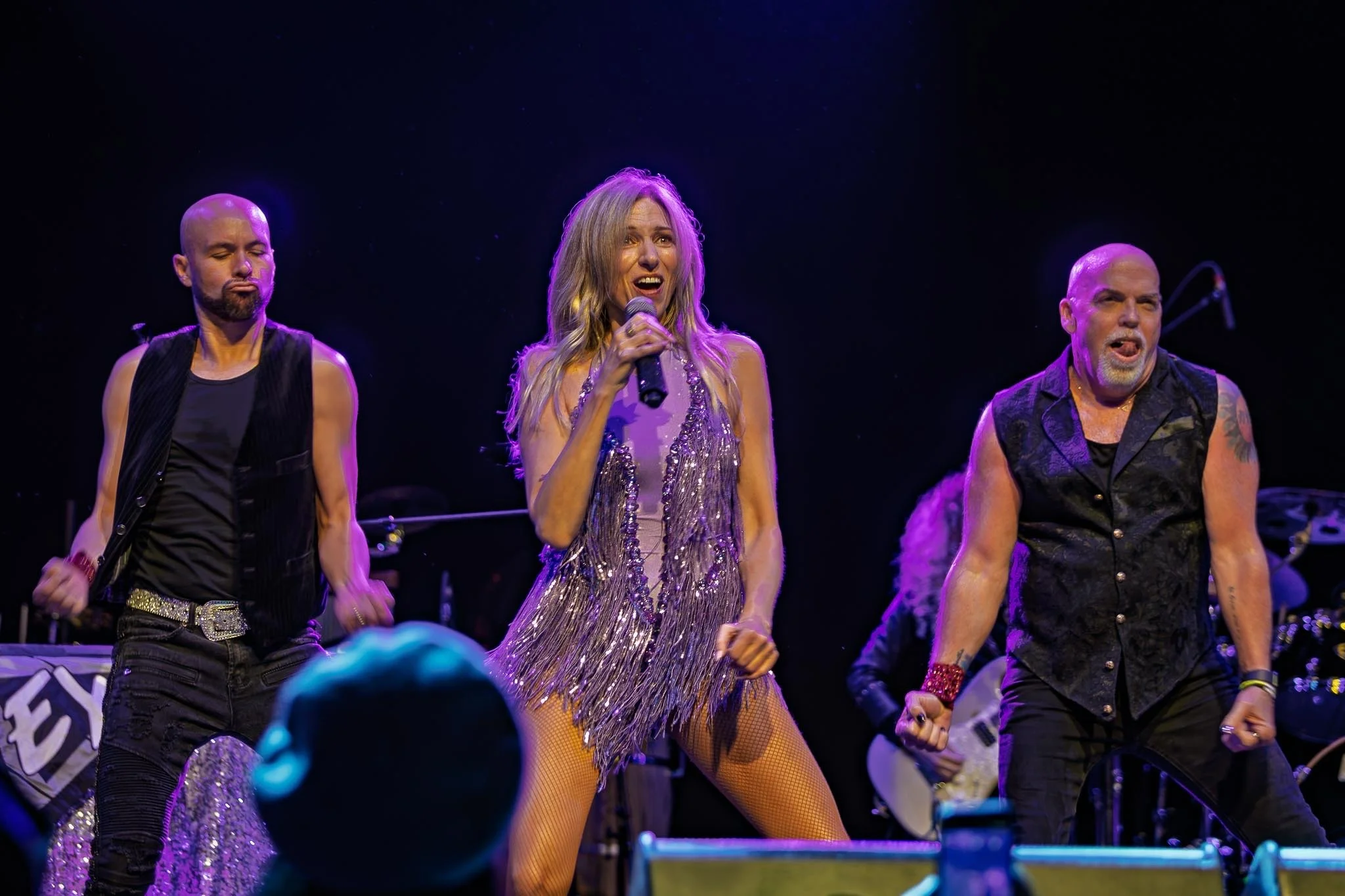
Back onstage, Gibson asked everyone to get up for Shake Your Love. They didn’t need asking twice. The Enmore was on its feet almost before she had finished the sentence, and around her Eddie Bennett, Stepp Stewart and Buddy Casimano moved with the sort of relaxed precision that comes from knowing this music in their bones. That history mattered. These weren’t anonymous dancers bolted onto an eighties nostalgia package. Bennett has worked with Gibson for decades, Stewart was there during the Electric Youth era and Casimano goes all the way back to their school days and Gibson’s earliest club gigs. Watching them together gave the choreography a warmth that you simply can’t manufacture. The Body Remembers, indeed. And judging by the amount of dancing Gibson packed into the set, hers apparently has a photographic memory.
After thanking the LGBTQ+ community, who responded with one of the loudest cheers of the night, Gibson talked about the people who had stood beside her from the very beginning. And speaking of beginnings, the unmistakable opening of Only in My Dreams filled the theatre. Adam Tese’s saxophone was glorious, while several hundred people suddenly discovered that lyrics they probably hadn’t consciously thought about for years were still sitting somewhere in the deepest recesses of their brains, waiting patiently to be called upon.
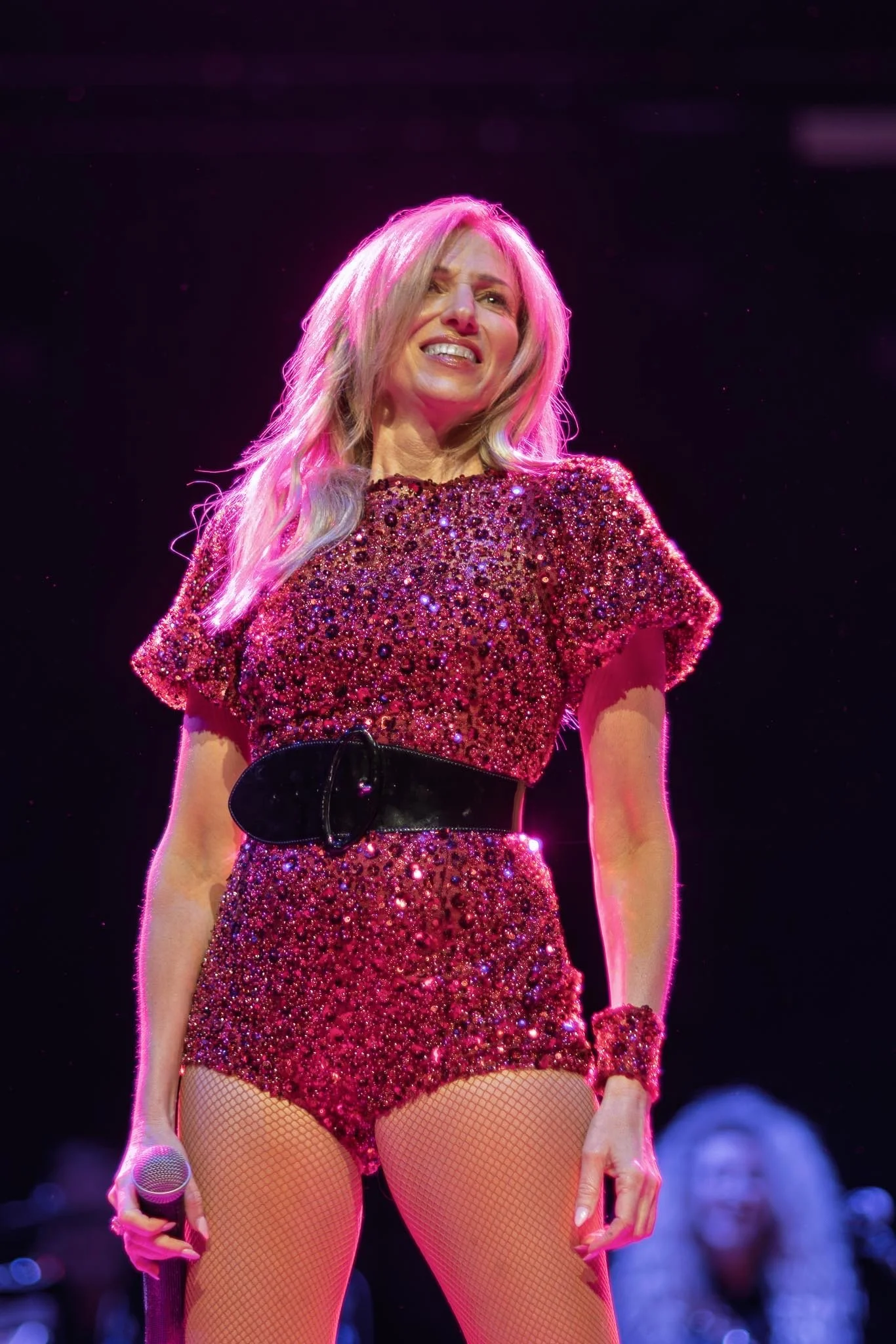
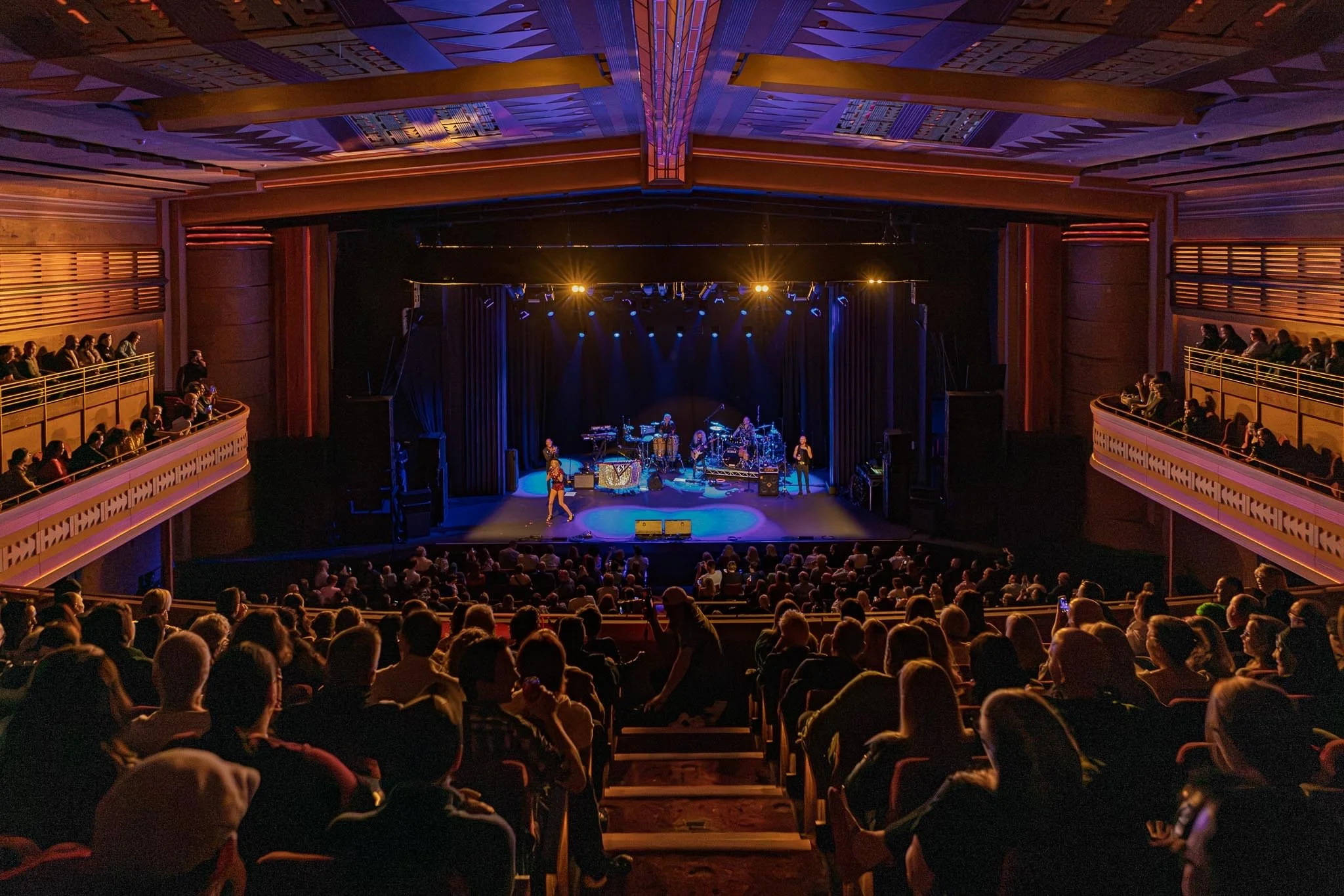
Then came one of those moments that shifted the entire mood of the room. Gibson was being reminded from the side of stage that she needed to keep an eye on the time. She acknowledged it, smiled, and then decided there was something more important she wanted to do. With the sad news of Dolly Parton’s passing only days old, she sat at the piano and began a slow, delicate version of 9 to 5. At first it was almost fragile, stripped of the bounce and bustle we all know so well. Then the chorus arrived and the band swept in around her.
It was beautiful. Personal, because you could feel what the song and its writer meant to Gibson. But communal too, because everyone in that room had their own Dolly somewhere in their lives. A song, a film, a childhood memory, a voice coming from a kitchen radio, a parent singing along in the car. For a few minutes it became less a cover version and more a roomful of people quietly acknowledging an extraordinary legacy together. There was sadness in it, certainly, but far more gratitude.
And Gibson stayed there at the piano for Lost in Your Eyes.
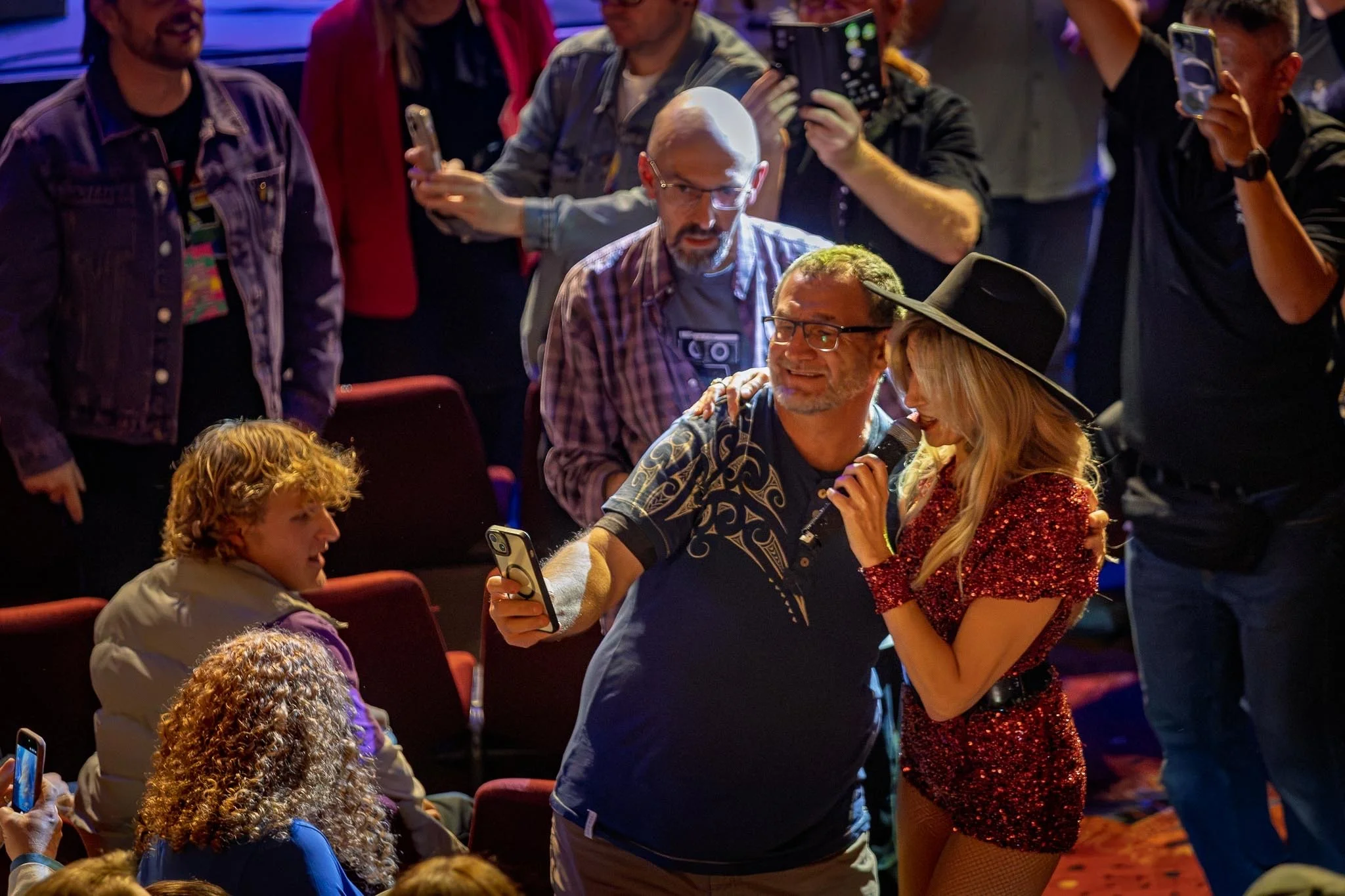
That was one of those hairs-standing-up-on-the-back-of-your-neck moments. The room changed. The chatter disappeared and her voice floated out across the Enmore with almost nothing between her and the audience. When the final notes faded there was that wonderful fraction of a second that sometimes happens at a show, when nobody quite wants to be the first person to break the spell. Then the theatre erupted.
Gibson made a point of thanking everyone around her, not only the musicians but the crew, sound team, tour management and merchandise staff, the people who make nights like this happen without ever standing in the spotlight themselves. And then came Electric Youth. The first bars were enough.
Everyone was back on their feet, dancing between the rows of theatre seats, any remaining Friday-night restraint long since abandoned. Gibson danced her way through it with the energy of somebody for whom the title of her 2021 album, The Body Remembers, suddenly felt very literal indeed. Even after she had left the stage, Ariel Bellvalaire kept firing great curling guitar lines through the outro while the rest of the band pushed on.
Nobody appeared interested in going anywhere. Instead, the chant began. “DEB-BIE. DEB-BIE. DEB-BIE.” Then again, louder. “DEB-BIE. DEB-BIE. DEB-BIE.”
And back she came, red sequins replaced by a rhinestone-covered silver fringed bodysuit, and for the next ten minutes the Enmore became one gloriously unrestrained nightclub. Right Back Where We Started From rolled into Don’t Stop ’Til You Get Enough, then Can’t Get You Out of My Head, I’m Coming Out, The Hustle, Nights on Broadway, Espresso, Xanadu and finally Last Dance. On paper, it sounds completely ridiculous. In the room, it was bloody brilliant. When Gibson finally left the stage there was a huge buzz around the theatre, that lovely slightly dazed chatter of people trying to process what they had just seen. It genuinely felt as though a headline act had finished.
Except the headline act hadn’t started yet.
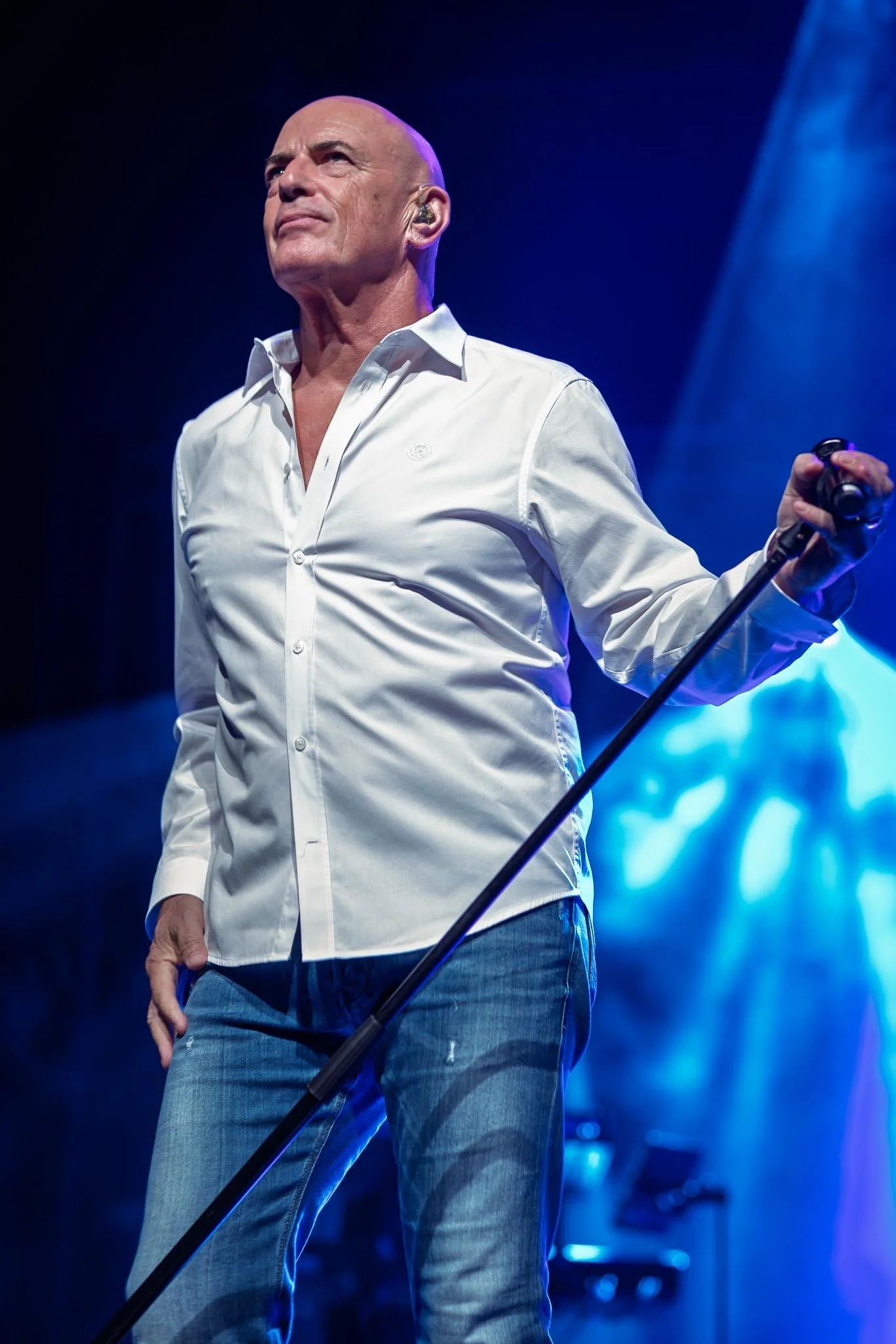
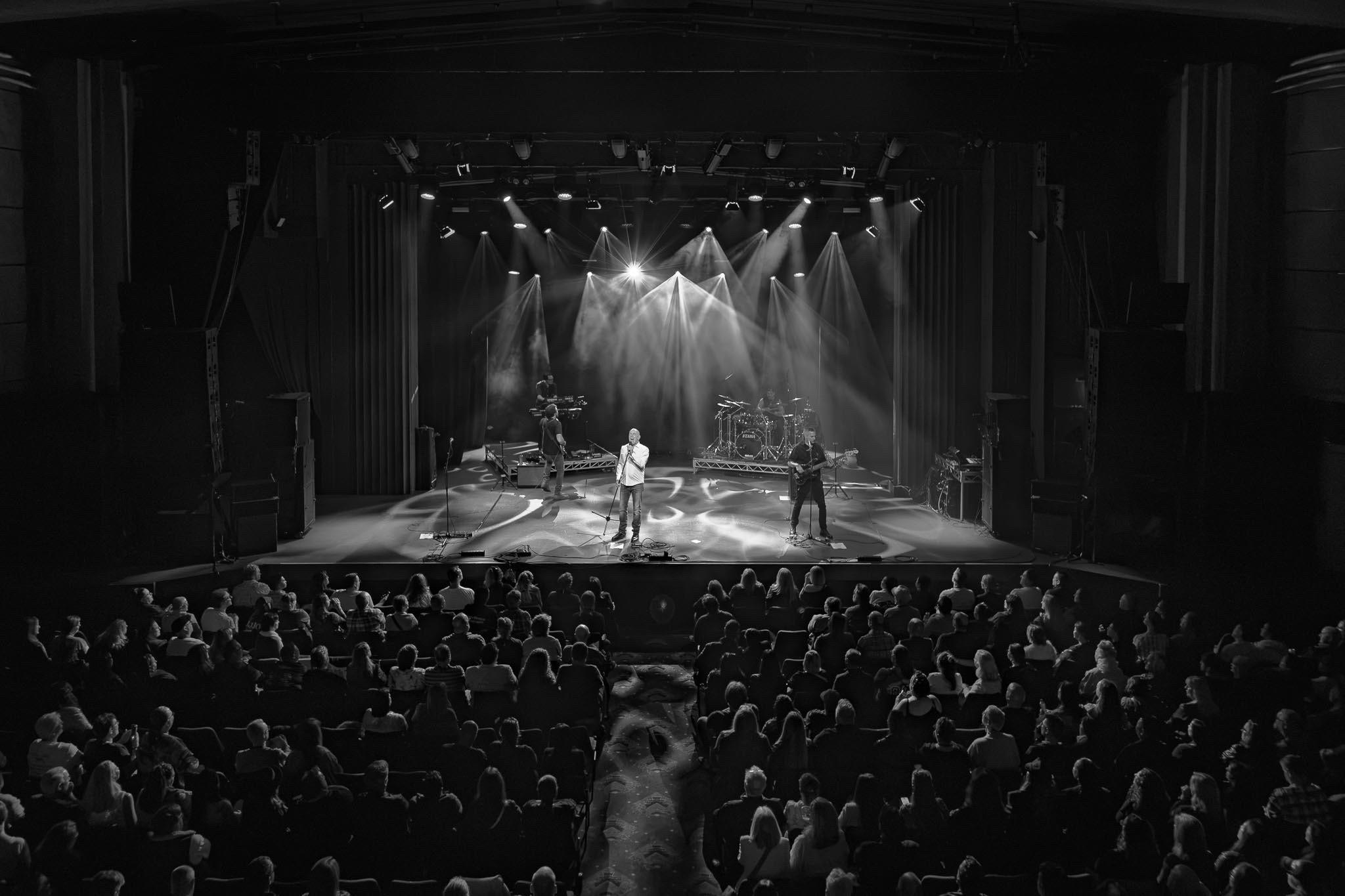
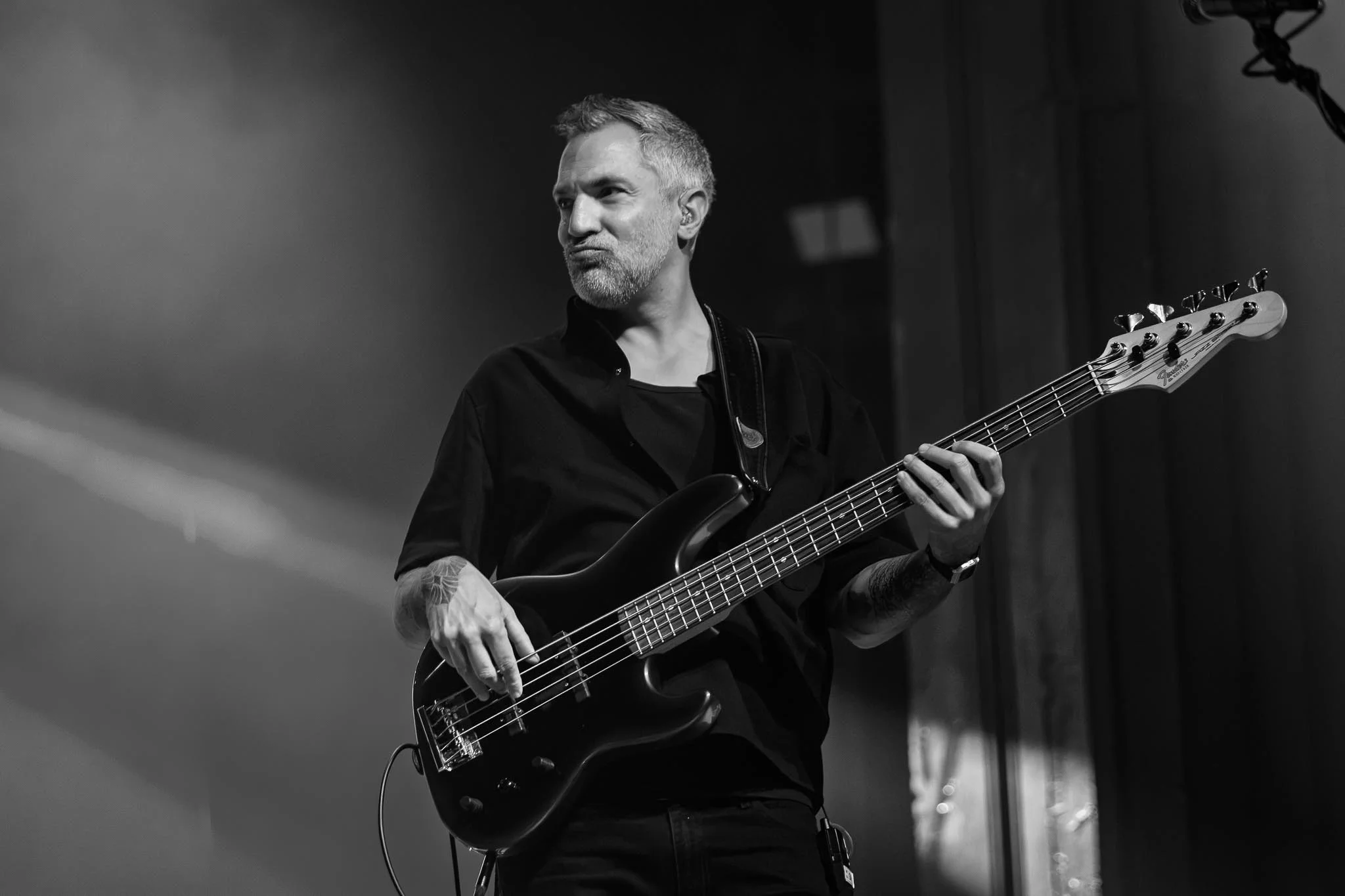
After the changeover, the stage suddenly looked broader and a little more muscular. Blue and magenta light washed across guitar and bass cabinets. The Tama kit remained towards stage left, two banks of synths sat on a riser to the right and three microphone stands stretched across the front. Sydney-based Dutch keyboardist Casper Tromp took his place alongside bassist Vinzenz Benjamin, guitarist David D’Andrade and the returning Phil G.
Then Peter Cox walked onto the stage. White shirt, blue jeans, black shoes, enormous smile. That smile barely left his face all night.
From the opening punch of Don’t Look Down, it was obvious that Go West weren’t treating their 40th anniversary like some solemn museum exhibition. There was no sense of dusting off the hits and carefully presenting them behind glass. This was a band still having fun playing together. Lots of it.
Their long-standing cover of Sam Sparro’s Black & Gold gave D’Andrade an early opportunity to stride towards the front of the stage and let rip, with Cox adding guitar himself. By the time they reached Eye to Eye, the shape of the band was becoming clear. Benjamin and Phil G were rock solid together, giving the songs considerably more punch than you might expect from those beautifully polished studio recordings. Tromp filled the spaces without overcrowding them, while D’Andrade appeared permanently about half a second away from launching into another guitar solo if anyone so much as looked in his direction. Cox, meanwhile, knew exactly what sort of audience he was dealing with. “It’s come to my attention,” he said, “that when you come and play an eighties concert, the words you guys don’t want to hear are, ‘We have a new song.’” Big laugh. “But it’s true. We do.” And that mattered. Go West haven’t stopped writing and recording, and rather than apologising for playing something newer, Cox seemed almost mischievously pleased about it as they launched into Too Far Gone. It stopped the evening becoming trapped in amber. Of course we had all arrived carrying memories, but the band had no intention of living entirely inside them.
The older songs landed beautifully anyway. Faithful was full of gorgeous harmonies, particularly its a cappella ending, before Goodbye Girl slipped into that wonderfully smooth, laid-back groove and seemed to soften the whole theatre by a few degrees. Somewhere just behind me came an almost involuntary: “Oh God, I love this one.” There are worse reviews.
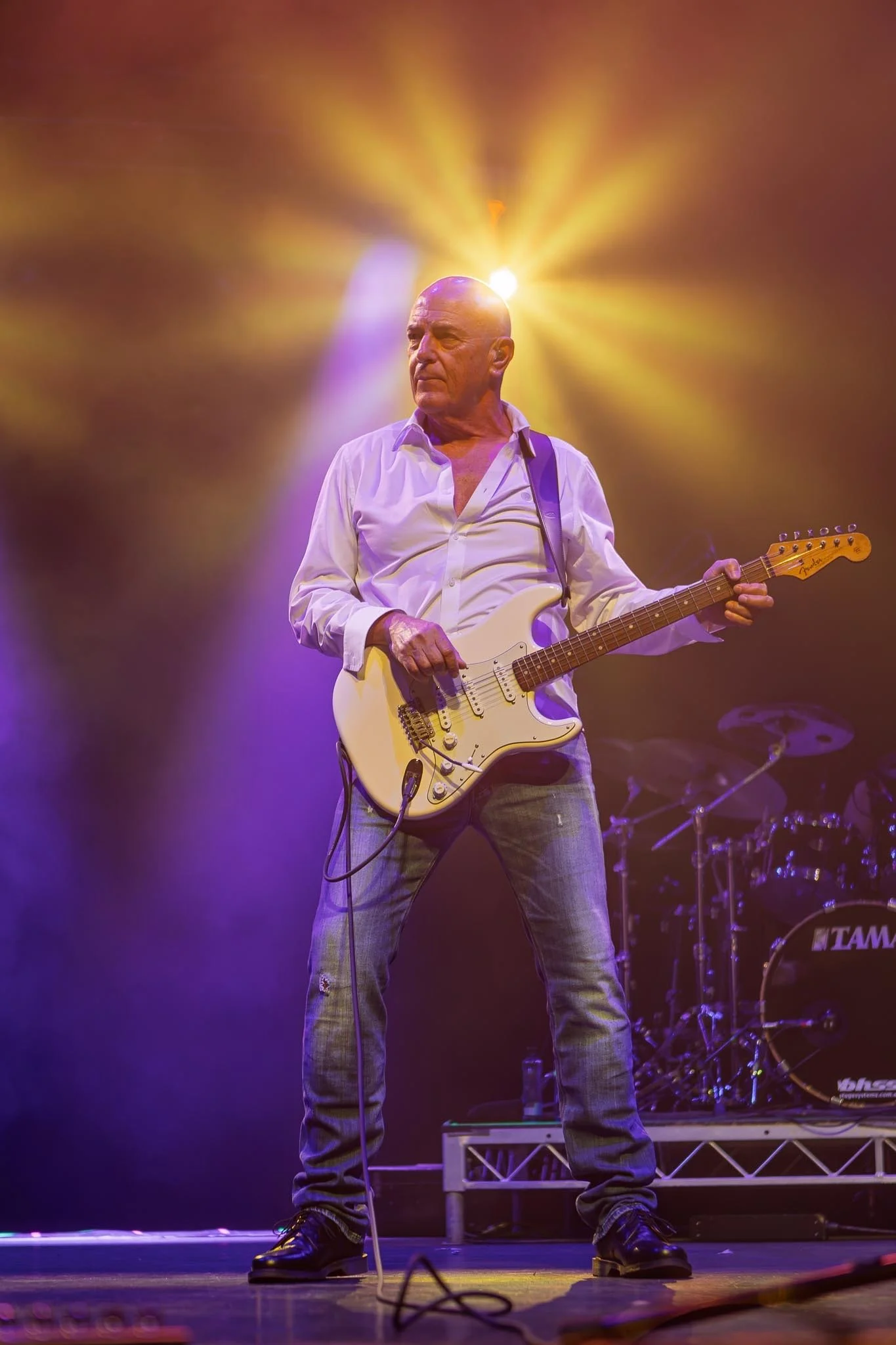
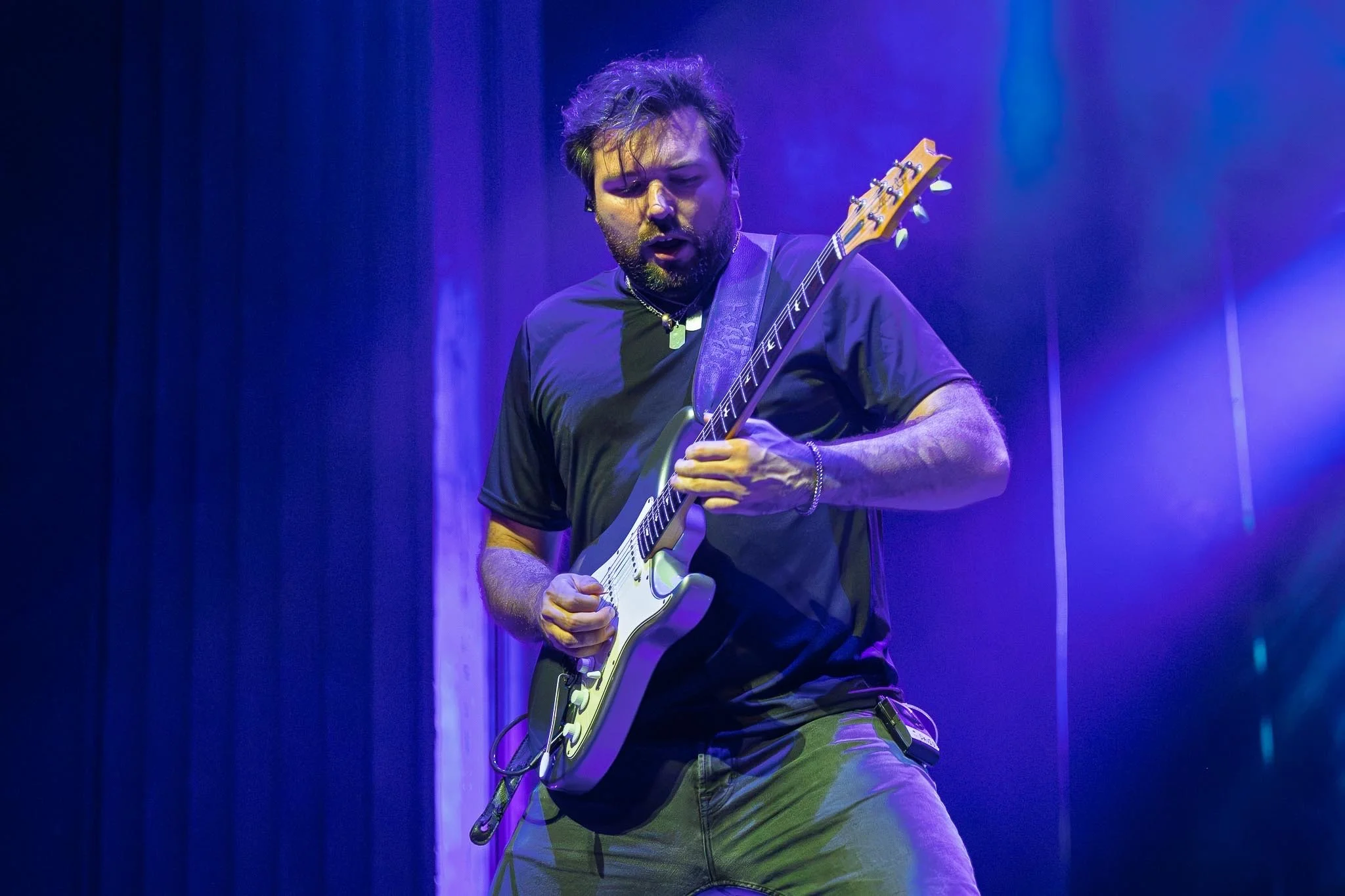
Cox also gave the newer songs context rather than simply announcing their titles. Before Pocket Call, he talked about that horribly modern experience of somebody accidentally calling you without realising it. You can hear them. They can’t hear you. And sometimes, when the person at the other end is your partner or somebody you love, what you hear can change everything. Tears Too Late explored another bruised corner of relationships, the person who only seems sorry once everything has already fallen apart.
Underneath it all, Benjamin and Phil G were absolutely locked together, driving the songs from underneath while D’Andrade carved another solo over the top. That rhythm section deserves a special mention. Phil G had already spent the best part of an hour powering Debbie Gibson’s set and then returned to do the whole thing again, apparently having decided that conserving energy was somebody else’s problem. Benjamin’s bass sat deep alongside him and together they gave Go West a surprisingly tough live edge.
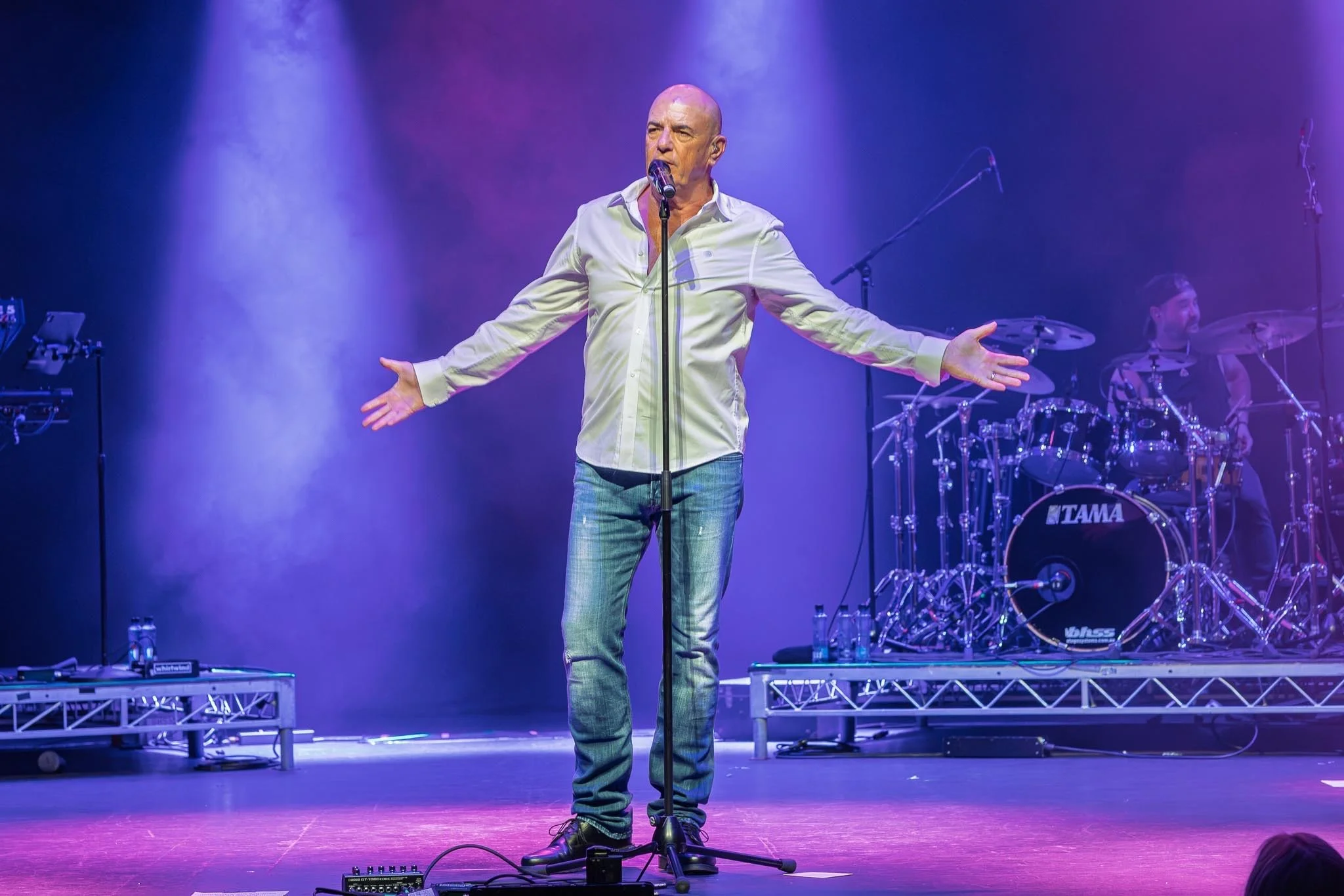
Cox remained wonderfully easy company throughout. No aloof rock-star nonsense. He talked with the crowd rather than at them, laughed with them and occasionally seemed genuinely amused that, after four decades, thousands of people still knew every word. Before Let Love Come, he mentioned an article he had recently read about the things in life that we simply can’t control. The song opened out around that thought and, by its peak, D’Andrade was down on his knees at the front of the stage, apparently having concluded that standing upright was unnecessarily restrictive when shredding a guitar.
And then something began to happen. The set started to climb. Not suddenly. Gradually.
Go West’s version of the Motown classic The Tracks of My Tears gave the room one of those wonderful communal moments where just a few familiar words are enough to turn hundreds of individuals into one enormous backing vocal section. Call Me pushed the temperature higher. Then came We Close Our Eyes, and by now pretty much everyone was standing again. The band knew it too. Phil G exploded into a drum feature. D’Andrade answered from the other side of the stage. Cox prowled the front, smiling out at a crowd that had stopped behaving like a seated theatre audience some time ago. The last part of the set had been tightening almost imperceptibly, song by song, chorus by chorus, like a spring being wound one turn at a time.
Everybody could feel where this was heading. Then Cox told us there was one song left. We knew. Of course we knew. Judging by the reaction, though, you would have sworn the idea had never occurred to anybody.
The Enmore went absolutely feral.
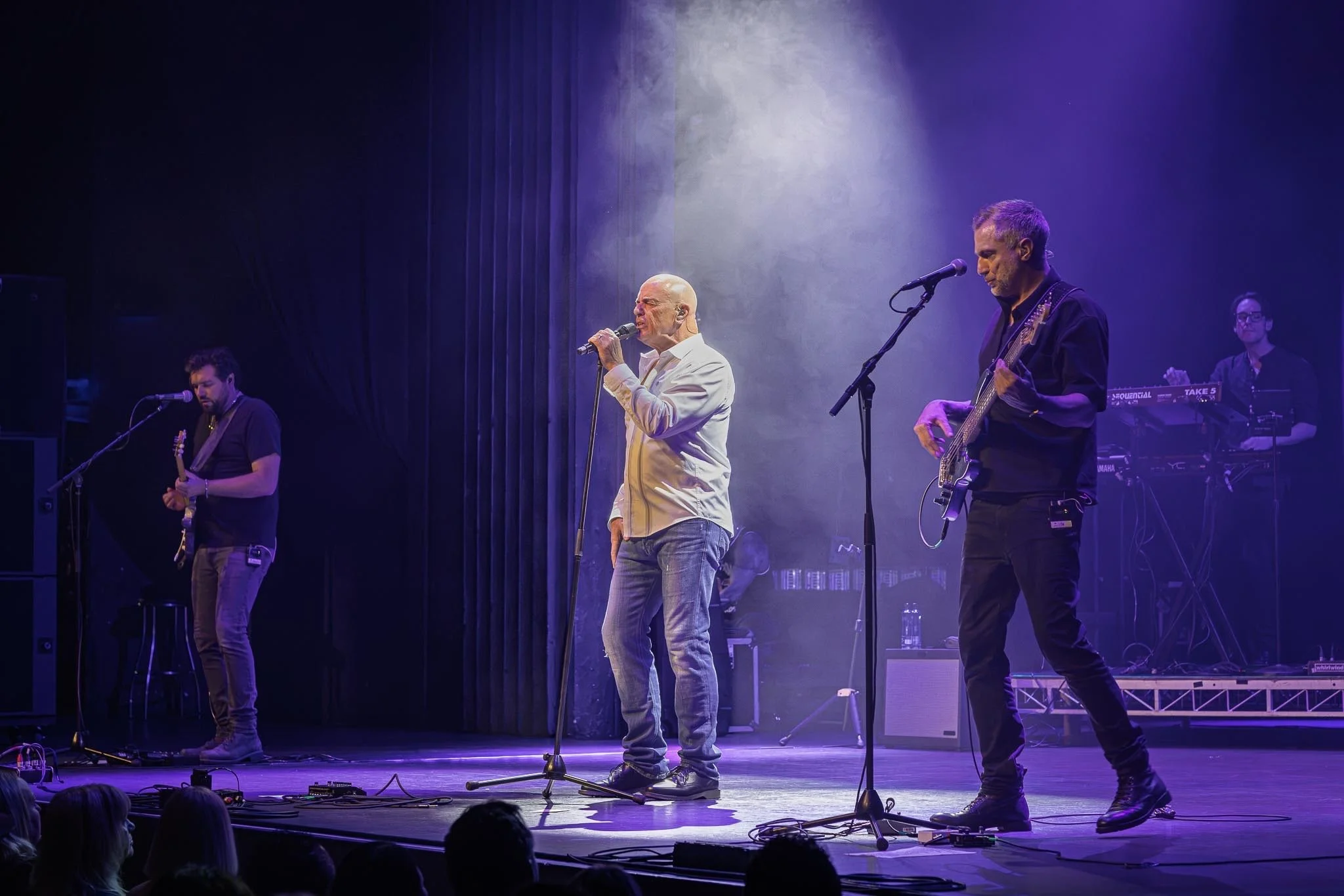
By now Cox’s voice had picked up a little road-worn rasp and he acknowledged that he might need some help getting through this one. “As you can hear, I’m gonna need some help with this. It goes approximately like this…”. A guitar chord rang out, giving him the starting note. Ostensibly for Peter. Absolutely for us.
He began: “I’ll get o...”
And that was it. He never stood a chance. The entire Enmore took King of Wishful Thinking away from him. Not a polite singalong. Not the front five rows doing the heavy lifting while everybody else filmed it. The whole bloody room. Hundreds of voices hit that opening line together, and suddenly we were all kings and queens of wishful thinking, singing with the sort of commitment normally reserved for national anthems and very late nights in pubs.
There are songs that were enormous because of when they were released, and songs that somehow become bigger than the era that produced them. King of Wishful Thinking belongs firmly in the second camp.
It is a ridiculously clever pop song. Beneath one of the most irrepressibly upbeat arrangements of the early nineties is a bloke trying desperately to convince himself that having his heart broken doesn’t bother him in the slightest. He’s fine. Absolutely fine. Completely over it. Couldn’t care less. Which, of course, means he is absolutely nowhere near fine. That is the joke at the heart of the song, but also its truth. King of Wishful Thinking takes denial, bruised pride and heartbreak, then wraps the lot in a chorus so joyously infectious that instead of sitting alone feeling sorry for yourself, you end up dancing around the kitchen. Thirty-six years after its release, it sounded absurdly fresh. And once the band kicked in behind us, the Enmore simply erupted.
The lights swept across a sea of people on their feet. Cox could barely have needed to sing if he hadn’t wanted to. Benjamin and Phil G drove the whole thing forward, D’Andrade threw guitar across the top and that chorus came around again, bigger this time, hundreds of voices throwing it straight back at the stage. Then again.
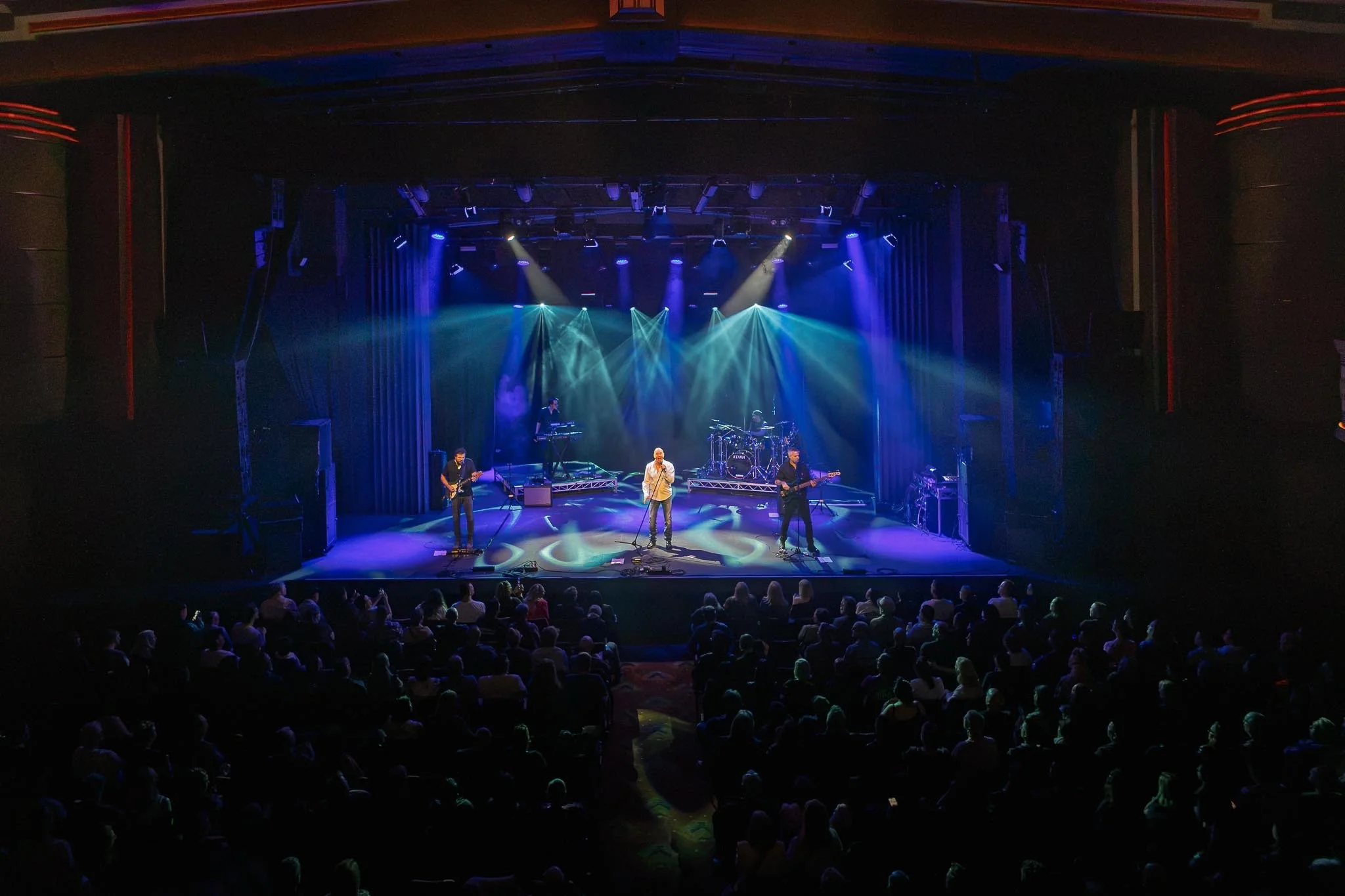
This was the release the entire second half had been building towards. And what a song to do it with. It might also be one of the safest jukebox choices ever written. Put King of Wishful Thinking on at a party, a wedding, in a pub, in the car, anywhere containing a group of people with functioning ears, and just watch what happens. Friday night at the Enmore was fairly conclusive evidence. By the final chorus there was barely any distinction left between band and audience. Peter Cox was singing it. We were singing it. People were laughing while they sang it. Couples had their arms around one another. Somewhere in amongst all of that, forty years had disappeared. And perhaps that was the real magic of the night.
Four decades into Go West’s story, the most striking thing wasn’t simply that the songs had survived. It was that the joy had survived with them. Peter Cox looked like a bloke who genuinely loved being on that stage, surrounded by musicians playing these songs not as contractual obligations, but as music they still seemed delighted to inhabit. Debbie Gibson had done much the same earlier. She took a theatre full of people carrying memories of bedroom walls, school desks, posters, cassette tapes and first crushes, then somehow made those memories feel alive rather than old. That is the difference between nostalgia and a great live show. Nostalgia asks you to look backwards. A great live show reaches backwards, takes hold of something you loved, and brings it right into the room with you.
For me, there was an extra little circle closing somewhere in there. The schoolboy who once lifted the lid of an old wooden desk to find Debbie Gibson smiling back at him could never have imagined that almost 40 years later he would be standing in a theatre on the other side of the world, watching her dance across a stage before joining hundreds of people singing Go West at the top of his lungs. Yet there we were. A little older. Hopefully a little wiser. In my case, considerably less hair. But when the right song starts, we’re not all that different from the people we used to be.
Maybe we never really close our eyes on the things that made us happy. And some nights, thankfully, the body remembers.
Gallery https://musicfestivalsaustralia.com/event-photos/go-west-debbie-gibson-australian-tour-2026
Thank you to Go West, Debbie Gibson, Destroy All Lines, Estellar PR and Enmore Theatre for having us along.
Review and Photos by Andy Kershaw for Music Kingdom Australia